
Pulp Fiction, 1897 · page 155 of 192
The Argosy, Vol. XXV, No. 3 — page 155: what you’re looking at
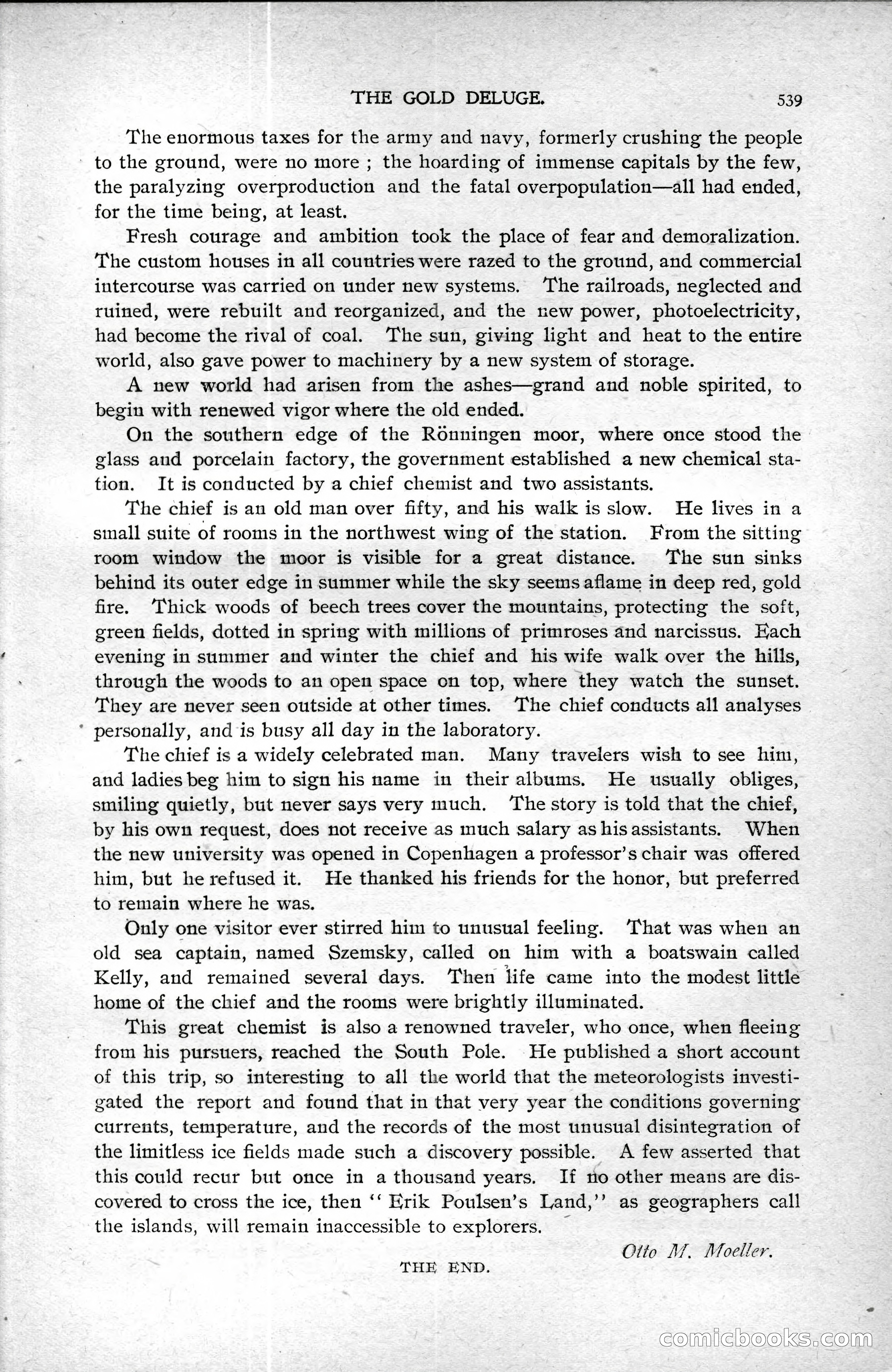
A restored page from Pulp Fiction, 1897. Page through the whole issue in the reader above.
📄 Transcribed text from this page (OCR, searchable)
Machine-transcribed from the original scan — historical spelling and the odd misread are preserved.
THE GOLD DELUGE. 539 The enormous taxes for the army and navy, formerly crushing the people ' to the ground, were no more ; the hoarding of immense capitals by the few, the paralyzing overproduction and the fatal overpopulation—all had ended, for the time being, at least. Fresh courage and ambition took the place of fear and demoralization. The custom houses in all countries were razed to the ground, and commercial intercourse was carried on under new systems. ‘The railroads, neglected and ruined, were rebuilt and reorganized, and the new power, photoelectricity, had become the rival of coal. The sun, giving light and heat to the entire world, also gave power to machinery by a new system of storage. A new world had arisen from the ashes—grand and noble spirited, to begin with renewed vigor where the old ended. On the southern edge of the Ronningen moor, where once stood the glass and porcelain factory, the government established a new chemical sta- tion. It is conducted by a chief chemist and two assistants. The chief is an old man over fifty, and his walk is slow. He lives in a small suite of rooms in the northwest wing of the station. From the sitting room window the moor is visible for a great distance. The sun sinks behind its outer edge in summer while the sky seemsaflame in deep red, gold fire. ‘Thick woods of beech trees cover the mountains, protecting the soit, green fields, dotted in spring with millions of primroses and narcissus. Hach evening in summer and winter the chief and his wife walk over the hills, through the woods to an open space on top, where they watch the sunset. They are never seen outside at other times. The chief conducts all analyses * personally, and is busy all day in the laboratory. The chief is a widely celebrated man. Many travelers wish to see him, and ladies beg him to sign his name in their albums. He usually obliges, smiling quietly, but never says very much. ‘The story is told that the chief, by his own request, does not receive as much salary as hisassistants. When the new university was opened in Copenhagen a professor’s chair was offered him, but he refused it. He thanked his friends for the honor, but preferred to remain where he was. Only one visitor ever stirred him to unusual feeling. That was when an old sea captain, named Szemsky, called on him with a boatswain called Kelly, and remained several days. ‘Then life came into the modest little home of the chief and the rooms were brightly illuminated. This great chemist is also a renowned traveler, who once, when fleeing from his pursuers, reached the South Pole. He published a short account of this trip, so interesting to all the world that the meteorologists investi- gated the report and found that in that very year the conditions governing currents, temperature, and the records of the most unusual disintegration of the limitless ice fields made such a discovery possible. A few asserted that this could recur but once in a thousand years. If no other means are dis- covered to cross the ice, then ‘‘ Erik Poulsen’s Land,’’ as geographers call the islands, will remain inaccessible to explorers. _ Otto 17. Moeller. THE: END. Ccomicoookxs (S@)