
Pulp Fiction, 1897 · page 21 of 192
The Argosy — page 21: what you’re looking at
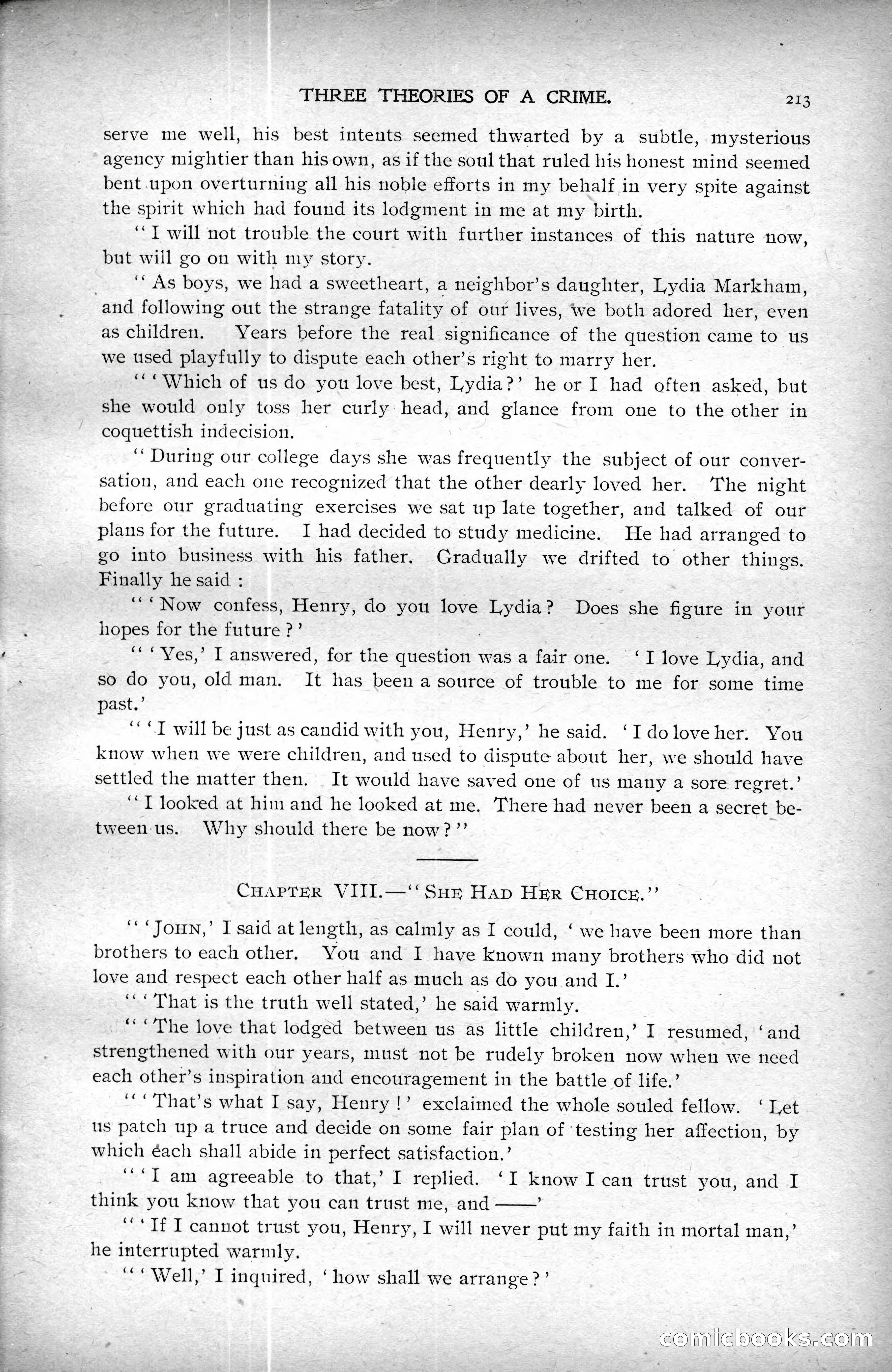
A restored page from Pulp Fiction, 1897. Page through the whole issue in the reader above.
📄 Transcribed text from this page (OCR, searchable)
Machine-transcribed from the original scan — historical spelling and the odd misread are preserved.
THREE THEORIES OF A CRIME. 213 serve me well, his best intents seemed thwarted by a subtle, mysterious agency mightier than his own, as if the soul that ruled his honest mind seemed bent upon overturning all his noble efforts in my behalf in very spite against the spirit which had found its lodgment in me at my birth. ‘I will not trouble the court with further instances of this nature now, but will go on with my story. ‘‘ As boys, we had a sweetheart, a neighbor’s daughter, Lydia Markham, and following out the strange fatality of our lives, Wwe both adored her, even as children. Years before the real significance of the question came to us we used playfully to dispute each other’s right to marry her. “Which of us do you love best, Lydia?’ he or I had often asked, but she would only toss her curly: head, and glance from one to the other in coquettish indecision. ‘‘ During our college days she was frequently the subject of our conver- sation, and each one recognized that the other dearly loved her. The night before our graduating exercises we sat up late together, and talked of our plans for the future. I had decided to study medicine. He had arranged to go into business with his father. Gradually we drifted to other things. Finally he said : ‘““ Now confess, Henry, do you love Lydia? Does she figure in your hopes for the future ?’ . ~ * Yes,’ I answered, for the question was a fair one. ‘I love Lydia, and so do you, old man. It has been a source of trouble to me for some time past.’ ‘* “T will be just as candid with you, Henry,’ he said. ‘Idoloveher. Vou know when we were children, and used to dispute about her, we should have settled the matter then. It would have saved one of us many a sore regret.’ IT looked at him and he looked at me. There had never been a secret be- tween us. Why should there be now?’’ CHAPTER VIII.—‘‘' SHE Hap Her CuHoIce.”’ ‘‘ “ JOHN,’ I said at length, as calmly as I could, ‘ we have been more than brothers to each other. You and I have known many brothers who did not love and respect each other half as much as do you and I.’ ‘That is the truth well stated,’ he said warmly. ‘““The love that lodged between us as little children,’ I resumed, ‘and strengthened with our years, must not be rudely broken now when we need each other’s inspiration and encouragement in the battle of life.’ ‘““That’s what I say, Henry !’ exclaimed the whole souled fellow. ‘ Let us patch up a truce and decide on some fair plan of ‘testing her affection, by which éach shall abide in perfect satisfaction.’ ‘Iam agreeable to that,’ I replied. ‘I know I can trust you, and I think you know that you can trust me, and “If I cannot trust you, Henry, I will never put my faith in mortal man,’ he interrupted warmly. ‘Well,’ I inquired, ‘how shall we arrange?’ (S@) CoOMmmicooolxs