
Pulp Fiction, 1897 · page 29 of 192
The Argosy, Vol. XXV, No. 1 — page 29: what you’re looking at
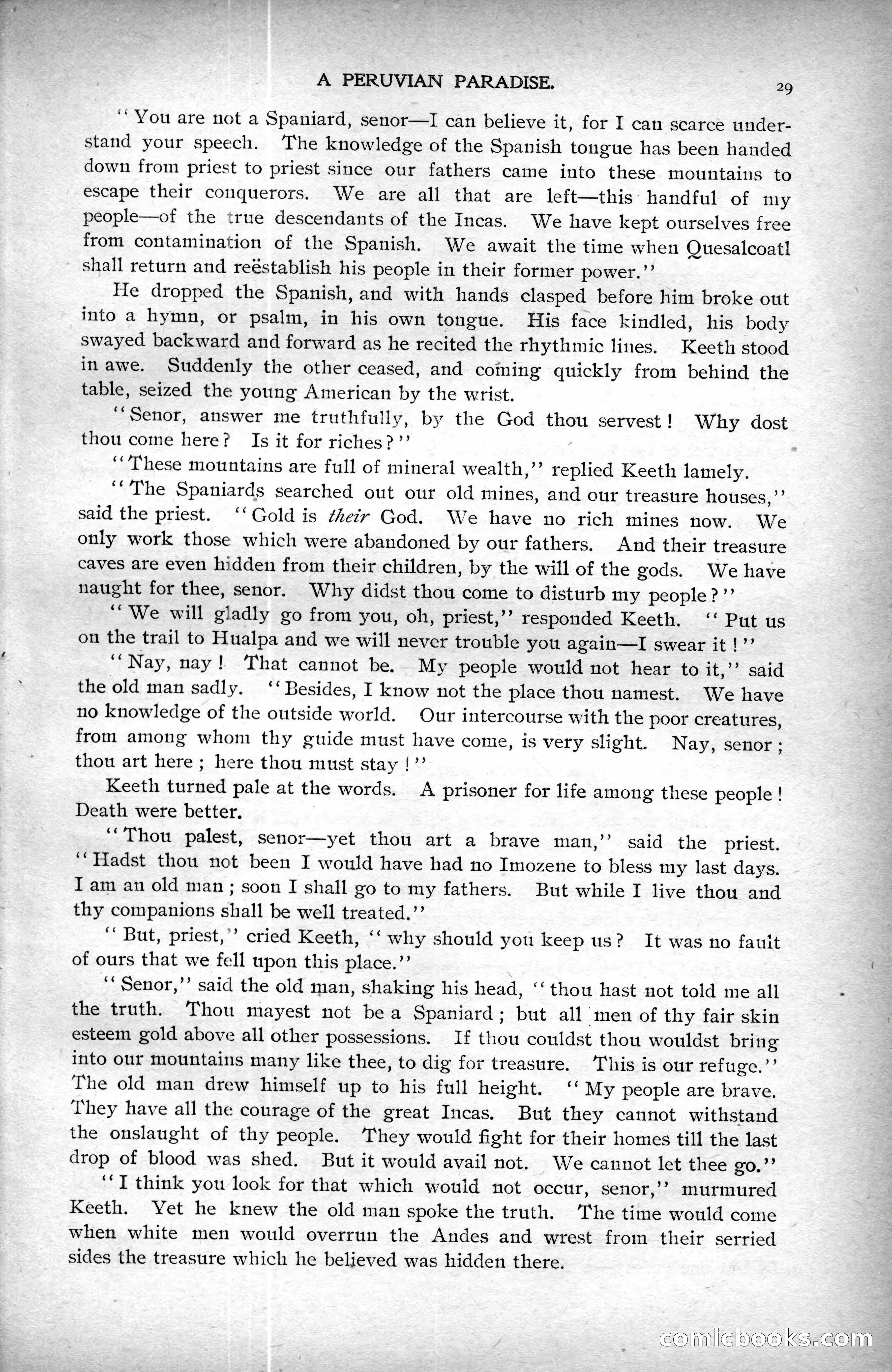
A restored page from Pulp Fiction, 1897. Page through the whole issue in the reader above.
📄 Transcribed text from this page (OCR, searchable)
Machine-transcribed from the original scan — historical spelling and the odd misread are preserved.
“sepuies A PERUVIAN PARADISE. 29 You are not a Spaniard, senor—I can believe it, for I can scarce under- stand your speech. The knowledge of the Spanish tongue has been handed down from priest to priest since our fathers came into these mountains to escape their conquerors. We are all that are left—this handful of nly people—of the true descendants of the Incas. We have kept ourselves free from contamination of the Spanish. We await the time when Quesalcoatl shall return and reéstablish his people in their former power.” He dropped the Spanish, and with hands clasped before him broke out into a hymn, or psalm, in his own tongue. His face kindled, his body swayed backward and forward as he recited the rhythmic lines. Keeth stood in awe. Suddenly the other ceased, and coming quickly from behind the table, seized the young American by the wrist. “Senor, answer me truthfully, by the God thou servest ! Why dost thou come here? Is it for riches?” ‘These mountains are full of mineral wealth,’’ replied Keeth lamely. ‘“The Spaniards searched out our old mines, and our treasure houses,’’ said the priest. ‘‘Gold is their God. We have no rich mines now. We only work those which were abandoned by our fathers. And their treasure caves are even hidden from their children, by the will of the gods. Wehave naught for thee, senor. Why didst thou come to disturb my people ?’”’ » We will gladly go from you, oh, priest,”’ responded Keeth. ‘‘ Put us on the trail to Hualpa and we will never trouble you again—I swear it !’’ ‘Nay, nay! ‘That cannot be. My people would not hear to it,’’ said the old man sadly. ‘“ Besides, I know not the place thou namest. We have no knowledge of the outside world. Our intercourse with the poor creatures, from among whom thy guide must have come, is very slight. Nay, senor; thou art here; here thou must stay !”’ Keeth turned pale at the words. A prisoner for life among these people ! Death were better, ‘“Thou palest, senor—yet thou art a brave man,’’ said the priest. ‘‘Hadst thou not been I would have had no Imozene to bless my last days. I am an old man ; soon I shall go to my fathers. But while I live thou and thy companions shall be well treated.’’ ‘‘ But, priest,’’ cried Keeth, ‘‘ why should you keep us? It was no fauit of ours that we fell upon this place.’’ ‘‘ Senor,” said the old man, shaking his head, ‘‘ thou hast not told me all the truth. Thou mayest not bea Spaniard; but all men of thy fair skin esteem gold above all other possessions. If thou couldst thou wouldst bring into our mountains many like thee, to dig for treasure. This is our refuge.’’ The old man drew himself up to his full height. ‘‘ My people are brave. They have all the courage of the great Incas. But they cannot withstand the onslaught of thy people. ‘They would fight for their homes till the last drop of blood was shed. But it would avail not. We cannot let thee go.”’ “I think you look for that which would not occur, senor,’’ murmured Keeth. Yet he knew the old man spoke the truth. The time would come when white men would overrun the Andes and wrest from their serried sides the treasure which he believed was hidden there. Conmiclaool< (S@)