
Pulp Fiction, 1897 · page 124 of 192
The Argosy, Vol. XXV, No. 1 — page 124: what you’re looking at
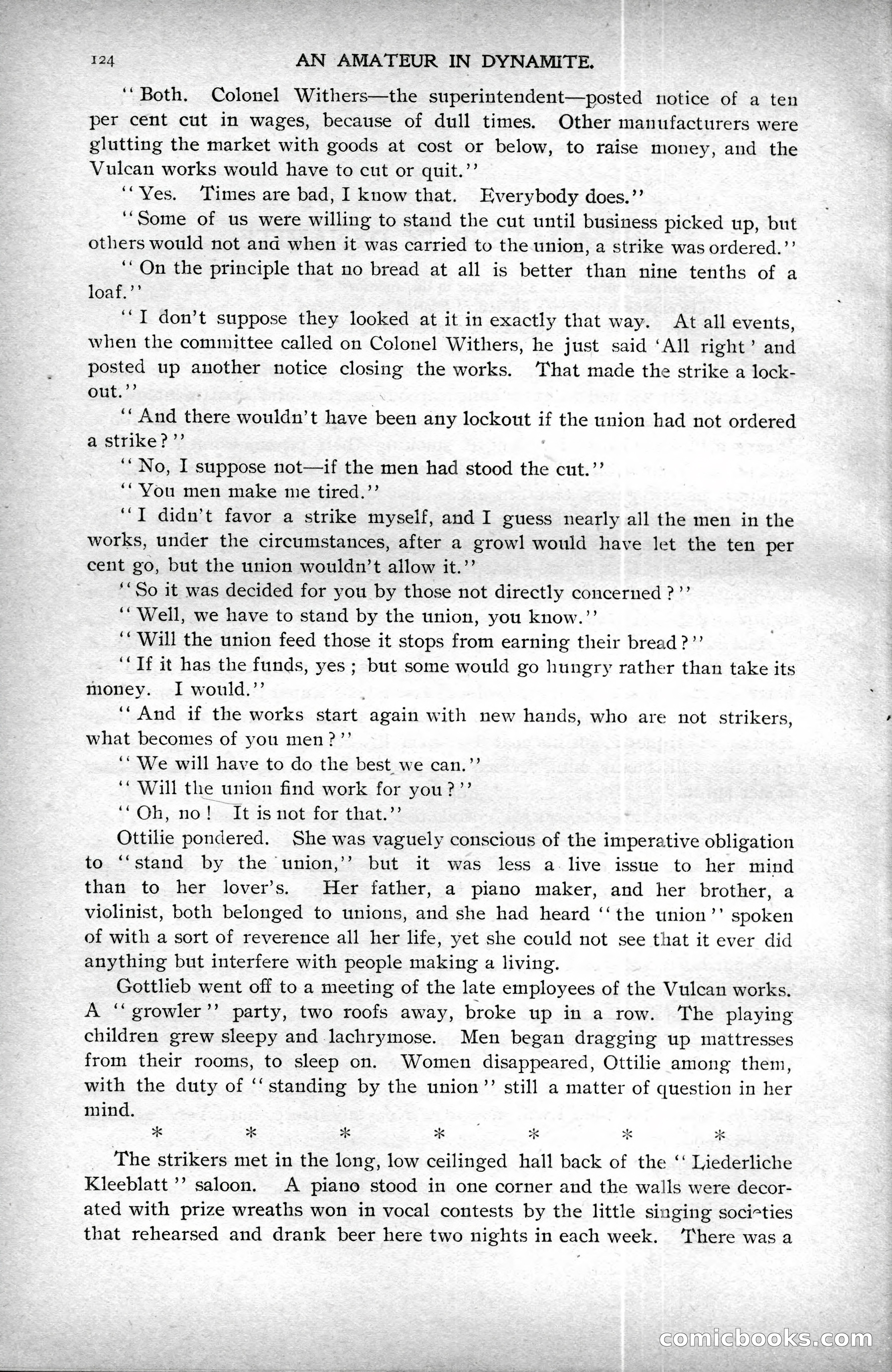
A restored page from Pulp Fiction, 1897. Page through the whole issue in the reader above.
📄 Transcribed text from this page (OCR, searchable)
Machine-transcribed from the original scan — historical spelling and the odd misread are preserved.
124 AN AMATEUR IN DYNAMITE. “Both. Colonel Withers—the superintendent—posted notice of a ten per cent cut in wages, because of dull times. Other manufacturers were glutting the market with goods at cost or below, to raise money, and the Vulcan works would have to cut or quit.’ ‘“Yes. ‘Times are bad, I know that. Everybody does.’’ : “Some of us were willing to stand the cut until business picked up, but others would not and when it was carried to the union, a strike was ordered.’’ ‘‘ On the principle that no bread at all is better than nine tenths of a loaf.’’ ‘I don’t suppose they looked at it in exactly that way. At all events, when the committee called on Colonel Withers, he just said ‘All right’ and posted up another notice closing the works. ‘That made the strike a lock- out.” : : ‘“ And there wouldn’t have been any lockout if the union had not ordered a strike?”’ | ‘‘ No, I suppose not—if the men had stood the cut.’’ ‘You men make me tired.’’ ‘“I didn’t favor a strike myself, and I guess nearly all the men in the works, under the circumstances, after a growl would have let the ten per cent go, but the union wouldn’t allow it.” ‘“So it was decided for you by those not directly concerned ?”’ ‘Well, we have to stand by the union, you know.”’ ‘“ Will the union feed those it stops from earning their bread ?’’ ‘‘ If it has the funds, yes; but some would go hungry rather than take its money. I would.’’ ‘And if the works start again with new hands, who are not strikers, what becomes of you men ??’’ ‘“ We will have to do the best we can.’’ ‘Will the union find work for you?’”’ ‘“ Oh, no ! Tt is not for that.” Ottilie pondered. She was vaguely conscious of the imperative obligation to “‘stand by the union,’’ but it was less a live issue to her mind than to her lover's. Her father, a piano maker, and her brother, a violinist, both belonged to unions, and she had heard ‘‘the union’’ spoken of with a sort of reverence all her life, yet she could not see that it ever did anything but interfere with people making a living. Gottlieb went off to a meeting of the late employees of the Vulcan works. A ‘‘ growler’’ party, two roofs away, broke up in a row. The playing children grew sleepy and lachrymose. Men began dragging up mattresses from their rooms, to sleep on. Women disappeared, Ottilie among them, with the duty of ‘standing by the union”’ still a matter of question in her mind. . The strikers met in the long, low ceilinged hall back of the ‘‘ Liederliche Kleeblatt ’’? saloon. A piano stood in one corner and the walls were decor- ated with prize wreaths won in vocal contests by the little singing socicties that rehearsed and drank beer here two nights in each week. ‘There was a Eomichbooks (<0)