
Pulp Fiction, 1897 · page 98 of 200
The Argosy, Vol. XXIV, No. 3 — page 98: what you’re looking at
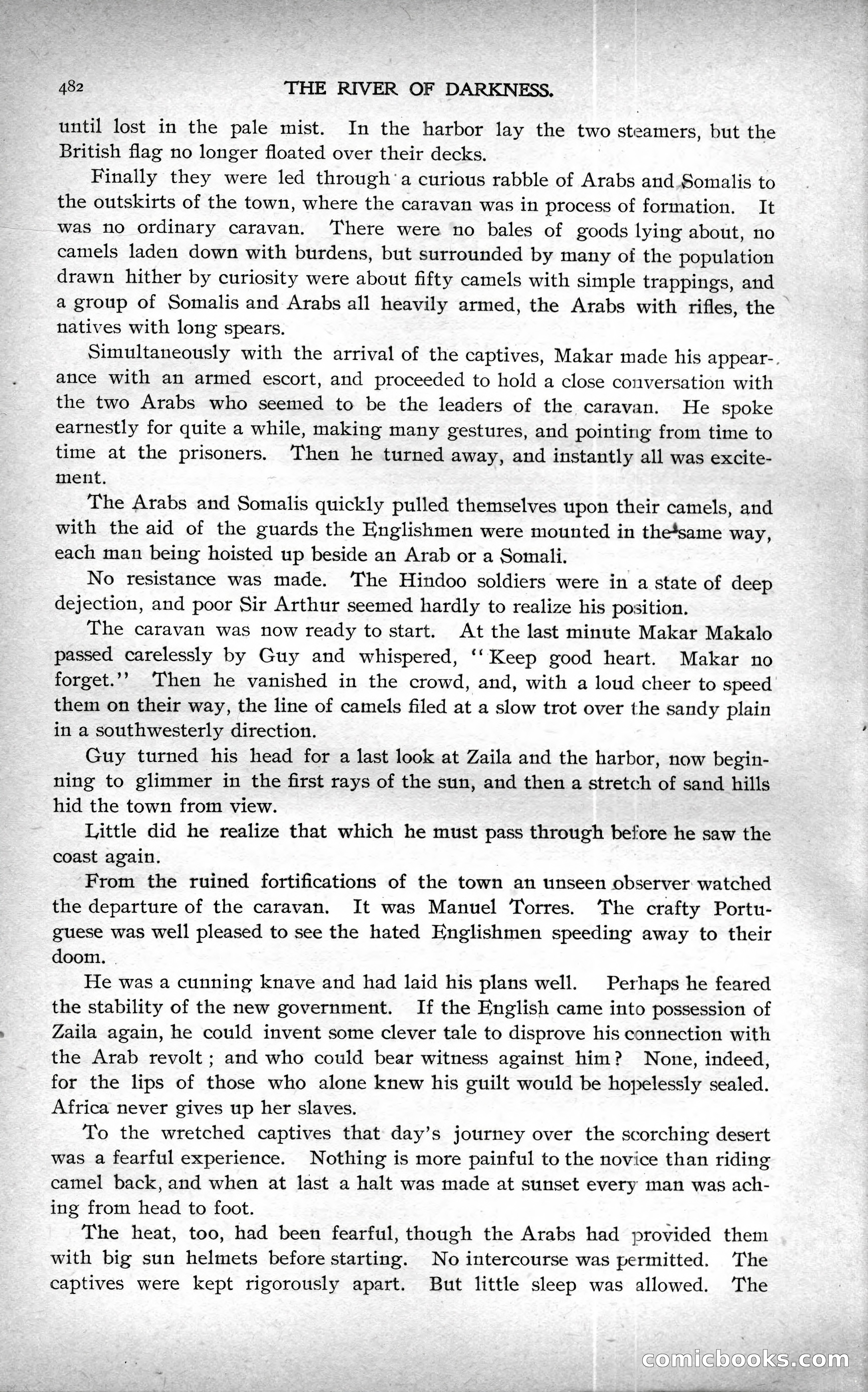
A restored page from Pulp Fiction, 1897. Page through the whole issue in the reader above.
📄 Transcribed text from this page (OCR, searchable)
Machine-transcribed from the original scan — historical spelling and the odd misread are preserved.
482 THE RIVER OF DARKNESS. until lost in the pale mist. In the harbor lay the two steamers, but the British flag no longer floated over their decks. Finally they were led through’a curious rabble of Arabs and Somalis to the outskirts of the town, where the caravan was in process of formation. It was no ordinary caravan. ‘There were no bales of goods lying about, no camels laden down with burdens, but surrounded by many of the population drawn hither by curiosity were about fifty camels with simple trappings, and a group of Somalis and Arabs all heavily armed, the Arabs with rifles, the natives with long spears. Simultaneously with the arrival of the captives, Makar made his appear-. ance with an armed escort, and proceeded to hold a close conversation with the two Arabs who seemed to be the leaders of the caravan. He spoke earnestly for quite a while, making many gestures, and pointing from time to time at the prisoners. Then he turned away, and instantly all was excite- ment. The Arabs and Somalis quickly pulled themselves upon their camels, and with the aid of the guards the Englishmen were mounted in thetsame way, each man being hoisted up beside an Arab or a Somali. No resistance was made. ‘The Hindoo soldiers were in a state of deep dejection, and poor Sir Arthur seemed hardly to realize his position. The caravan was now ready to start. At the last minute Makar Makalo passed carelessly by Guy and whispered, ‘‘Keep good heart. Makar no forget.’ Then he vanished in the crowd, and, with a loud cheer to speed them on their way, the line of camels filed at a slow trot over the sandy plain in a southwesterly direction. Guy turned his head for a last look at Zaila and the harbor, now begin- ning to glimmer in the first rays of the sun, and then a stretch of sand hills hid the town from view. Little did he realize that which he must pass through before he saw the coast again. : From the ruined fortifications of the town an unseen observer watched the departure of the caravan. It was Manuel Torres. The crafty Portu- guese was well pleased to see the hated Englishmen speeding away to their doom. . He was a cunning knave and had laid his plans well. Perhaps he feared the stability of the new government. If the English came into possession of Zaila again, he could invent some clever tale to disprove his connection with the Arab revolt ; and who could bear witness against him? None, indeed, for the lips of those who alone knew his guilt would be hopelessly sealed. Africa never gives up her slaves. To the wretched captives that day’s journey over the scorching desert was a fearful experience. Nothing is more painful to the novice than riding camel back, and when at last a halt was made at sunset every man was ach- ing from head to foot. The heat, too, had been fearful, though the Arabs had provided them with big sun helmets before starting. No intercourse was permitted. ‘The captives were kept rigorously apart. But little sleep was allowed. ‘The Gomicbook (e(0) 3