
Pulp Fiction, 1897 · page 93 of 200
The Argosy, Vol. XXIV, No. 3 — page 93: what you’re looking at
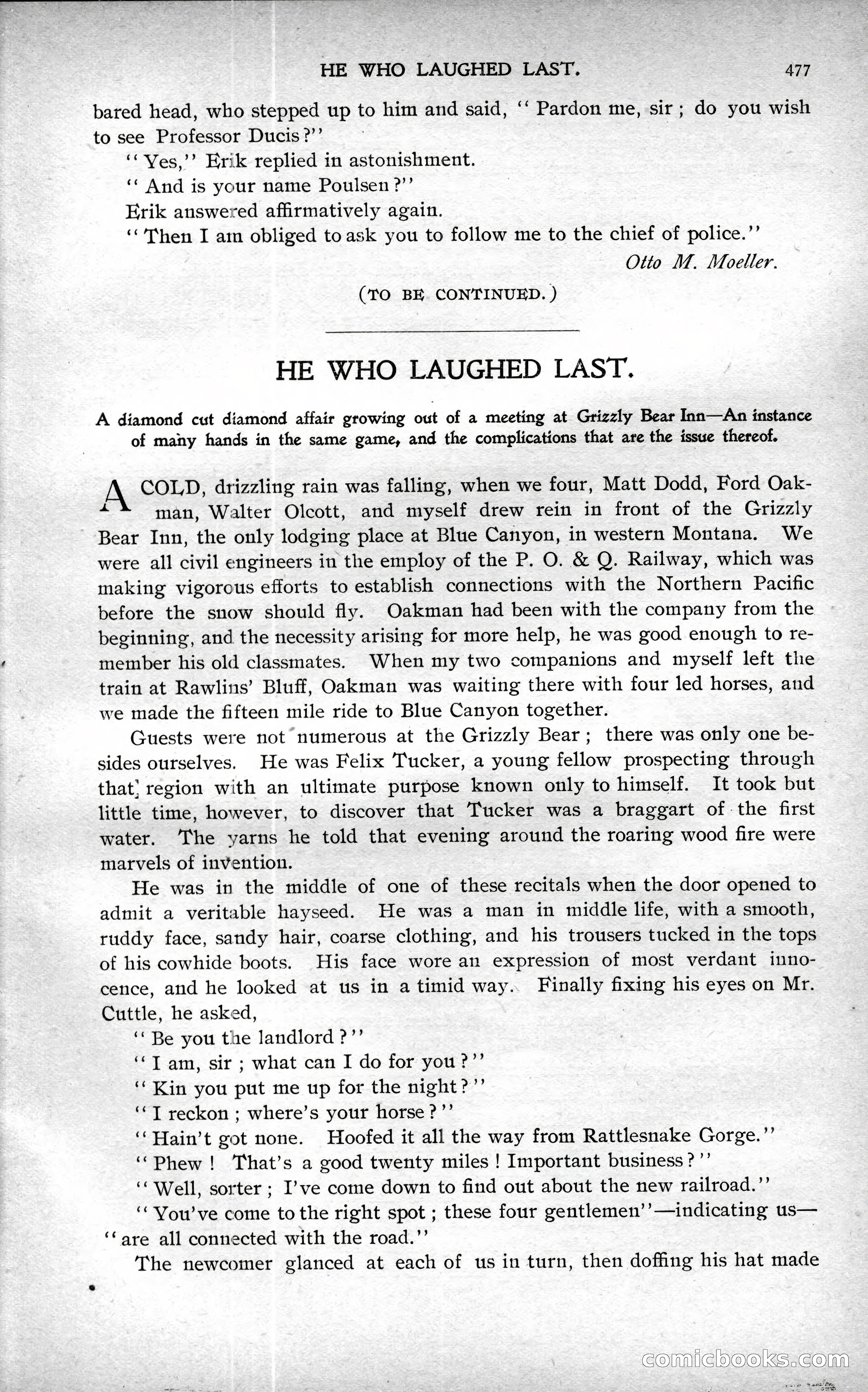
A restored page from Pulp Fiction, 1897. Page through the whole issue in the reader above.
📄 Transcribed text from this page (OCR, searchable)
Machine-transcribed from the original scan — historical spelling and the odd misread are preserved.
HE WHO LAUGHED LAST. 477 bared head, who stepped up to him and said, ‘‘ Pardon me, sir; do you wish to see Professor Ducis ?”’ 7 ‘(Ves,’’ Erik replied in astonishment. ‘¢ And is your name Poulsen ?’’ Erik answered affirmatively again. ‘Then I am obliged to ask you to follow me to the chief of police.’’ Otto M. Moeller. (TO BE. CONTINUED. ) HE WHO LAUGHED LAST. A diamond cut diamond affair growing out of a meeting at Grizzly Bear Inn—An instance of many hands in the same game, and the complications that are the issue thereof. COLD, drizzling rain was falling, when we four, Matt Dodd, Ford Oak- man, Walter Olcott, and myself drew rein in front of the Grizzly Bear Inn, the only lodging place at Blue Canyon, in western Montana. We were all civil engineers in the employ of the P. O. & Q. Railway, which was making vigorous efforts to establish connections with the Northern Pacific before the snow should fly. Oakman had been with the company from the beginning, and the necessity arising for more help, he was good enough to re- member his old classmates. When my two companions and myself left the train at Rawlins’ Bluff, Oakman was waiting there with four led horses, and we made the fifteen mile ride to Blue Canyon together. Guests were not numerous at the Grizzly Bear; there was only one be- sides ourselves. He was Felix Tucker, a young fellow prospecting through that! region with an ultimate purpose known only to himself. It took but little time, however, to discover that Tucker was a braggart of the first water. ‘The yarns he told that evening around the roaring wood fire were marvels of invention. He was in the middle of one of these recitals when the door opened to admit a veritable hayseed. He was a man in middle life, with a smooth, ruddy face, sandy hair, coarse clothing, and his trousers tucked in the tops of his cowhide boots. His face wore an expression of most verdant inno- cence, and he looked at us in a timid way. Finally fixing his eyes on Mr. Cuttle, he asked, . ‘Be you the landlord ?’’ ‘“T am, sir ; what can I do for you?”’ ‘Kin you put me up for the night?”’ ‘*T reckon ; where’s your horse ?”’ ‘“ Hain’t got none. Hoofed it all the way from Rattlesnake Gorge.”’ ‘Phew! That’s a good twenty miles ! Important business ?”’ “Well, sorter; I’ve come down to find out about the new railroad.’’ ‘““-Vou’ve come to the right spot ; these four gentlemen’’—indicating us— ‘Care all connected with the road.’’ | The newcomer glanced at each of us in turn, then doffing his hat made 4 GOMIGDOOKSEEO