
Pulp Fiction, 1897 · page 163 of 192
The Argosy, Vol. XXIV, No. 1 — page 163: what you’re looking at
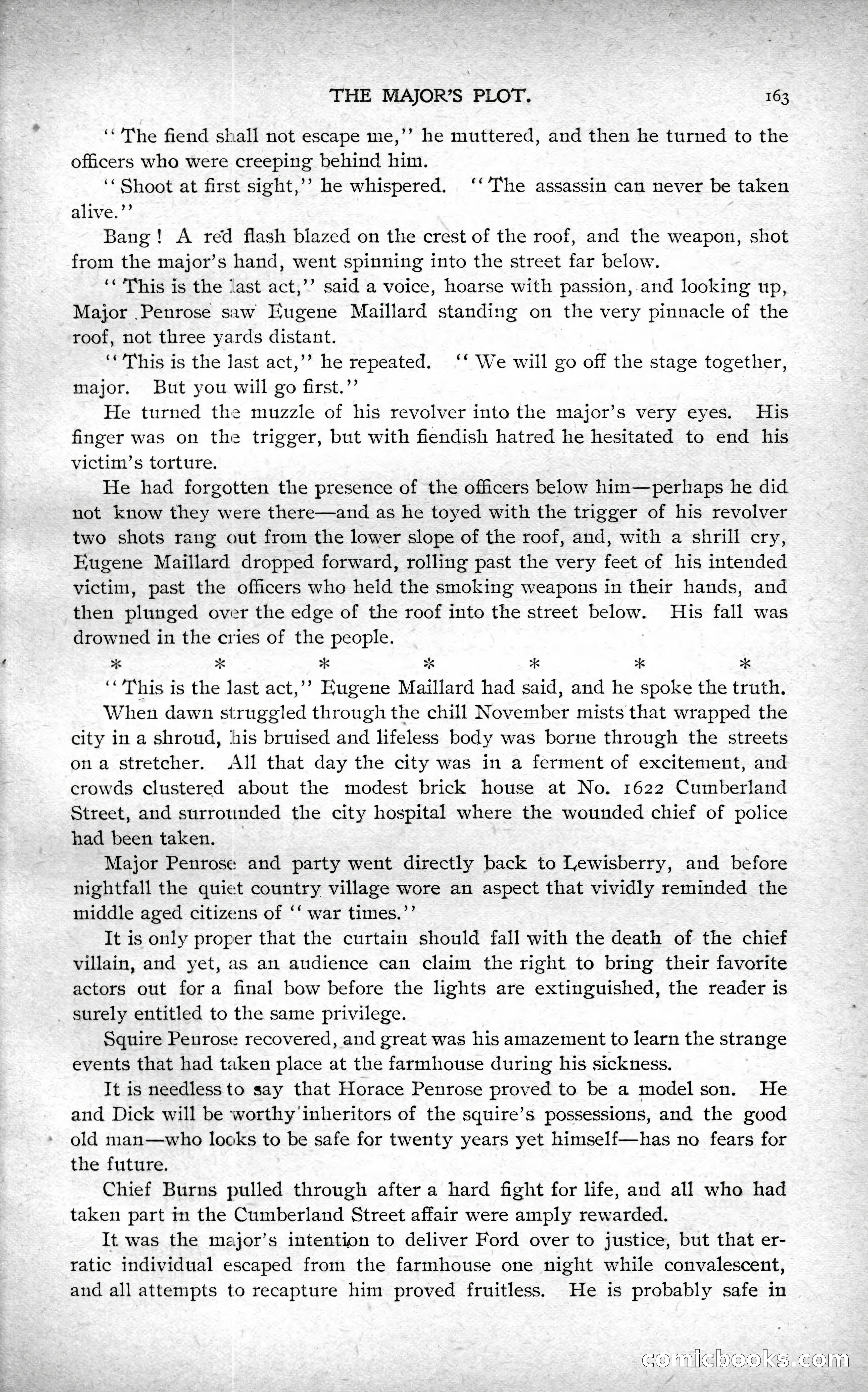
A restored page from Pulp Fiction, 1897. Page through the whole issue in the reader above.
📄 Transcribed text from this page (OCR, searchable)
Machine-transcribed from the original scan — historical spelling and the odd misread are preserved.
THE MAJOR’S PLOT. 163 ‘‘'The fiend shall not escape me,’’ he muttered, and then he turned to the oficers who were creeping behind him. ‘Shoot at first sight,’’ he whispered. ‘‘’The assassin can never be taken alive.’’ Bang! A red flash blazed on the crest of the roof, and the weapon, shot from the major’s hand, went spinning into the street far below. ‘This is the last act,’’ said a voice, hoarse with passion, and looking up, Major Penrose saw Eugene Maillard standing on the very pinnacle of the roof, not three yards distant. | ‘This is the last act,’’ he repeated. ‘‘ We will go off the stage together, major. But you will go first.’’ He turned the muzzle of his revolver into the major’s very eyes. His finger was on the trigger, but with fiendish hatred he hesitated to end his victim’s torture. He had forgotten the presence of the officers below him—perhaps he did not know they were there—and as he toyed with the trigger of his revolver two shots rang out from the lower slope of the roof, and, with a shrill cry, Eugene Maillard dropped forward, rolling past the very feet of his intended victim, past the officers who held the smoking weapons in their hands, and then plunged over the edge of the roof into the street below. His fall was drowned in the cries of the people. *K *K *f * *K “K *K ‘This is the last act,’? Eugene Maillard had said, and he spoke the truth. When dawn struggled through the chill November mists that wrapped the city in a shroud, his bruised and lifeless body was borne through the streets ona stretcher. All that day the city was in a ferment of excitement, and crowds clustered about the modest brick house at No. 1622 Cumberland Street, and surrounded the city hospital where the wounded chief of police had been taken. Major Penrose and party went directly back to Lewisberry, and before nightfall the quiet country village wore an aspect that vividly reminded the middle aged citizens of ‘‘ war times.’’ It is only proper that the curtain should fall with the death of the chief villain, and yet, as an audience can claim the right to bring their favorite actors out fora final bow before the lights are extinguished, the reader is _ surely entitled to the same privilege. Squire Penrose recovered, and great was his amazement to learn the strange events that had taken place at the farmhouse during his sickness. It is needless to say that Horace Penrose proved to be a model son. He and Dick will be worthy inheritors of the squire’s possessions, and the guvod old man—who looks to be safe for twenty years yet himself—has no fears for the future. Chief Burns pulled through after a hard fight for life, and all who had taken part in the Cumberland Street affair were amply rewarded. It was the major’s intention to deliver Ford over to justice, but that er- ratic individual escaped from the farmhouse one night while convalescent, and all attempts to recapture him proved fruitless. He is probably safe in CoOmcooolks