
Pulp Fiction, 1877 · page 32 of 84
The Argosy, Volume XXIV — page 32: what you’re looking at
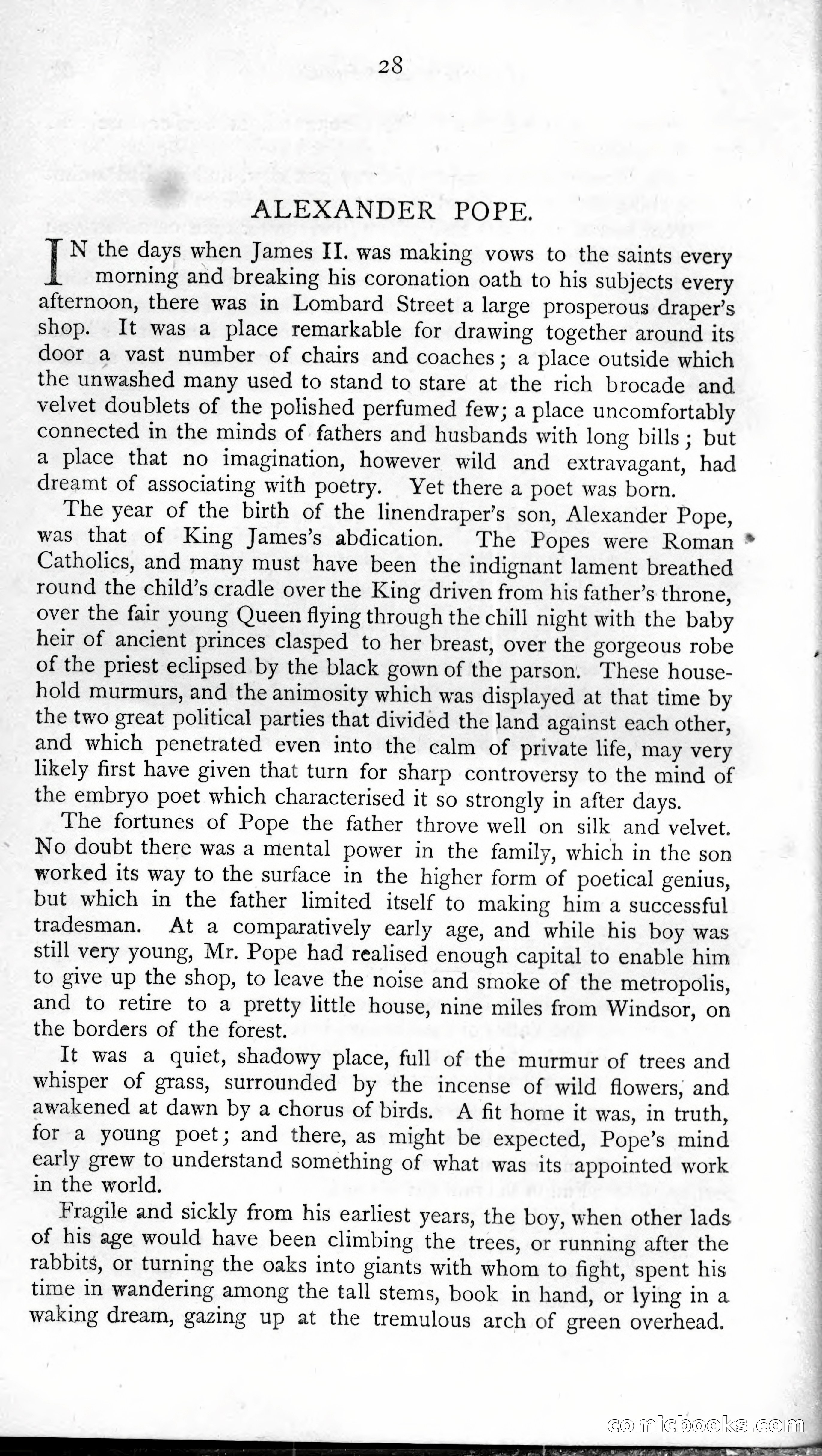
A restored page from Pulp Fiction, 1877. Page through the whole issue in the reader above.
📄 Transcribed text from this page (OCR, searchable)
Machine-transcribed from the original scan — historical spelling and the odd misread are preserved.
28 ALEXANDER POPE. T° the days when James II. was making vows to the saints every morning and breaking his coronation oath to his subjects every afternoon, there was in Lombard Street a large prosperous draper’s shop. It was a place remarkable for drawing together around its door a vast number of chairs and coaches; a place outside which the unwashed many used to stand to stare at the rich brocade and velvet doublets of the polished perfumed few; a place uncomfortably connected in the minds of fathers and husbands with long bills ; but a place that no imagination, however wild and extravagant, had dreamt of associating with poetry. Yet there a poet was born. The year of the birth of the linendraper’s son, Alexander Pope, was that of King James’s abdication. The Popes were Roman Catholics, and many must have been the indignant lament breathed round the child’s cradle over the King driven from his father’s throne, over the fair young Queen flying through the chill night with the baby heir of ancient princes clasped to her breast, over the gorgeous robe of the priest eclipsed by the black gown of the parson. These house- hold murmurs, and the animosity which was displayed at that time by the two great political parties that divided the land against each other, and which penetrated even into the calm of private life, may very likely first have given that turn for sharp controversy to the mind of the embryo poet which characterised it so strongly in after days. The fortunes of Pope the father throve well on silk and velvet. No doubt there was a mental power in the family, which in the son worked its way to the surface in the higher form of poetical genius, but which in the father limited itself to making him a successful tradesman. At a comparatively early age, and while his boy was still very young, Mr. Pope had realised enough capital to enable him to give up the shop, to leave the noise and smoke of the metropolis, and to retire to a pretty little house, nine miles from Windsor, on the borders of the forest. It was a quiet, shadowy place, full of the murmur of trees and whisper of grass, surrounded by the incense of wild flowers, and awakened at dawn by a chorus of birds. A fit home it was, in truth, for a young poet; and there, as might be expected, Pope’s mind early grew to understand something of what was its appointed work in the world. Fragile and sickly from his earliest years, the boy, when other lads of his age would have been climbing the trees, or running after the rabbits, or turning the oaks into giants with whom to fight, spent his time in wandering among the tall stems, book in hand, or lying in a waking dream, gazing up at the tremulous arch of green overhead. e comicbooks.com