
Pulp Fiction, 1907 · page 67 of 228
The Argosy, March 1907 — page 67: what you’re looking at
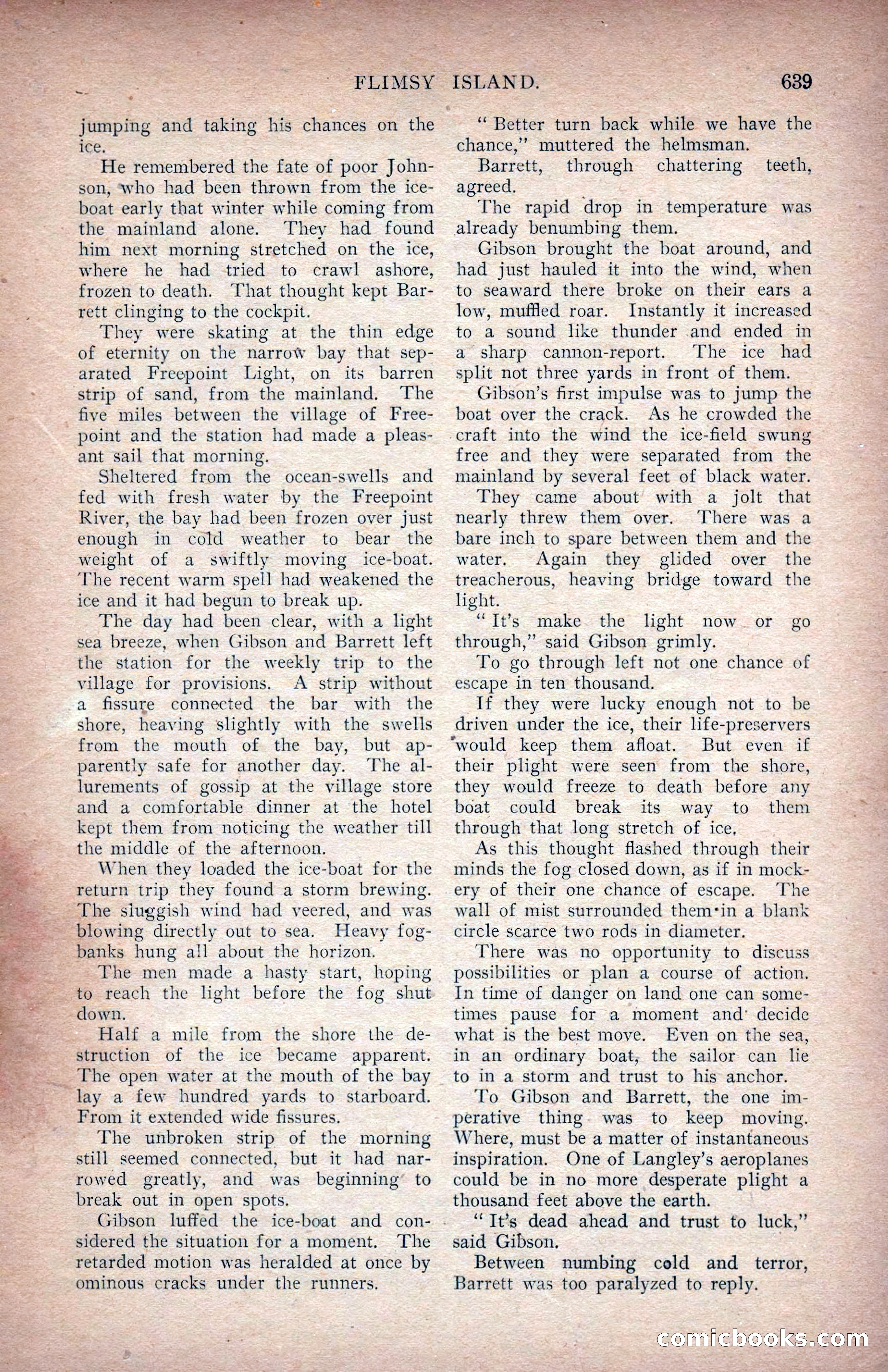
A restored page from Pulp Fiction, 1907. Page through the whole issue in the reader above.
📄 Transcribed text from this page (OCR, searchable)
Machine-transcribed from the original scan — historical spelling and the odd misread are preserved.
* * | jumping and taking his chances on the ice. He remembered the fate of poor John- son, who had been thrown from the ice- boat early that winter while coming from the mainland alone. They had found him next morning stretched on the ice, where he had tried to crawl ashore, frozen to death. That thought kept Bar- rett clinging to the cockpit. They were skating at the thin edge of eternity on the narrow bay that sep- arated Freepoint Light, on its barren strip of sand, from the mainland. The _ five miles between the village of Free- point and the station had made a pleas- ant sail that morning. Sheltered from the ocean-swells and fed with fresh water by the Freepoint River, the bay had been frozen over just enough in cold weather to bear the weight of a swiftly moving ice-boat. The recent warm spell had weakened the ice and it had begun to break up. The day had been clear, with a light sea breeze, when Gibson and Barrett left the station for the weekly trip to the village for provisions. A strip without a fissure connected the bar with the shore, heaving slightly with the swells from the mouth of the bay, but ap- parently safe for another day. The al- lurements of gossip at the village store and a comfortable dinner at the hotel kept them from noticing the weather till the middle of the afternoon. When they loaded the ice-boat for the return trip they found a storm brewing. ~The siuggish wind had veered, and was ~ blowing directly out to sea. Heavy fog- banks hung all about the horizon. The men made a hasty start, hoping : a reach the light before the fog shut __- down. Half a mile from the shore the de- struction of the ice became apparent. _ The open water at the mouth of the bay day a few hundred yards to starboard. From it extended wide fissures. The unbroken strip of the morning still seemed connected, but it had nar- rowed greatly, and was beginning’ to break out in open spots. Gibson luffed the ice-boat and con- sidered the situation for a moment, The retarded motion was heralded at once by ominous cracks under the runners. Pe - FLIMSY ISLAND. & ‘would keep them afloat. ‘‘ Better turn back while we have the. chance,” muttered the helmsman. Barrett, through chattering agreed. The rapid drop in temperature was teeth, already benumbing them. Gibson brought the boat around, and had just hauled it into the wind, when to seaward there broke on their ears a low, muffled roar. Instantly it increased to a sound like thunder and ended in a sharp cannon-report. The ice had split not three yards in front of them. Gibson’s first impulse was to jump the boat over the crack. As he crowded the craft into the wind the ice-field swung free and they were separated from the mainland by several feet of black water. They came about with a jolt that nearly threw them over. ‘There was a bare inch to spare between them and the water. Again they glided over the treacherous, heaving bridge toward the light. “It’s make the light now~ or go through,” said Gibson grimly. To go through left not one chance of escape in ten thousand. If they were lucky enough not to be driven under the ice, their life-preservers But even if their plight were seen from the shore, they would freeze to death before any 7 boat could break its way to them through that long stretch of ice, As this thought flashed through their minds the fog closed down, as if in mock- ery of their one chance of escape. ‘The wall of mist surrounded them-in a blank circle scarce two rods in diameter. There was no opportunity to discuss possibilities or plan a course of action. In time of danger on land one can some- times pause for a moment and’ decide what is the best move. in an ordinary boat; the sailor can He to in a storm and trust to his anchor. To Gibson and Barrett, the one im- perative thing. was to keep moving. Where, must be a matter of instantaneous inspiration. One of Langley’s aeroplanes could be in no more desperate plight a thousand feet above the earth. “It’s dead ahead and trust to luck,” : said Gibson. Between numbing cold and terror, Barrett was too paralyzed to reply. Gomiechboo Even on the sea, . Sco) sedi > ety ; f Si a a ¥ i Wh ato Aa bh ? ash t73 Ni? 20! F av * . i ey 7 oP el A aS Bee avin ire : TT ran