
Pulp Fiction, 1924 · page 159 of 172
Argosy All-Story Weekly, October 25, 1924 — page 159: what you’re looking at
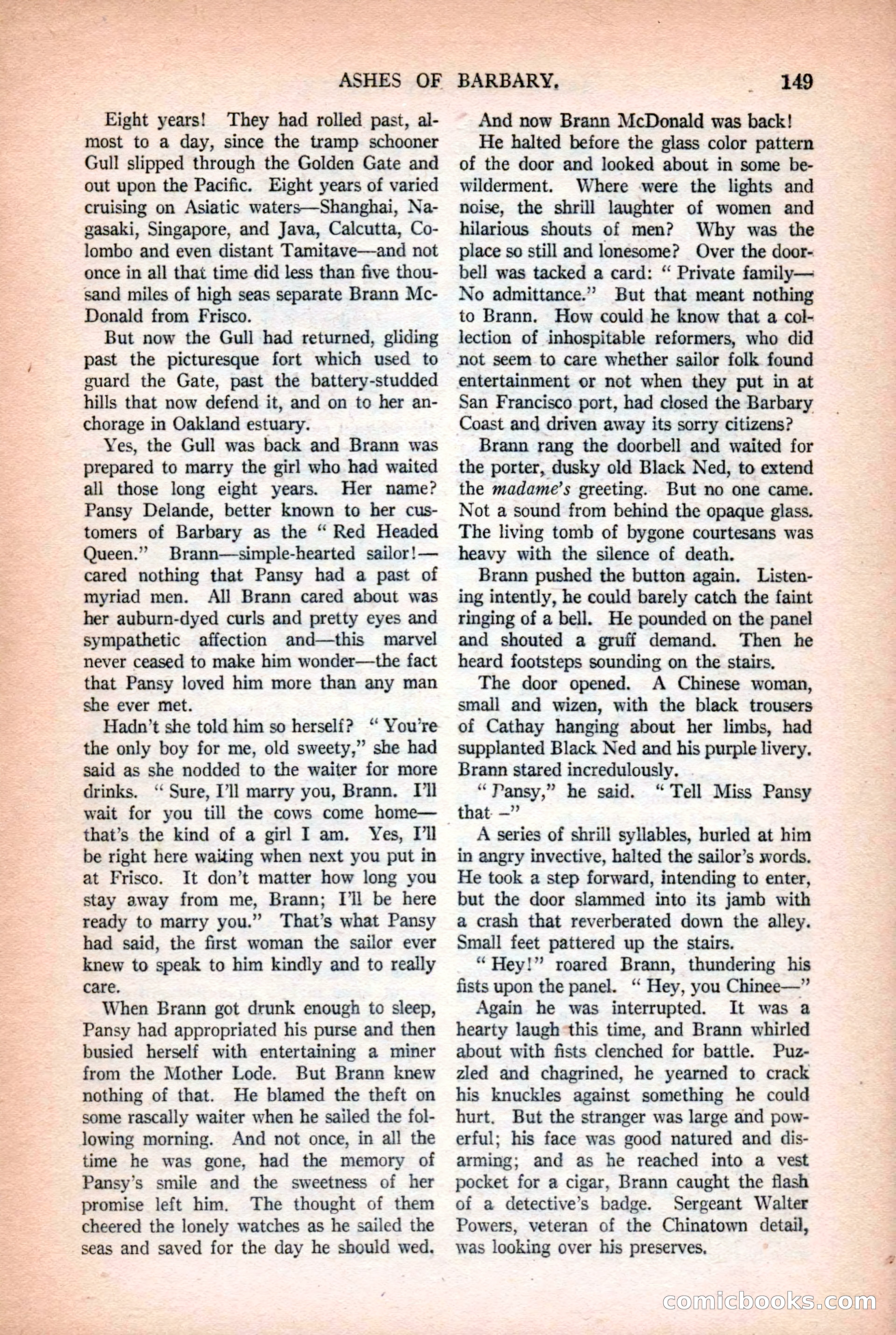
A restored page from Pulp Fiction, 1924. Page through the whole issue in the reader above.
📄 Transcribed text from this page (OCR, searchable)
Machine-transcribed from the original scan — historical spelling and the odd misread are preserved.
ASHES OF Eight years! They had rolled past, al- most to a day, since the tramp schooner Gull slipped through the Golden Gate and out upon the Pacific. Eight years of varied cruising on Asiatic waters—Shanghai, Na- gasaki, Singapore, and Java, Calcutta, Co- lombo and even distant Tamitave—and not once in all that time did less than five thou- sand miles of high seas separate Brann Mc- Donald from Frisco. But now the Gull had returned, gliding past the picturesque fort which used to guard the Gate, past the battery-studded hills that now defend it, and on to her an- chorage in Oakland estuary. Yes, the Gull was back and Brann was prepared to marry the girl who had waited all those long eight years. Her name? Pansy Delande, better known to her cus- tomers of Barbary as the “ Red Headed Queen.” Brann—simple-hearted sailor!— cared nothing that Pansy had a past of myriad men. All Brann cared about was her auburn-dyed curls and pretty eyes and sympathetic affection and—this marvel never ceased to make him wonder—the fact that Pansy loved him more than any man she ever met. Hadn’t she told him so herself? “ You’re the only boy for me, old sweety,” she had said as she nodded to the waiter for more drinks. ‘ Sure, I’ll marry you, Brann. T'll wait for you till the cows come home— that’s the kind of a girl I am. Yes, Ill be right here waiting when next you put in at Frisco. It don’t matter how long you stay away from me, Brann; I'll be here ready to marry you.” That’s what Pansy had said, the first woman the sailor ever knew to speak to him kindly and to really care. When Brann got drunk enough to sleep, Pansy had appropriated his purse and then busied herself with entertaining a miner from the Mother Lode. But Brann knew nothing of that. He blamed the theft on some rascally waiter when he sailed the fol- lowing morning. And not once, in all the time he was gone, had the memory of Pansy’s smile and the sweetness of her promise left him. The thought of them cheered the lonely watches as he sailed the seas and saved for the day he should wed. BARBARY. 149 And now Brann McDonald was back! He halted before the glass color pattern of the door and looked about in some be- wilderment. Where were the lights and noise, the shrill laughter of women and hilarious shouts of men? Why was the place so still and lonesome? Over the door- bell was tacked a card: “ Private family— No admittance.” But that meant nothing to Brann. How could he know that a col- lection of inhospitable reformers, who did not seem to care whether sailor folk found entertainment or not when they put in at San Francisco port, had closed the Barbary Coast and driven away its sorry citizens? Brann rang the doorbell and waited for the porter, dusky old Black Ned, to extend the madame’s greeting. But no one came. Not a sound from behind the opaque glass. The living tomb of bygone courtesans was heavy with the silence of death. Brann pushed the button again. Listen- ing intently, he could barely catch the faint ringing of a bell. He pounded on the panel and shouted a gruff demand. Then he heard footsteps sounding on the stairs, The door opened. A Chinese woman, small and wizen, with the black trousers of Cathay hanging about her limbs, had supplanted Black Ned and his purple livery. Brann stared incredulously. “Pansy,” he said. “ Tell Miss Pansy that: —” A series of shrill syllables, burled at him in angry invective, halted the sailor’s words. He took a step forward, intending to enter, but the door slammed into its jamb with a crash that reverberated down the alley. Small feet pattered up the stairs. “ Hey!” roared Brann, thundering his fists upon the panel. ‘“ Hey, you Chinee—” Again he was interrupted. It was a hearty laugh this time, and Brann whirled about with fists clenched for battle. Puz- zled and chagrined, he yearned to crack his knuckles against something he could hurt. But the stranger was large and pow- erful; his face was good natured and dis- arming; and as he reached into a vest pocket for a cigar, Brann caught the flash of a detective’s badge. Sergeant Walter Powers, veteran of the Chinatown detail, was looking over his preserves, COmMICMOoOoks (C@