
Pulp Fiction, 1924 · page 85 of 186
Argosy All-Story Weekly, May 3, 1924 — page 85: what you’re looking at
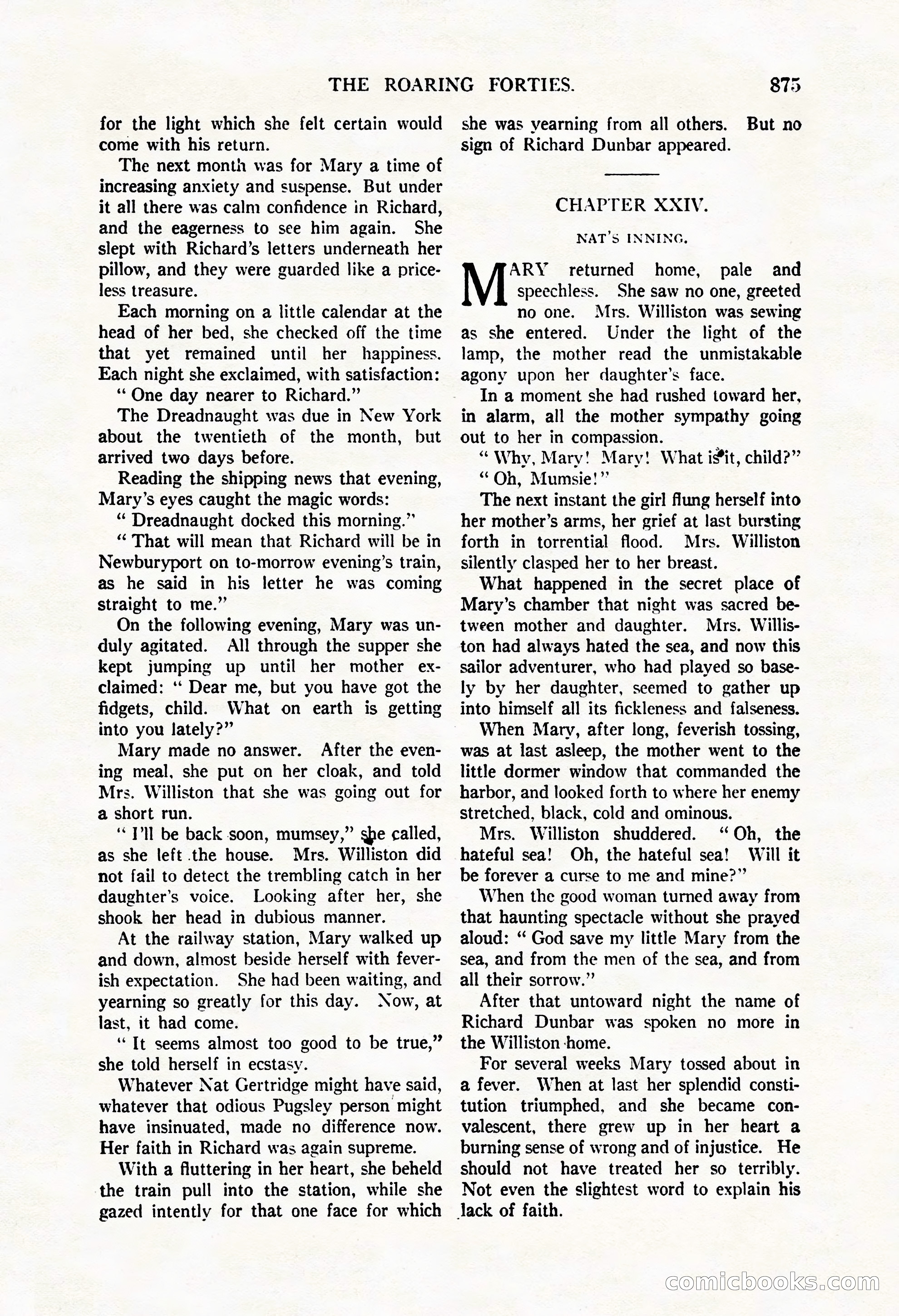
A restored page from Pulp Fiction, 1924. Page through the whole issue in the reader above.
📄 Transcribed text from this page (OCR, searchable)
Machine-transcribed from the original scan — historical spelling and the odd misread are preserved.
THE ROARING FORTIES. for the light which she felt certain would come with his return. The next month was for Mary a time of increasing anxiety and suspense. But under it all there was calm confidence in Richard, and the eagerness to see him again. She slept with Richard’s letters underneath her pillow, and they were guarded like a price- less treasure. Each morning on a little calendar at the head of her bed, she checked off the time that yet remained until her happiness. Each night she exclaimed, with satisfaction: ‘One day nearer to Richard.” The Dreadnaught was due in New York about the twentieth of the month, but arrived two days before. Reading the shipping news that evening, Mary’s eyes caught the magic words: “ Dreadnaught docked this morning.” “* That will mean that Richard will be in Newburyport on to-morrow evening’s train, as he said in his letter he was coming straight to me.” On the following evening, Mary was un- duly agitated. All through the supper she kept jumping up until her mother ex- claimed: ‘‘ Dear me, but you have got the fidgets, child. What on earth is getting into you lately?” Mary made no answer. After the even- ing meal, she put on her cloak, and told Mrs. Williston that she was going out for a short run. ‘Tl be back soon, mumsey,” she called, as she left the house. Mrs. Williston did not fail to detect the trembling catch in her daughter’s voice. Looking after her, she shook her head in dubious manner. At the railway station, Mary walked up and down, almost beside herself with fever- ish expectation. She had been waiting, and yearning so greatly for this day. Now, at last, it had come. ‘Tt seems almost too good to be true, she told herself in ecstasy. Whatever Nat Gertridge might have said, whatever that odious Pugsley person might have insinuated, made no difference now. Her faith in Richard was again supreme. With a fluttering in her heart, she beheld the train pull into the station, while she gazed intently for that one face for which 99 875 she was vearning from all others. But no sign of Richard Dunbar appeared. CHAPTER XXIV. NAT’S INNING, ARY returned home, pale and speechless. She saw no one, greeted no one. Mrs. Williston was sewing as she entered. Under the light of the lamp, the mother read the unmistakable agony upon her daughter’s face. In a moment she had rushed toward her, in alarm, all the mother sympathy going out to her in compassion. “Why, Mary! Mary! What isit, child?” “Oh, Mumsie!”’ The next instant the girl flung herself into her mother’s arms, her grief at last bursting forth in torrential flood. Mrs. Williston silently clasped her to her breast. What happened in the secret place of Mary’s chamber that night was sacred be- tween mother and daughter. Mrs. Willis- ton had always hated the sea, and now this sailor adventurer, who had played so base- ly by her daughter, seemed to gather up into himself all its fickleness and falseness. When Mary, after long, feverish tossing, was at last asleep, the mother went to the little dormer window that commanded the harbor, and looked forth to where her enemy stretched, black, cold and ominous. Mrs. Williston shuddered. ‘Oh, the hateful sea! Oh, the hateful sea! Will it be forever a curse to me and mine?” When the good woman turned away from that haunting spectacle without she prayed aloud: “ God save my little Mary from the sea, and from the men of the sea, and from all their sorrow.” After that untoward night the name of Richard Dunbar was spoken no more in the Williston -home. For several weeks Mary tossed about in a fever. When at last her splendid consti- tution triumphed, and she became con- valescent, there grew up in her heart a burning sense of wrong and of injustice. He should not have treated her so terribly. Not even the slightest word to explain his Jack of faith. COMG DOO! (©