
Pulp Fiction, 1924 · page 8 of 166
Argosy All-Story Weekly, February 23, 1924 — page 8: what you’re looking at
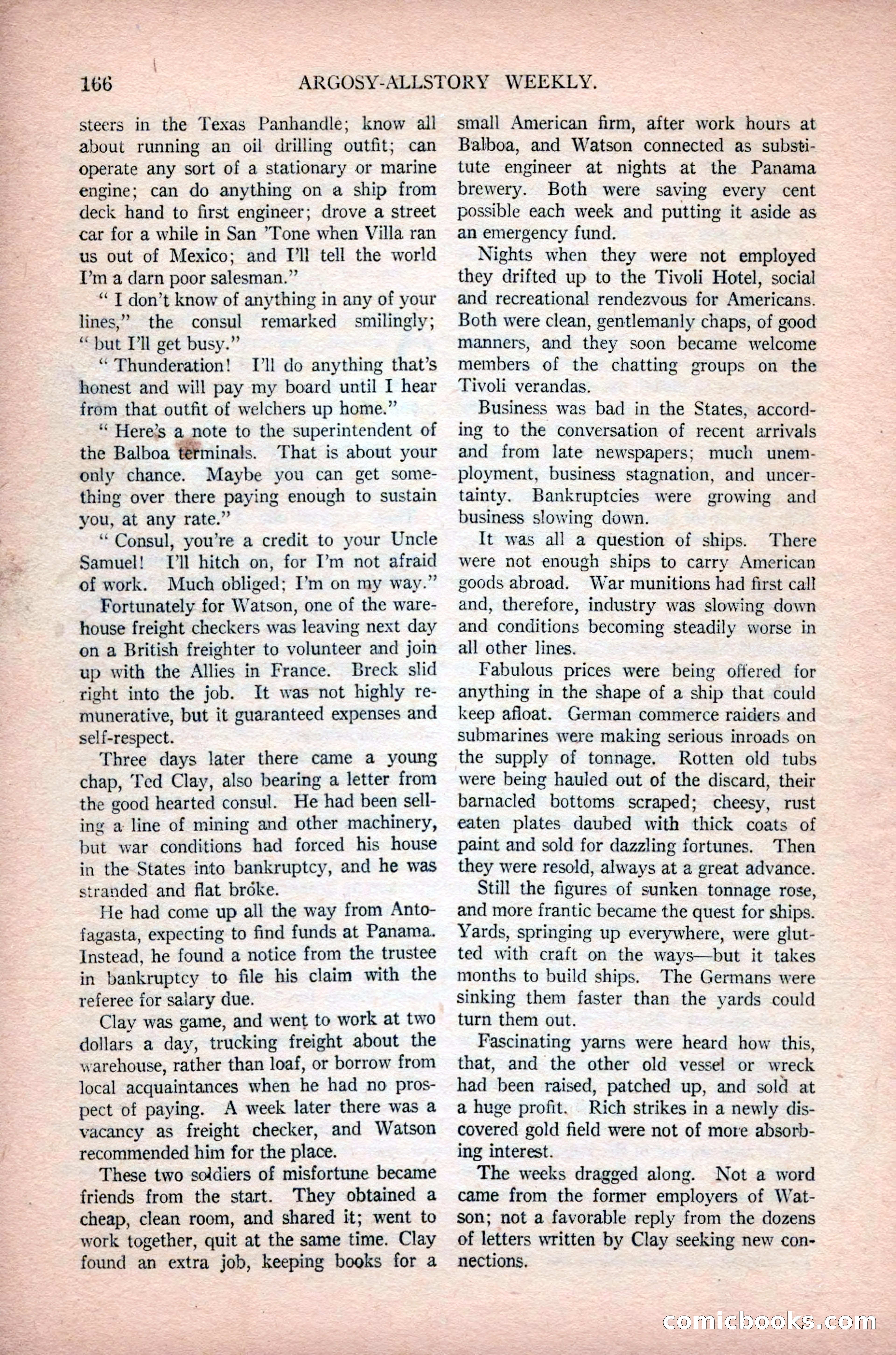
A restored page from Pulp Fiction, 1924. Page through the whole issue in the reader above.
📄 Transcribed text from this page (OCR, searchable)
Machine-transcribed from the original scan — historical spelling and the odd misread are preserved.
_ right into the job. 166 steers in the Texas Panhandle; know all about running an oil drilling outfit; can operate any sort of a stationary or marine engine; can do anything on a ship from deck hand to first engineer; drove a street car for a while in San ’Tone when Villa ran us out of Mexico; and Il! tell the world I’m a darn poor salesman.” “ T don’t know of anything in any of your lines,” the consul remarked smilingly; “but Pll get busy.” “ Thunderation! Ill do anything that’s honest and will pay my board until I hear from that outfit of welchers up home.” “ Here’s a note to the superintendent of the Balboa terminals. That is about your only chance. Maybe you can get some- thing over there paying enough to sustain you, at any rate.” “Consul, you’re a credit to your Uncle Samuel! Ill hitch on, for I’m not afraid of work. Much obliged; I’m on my way.” Fortunately for Watson, one of the ware- house freight checkers was leaving next day on a British freighter to volunteer and join up with the Allies in France. Breck slid It was not highly re- munerative, but it guaranteed expenses and self-respect. Three days later there came a young chap, Ted Clay, also bearing a letter from the good hearted consul. He had been sell- ing a line of mining and other machinery, but war conditions had forced his house in the States into bankruptcy, and he was stranded and flat broke. He had come up all the way from Anto- fagasta, expecting to find funds at Panama. Instead, he found a notice from the trustee in bankruptcy to file his claim with the referee for salary due. Clay was game, and went to work at two dollars a day, trucking freight about the warehouse, rather than loaf, or borrow from local acquaintances when he had no pros- pect of paying. A week later there was a vacancy as freight checker, and Watson recommended him for the place. These two soldiers of misfortune became friends from the start. They obtained a cheap, clean room, and shared it; went to work together, quit at the same time. Clay found an extra job, keeping books for a ARGOSY-ALLSTORY WEEKLY. small American firm, after work hours at Balboa, and Watson connected as substi- tute engineer at nights at the Panama brewery. Both were saving every cent possible each week and putting it aside as an emergency fund. Nights when they were not employed they drifted up to the Tivoli Hotel, social and recreational rendezvous for Americans. Both were clean, gentlemanly chaps, of good manners, and they soon became welcome members of the chatting groups on the Tivoli verandas. Business was bad in the States, accord- ing to the conversation of recent arrivals and from late newspapers; much unem- ployment, business stagnation, and uncer- tainty. Bankruptcies were growing and business slowing down. It was all a question of ships. There were not enough ships to carry American goods abroad. War munitions had first call and, therefore, industry was slowing down and conditions becoming steadily worse in all other lines. Fabulous prices were being offered for anything in the shape of a ship that could keep afloat. German commerce raiders and submarines were making serious inroads on the supply of tonnage. Rotten old tubs were being hauled out of the discard, their barnacled bottoms scraped; cheesy, rust eaten plates daubed with thick coats of paint and sold for dazzling fortunes. Then they were resold, always at a great advance. Still the figures of sunken tonnage rose, and more frantic became the quest for ships. Yards, springing up everywhere, were glut- ted with craft on the ways—but it takes months to build ships. The Germans were sinking them faster than the yards could turn them out. Fascinating yarns were heard how this, that, and the other old vessel or wreck had been raised, patched up, and sold at a huge profit. Rich strikes in a newly dis- covered gold field were not of more absorb- ing interest. The weeks dragged along. Not a word came from the former employers of Wat- son; not a favorable reply from the dozens of letters written by Clay seeking new con- nections. Gomichbooks (Q) (E@)