
Pulp Fiction, 1923 · page 69 of 184
Argosy All-Story Weekly, January 13, 1923 — page 69: what you’re looking at
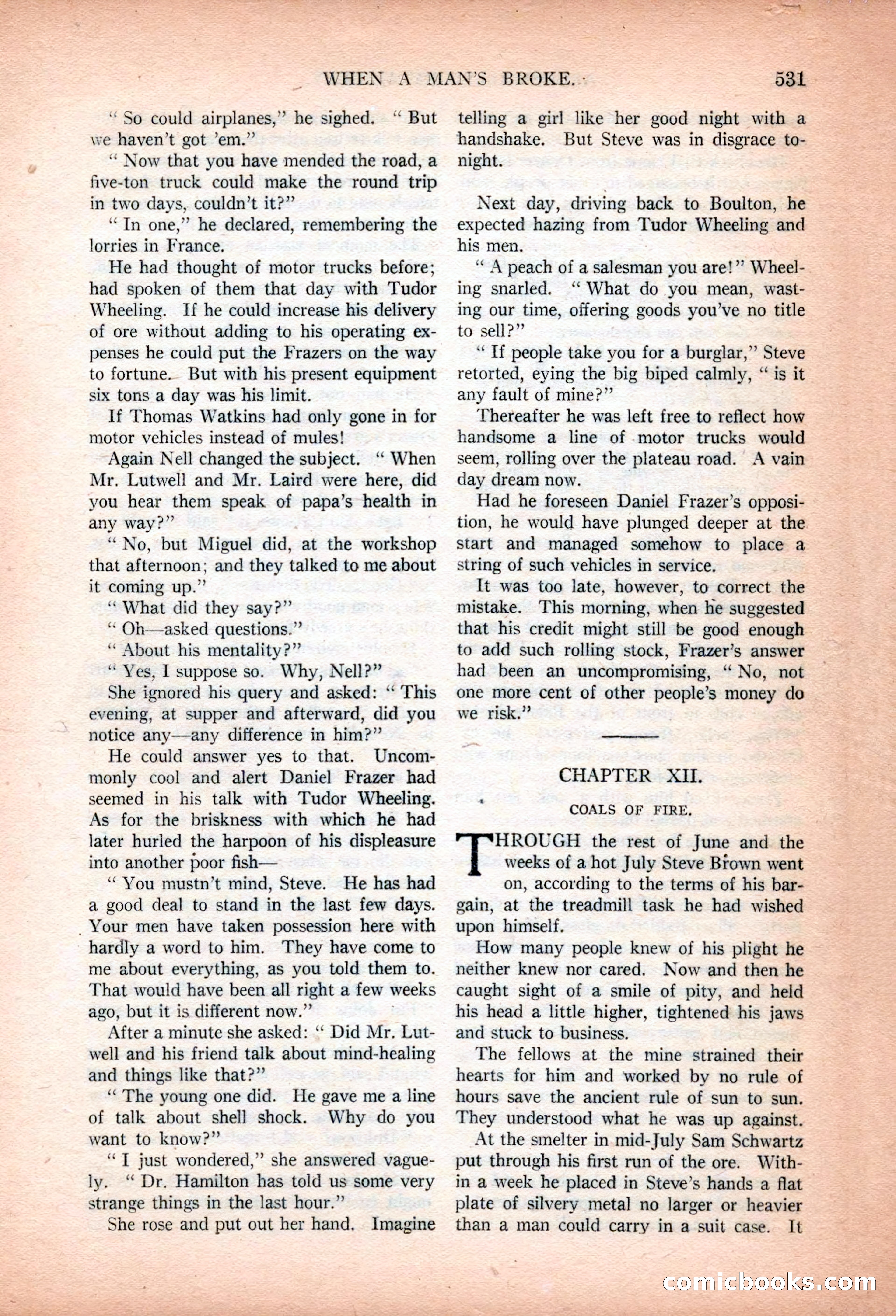
A restored page from Pulp Fiction, 1923. Page through the whole issue in the reader above.
📄 Transcribed text from this page (OCR, searchable)
Machine-transcribed from the original scan — historical spelling and the odd misread are preserved.
WHEN A MAN’S BROKE. - ‘So could airplanes,” he sighed. “ But we haven’t got ’em.” ‘“ Now that you have mended the road, a five-ton truck could make the round trip in two days, couldn’t it?” ‘In one,” he declared, remembering the lorries in France. He had thought of motor trucks before; had spoken of them that day with Tudor Wheeling. If he could increase his delivery of ore without adding to his operating ex- penses he could put the Frazers on the way to fortune.. But with his present equipment six tons a day was his limit. If Thomas Watkins had only gone in for motor vehicles instead of mules! Again Nell changed the subject. ‘“ When Mr. Lutwell and Mr. Laird were here, did you hear them speak of papa’s health in any way?” “No, but Miguel did, at the workshop that afternoon; and they talked to me about it coming up.” ‘What did they say?” ‘“ Oh—asked questions.” “ About his mentality?” ‘Yes, I suppose so. Why, Nell?” She ignored his query and asked: “‘ This evening, at supper and afterward, did you notice any—any difference in him?” He could answer yes to that. Uncom- monly cool and alert Daniel Frazer had seemed in his talk with Tudor Wheeling. As for the briskness with which he had later hurled the harpoon of his displeasure into another poor fish— “You mustn’t mind, Steve. He has had a good deal to stand in the last few days. _ Your men have taken possession here with hardly a word to him. They have come to me about everything, as you told them to. That would have been all right a few weeks ago, but it is different now.” : After a minute she asked: ‘“ Did Mr. Lut- well and his friend talk about mind-healing and things like that?” ‘““The young one did. He gave me a line of talk about shell shock. Why do you want to know?” ‘“‘T just wondered,” she answered vague- ly. ‘‘ Dr. Hamilton has told us some very strange things in the last hour.” She rose and put out her hand, Imagine telling a girl like her good night with a handshake. But Steve was in disgrace to- night. Next day, driving back to Boulton, he expected hazing from Tudor Wheeling and his men. ‘* A peach of a salesman you are!’’ Wheel- ing snarled. “‘ What do you mean, wast- ing our time, offering goods you’ve no title to sell?” “Tf people take you for a burglar,’ Steve retorted, eying the big biped calmly, “ is it any fault of mine?” Thereafter he was left free to reflect how handsome a line of motor trucks would seem, rolling over the plateau road. <A vain day dream now. 3 Had he foreseen Daniel Frazer’s opposi- tion, he would have plunged deeper at the start and managed somehow to place a string of such vehicles in service. It was too late, however, to correct the mistake. This morning, when he suggested that his credit might still be good enough to add such rolling stock, Frazer’s answer had been an uncompromising, “‘ No, not one more cent of other people’s money do we risk.” CHAPTER XII. COALS OF FIRE. HROUGH the rest of June and the e& weeks of a hot July Steve Brown went on, according to the terms of his bar- gain, at the treadmill task he had wished upon himself. How many people knew of his plight he neither knew nor cared. Now and then he caught sight of a smile of pity, and held his head a little higher, tightened his jaws and stuck to business. The fellows at the mine strained their hearts for him and worked by no rule of hours save the ancient rule of sun to sun. They understood what he was up against. At the smelter in mid-July Sam Schwartz put through his first run of the ore. With- in a week he placed in Steve’s hands a flat plate of silvery metal no larger or heavier than a man could carry in a suit case. It bys) a GComirceboo cS