
Pulp Fiction, 1920 · page 27 of 176
Argosy, Vol. 117, No. 2 — page 27: what you’re looking at
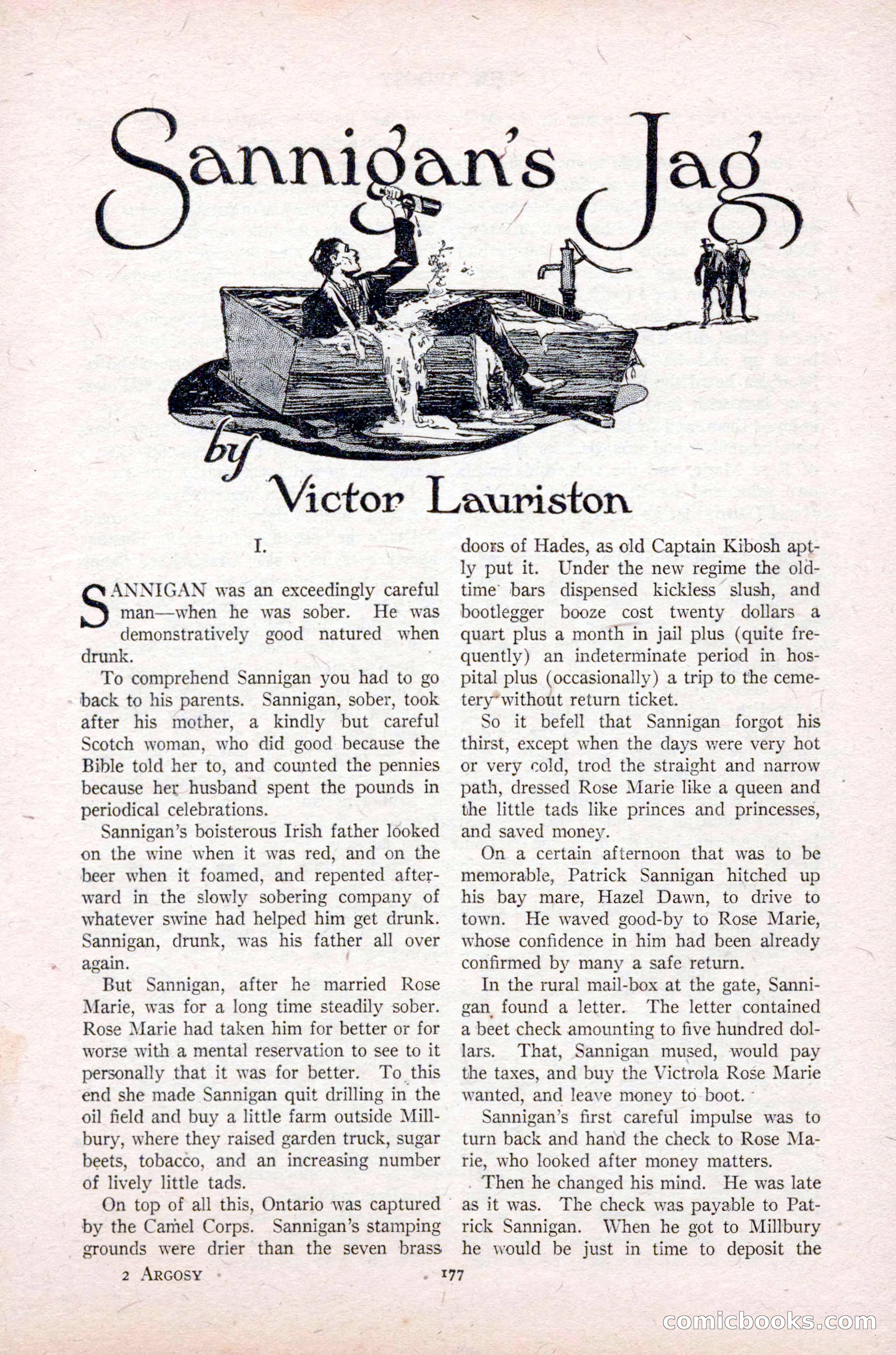
A restored page from Pulp Fiction, 1920. Page through the whole issue in the reader above.
📄 Transcribed text from this page (OCR, searchable)
Machine-transcribed from the original scan — historical spelling and the odd misread are preserved.
- ANNIGAN was an exceedingly careful man—when he was sober. He was demonstratively good natured when drunk. : To comprehend Sannigan you had to go back to his parents. Sannigan, sober, took after his mother, a kindly but careful Scotch woman, who did good because the Bible told her to, and counted the pennies because her husband spent the pounds in periodical celebrations. Sannigan’s boisterous Irish father looked on the wine when it was red, and on the beer when it foamed, and repented after- ward in the slowly sobering company of whatever swine had helped him get drunk. Sannigan, drunk, was his father all over again. But Sannigan, after he married Rose Marie, was for a long time steadily sober. Rose Marie had taken him for better or for worse with a mental reservation to see to it personally that it was for better. To this end she made Sannigan quit drilling in the oil field and buy a little farm outside Muill- bury, where they raised garden truck, sugar beets, tobacco, and an increasing number of lively little tads. On top of all this, Ontario was captured — by the Camel Corps. Sannigan’s stamping grounds were drier than the seven brass 2 ARGOSY Victor Lauriston doors of Hades, as old Captain Kibosh apt- ly put it. Under the new regime the old- time’ bars dispensed kickless slush, and bootlegger booze cost twenty dollars a quart plus a month in jail plus (quite fre- quently) an indeterminate period in hos- pital plus (occasionally) a trip to the ceme- tery’without return ticket. So it befell that Sannigan forgot his thirst, except when the days were very hot or very cold, trod the straight and narrow path, dressed Rose Marie like a queen and the little tads like princes and princesses, and saved money. On a certain afternoon that was to be memorable, Patrick Sannigan hitched up his bay mare, Hazel Dawn, to drive to town. He waved good-by to Rose Marie, whose confidence in him had been already confirmed by many a safe return. In the rural mail-box at the gate, Sanni- gan found a letter. The letter contained a beet check amounting to five hundred dol- lars. That, Sannigan mused, would pay the taxes, and buy the Victrola Rose Marie wanted, and leave money to boot. - Sannigan’s first careful impulse was to turn back and hand the check to Rose Ma- rie, who looked after money matters. Then he changed his mind. He was late as it was. The check was payable to Pat- rick Sannigan. When he got to Millbury he would be just in time to deposit the 177 Go 00) (C@