
Pulp Fiction, 1919 · page 152 of 196
Argosy, Vol. 112, No. 2 — page 152: what you’re looking at
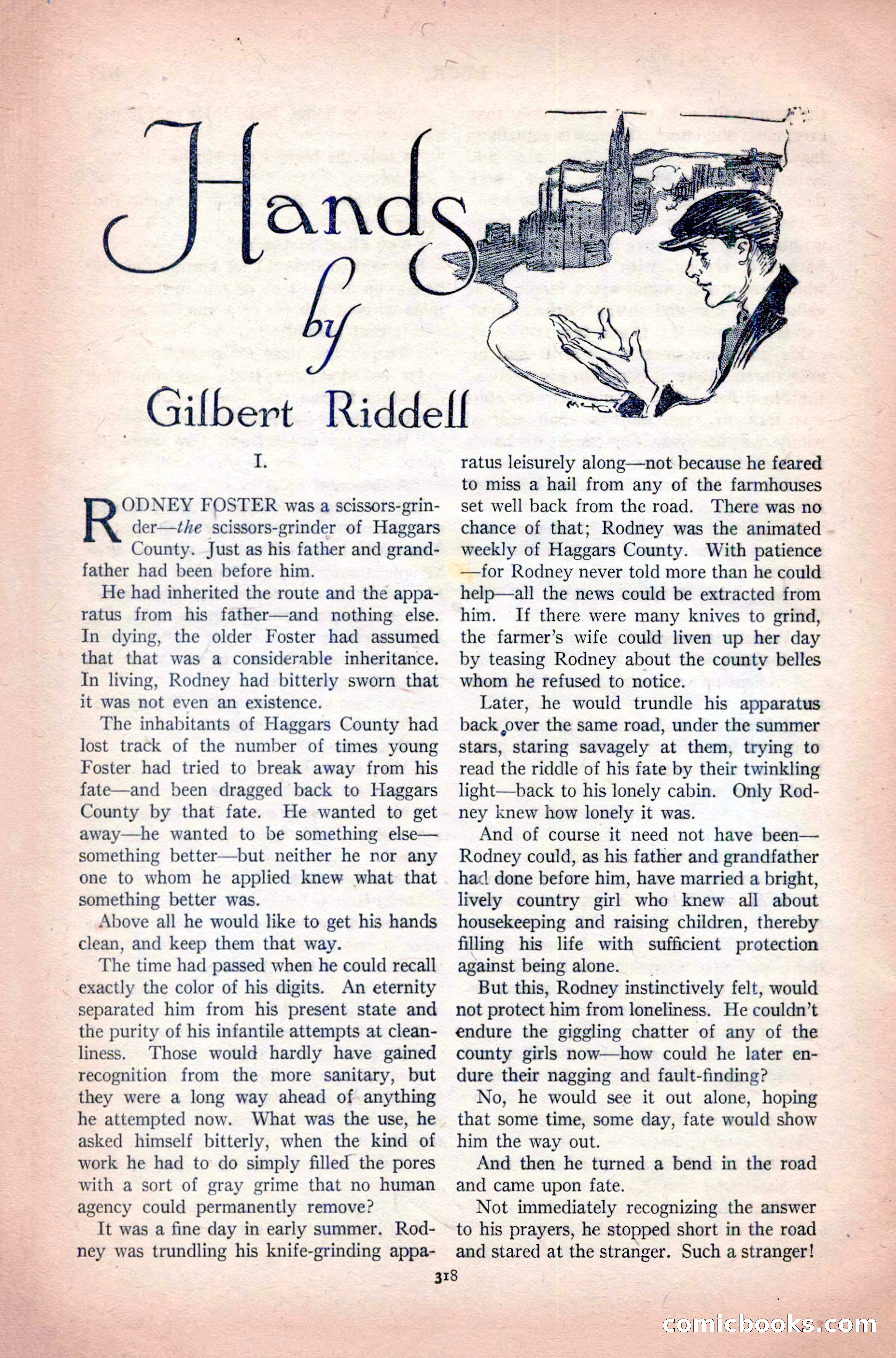
A restored page from Pulp Fiction, 1919. Page through the whole issue in the reader above.
📄 Transcribed text from this page (OCR, searchable)
Machine-transcribed from the original scan — historical spelling and the odd misread are preserved.
7 Gilbert Ridde ODNEY FOSTER was a scissors-grin- der—the scissors-grinder of Haggars County. Just as his father and grand- father had been before him. He had inherited the route and the appa- ratus from his father—and nothing else. In dying, the older Foster had assumed that that was a considerable inheritance. In living, Rodney had bitterly sworn that it was not even an existence. The inhabitants of Haggars County had lost track of the number of times young Foster had tried to break away from his fate—and been dragged back to Haggars County by that fate. He wanted to get away—he wanted to be something else— something better—but neither he nor any one to whom he applied knew what that something better was. Above all he would like to get his hands clean, and keep them that way. The time had passed when he could recall _ exactly the color of his digits. An eternity separated him from his present state and the purity of his infantile attempts at clean- liness. Those would hardly have gained recognition from the more sanitary, but they were a long way ahead of anything he attempted now. What was the use, he asked himself bitterly, when the kind of work he had to do simply filled the pores with a sort of gray grime that no human agency could permanently remove? It was a fine day in early summer. Rod- ney was trundling his knife-grinding appa- [{ ratus leisurely along—not because he feared to miss a hail from any of the farmhouses set well back from the road. There was no chance of that; Rodney was the animated weekly of Haggars County. With patience —for Rodney never told more than he could help—all the news could be extracted from him. If there were many knives to grind, the farmer’s wife could liven up her day by teasing Rodney about the county belles whom he refused to notice. Later, he would trundle his apparatus back ,over the same road, under the summer stars, staring savagely at them, trying to read the riddle of his fate by their twinkling light—back to his lonely cabin. Only Rod- ney knew how lonely it was. And of course it need not have been— Rodney could, as his father and grandfather hac done before him, have married a bright, lively country girl who knew all about housekeeping and raising children, thereby filling his life with sufficient protection against being alone. _ But this, Rodney instinctively felt, would not protect him from loneliness. He couldn’t endure the giggling chatter of any of the county girls now—how could he later en- dure their nagging and fault-finding? No, he would see it out alone, hoping that some time, some day, fate would show him the way out. And then he turned a bend in the road and came upon fate. Not immediately recognizing the answer to his prayers, he stopped short in the road and stared at the stranger. Such a stranger! 318 Comicbooks.com