
Pulp Fiction, 1916 · page 24 of 204
The Argosy, Vol. 83 No. 1 — page 24: what you’re looking at
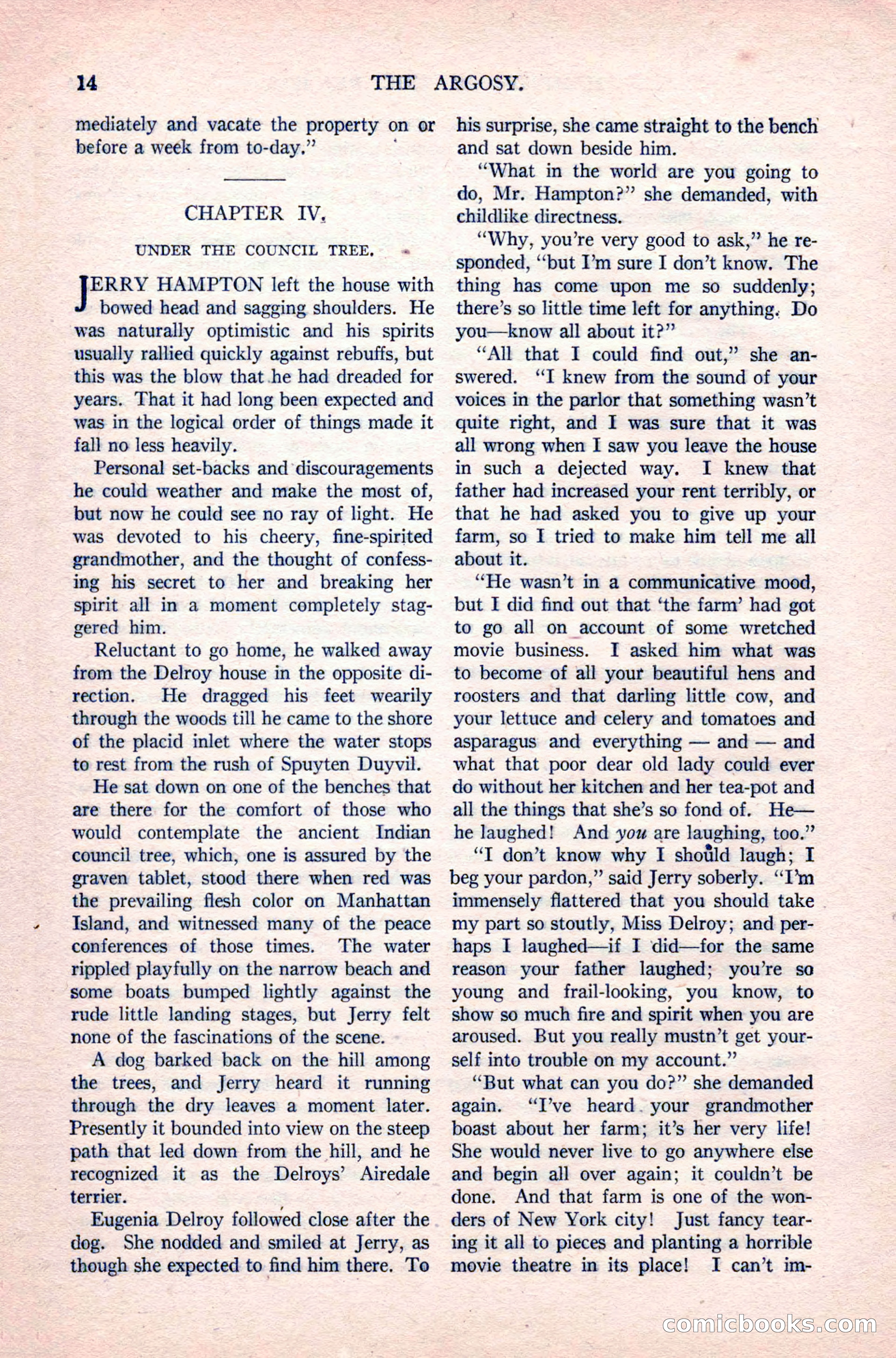
A restored page from Pulp Fiction, 1916. Page through the whole issue in the reader above.
📄 Transcribed text from this page (OCR, searchable)
Machine-transcribed from the original scan — historical spelling and the odd misread are preserved.
14 mediately and vacate the property on or before a week from to-day.” , CHAPTER IV. UNDER THE COUNCIL TREE, « ERRY HAMPTON left the house with bowed head and sagging shoulders. He was naturally optimistic and his spirits usually rallied quickly against rebuffs, but this was the blow that he had dreaded for years. That it had long been expected and was in the logical order of things made it fall no less heavily. Personal set-backs and discouragements he could weather and make the most of, but now he could see no ray of light. He was devoted to his cheery, fine-spirited grandmother, and the thought of confess- ing his secret to her and breaking her spirit all in a moment completely stag- gered him. Reluctant to go home, he walked away from the Delroy house in the opposite di- rection. He dragged his feet wearily through the woods till he came to the shore of the placid inlet where the water stops to rest from the rush of Spuyten Duyvil. He sat down on one of the benches that are there for the comfort of those who would contemplate the ancient Indian council tree, which, one is assured by the graven tablet, stood there when red was the prevailing flesh color on Manhattan Island, and witnessed many of the peace conferences of those times. The water rippled playfully on the narrow beach and some boats bumped lightly against the rude little landing stages, but Jerry felt none of the fascinations of the scene. A dog barked back on the hill among the trees, and Jerry heard it running through the dry leaves a moment later. Presently it bounded into view on the steep path that led down from the hill, and he recognized it as the Delroys’ Airedale terrier. Eugenia Delroy followed close after the dog. She nodded and smiled at Jerry, as though she expected to find him there. To THE ARGOSY. his surprise, she came straight to the bench and sat down beside him. “What in the world are you going to do, Mr. Hampton?” she demanded, with childlike directness. “Why, you’re very good to ask,” he re- sponded, “‘but I’m sure I don’t know. The thing has come upon me so suddenly; there’s so little time left for anything. Do you—know all about it?” “All that I could find out,” she an- swered. “TI knew from the sound of your voices in the parlor that something wasn’t quite right, and I was sure that it was all wrong when I saw you leave the house in such a dejected way. I knew that father had increased your rent terribly, or that he had asked you to give up your farm, so I tried to make him tell me all about it. “He wasn’t in a communicative mood, but I did find out that ‘the farm’ had got to go all on account of some wretched movie business. I asked him what was to become of all your beautiful hens and roosters and that darling little cow, and your lettuce and celery and tomatoes and asparagus and everything — and — and what that poor dear old lady could ever do without her kitchen and her tea-pot and all the things that she’s so fond of. He— he laughed! And you are laughing, too.” “T don’t know why I shotld laugh; I beg your pardon,” said Jerry soberly. “I’m immensely flattered that you should take my part so stoutly, Miss Delroy; and per- haps I laughed—if I did—for the same reason your father laughed; you’re so young and frail-looking, you know, to show so much fire and spirit when you are aroused. But you really mustn’t get your- self into trouble on my account.” “But what can you do?” she demanded again. “I’ve heard. your grandmother boast about her farm; it’s her very life! She would never live to go anywhere else and begin all over again; it couldn’t be done. And that farm is one of the won- ders of New York city! Just fancy tear- ing it all to pieces and planting a horrible movie theatre in its place! I can’t im- CORMICLOOLKS (C@)