
Pulp Fiction, 1916 · page 178 of 204
The Argosy, Vol. 83 No. 1 — page 178: what you’re looking at
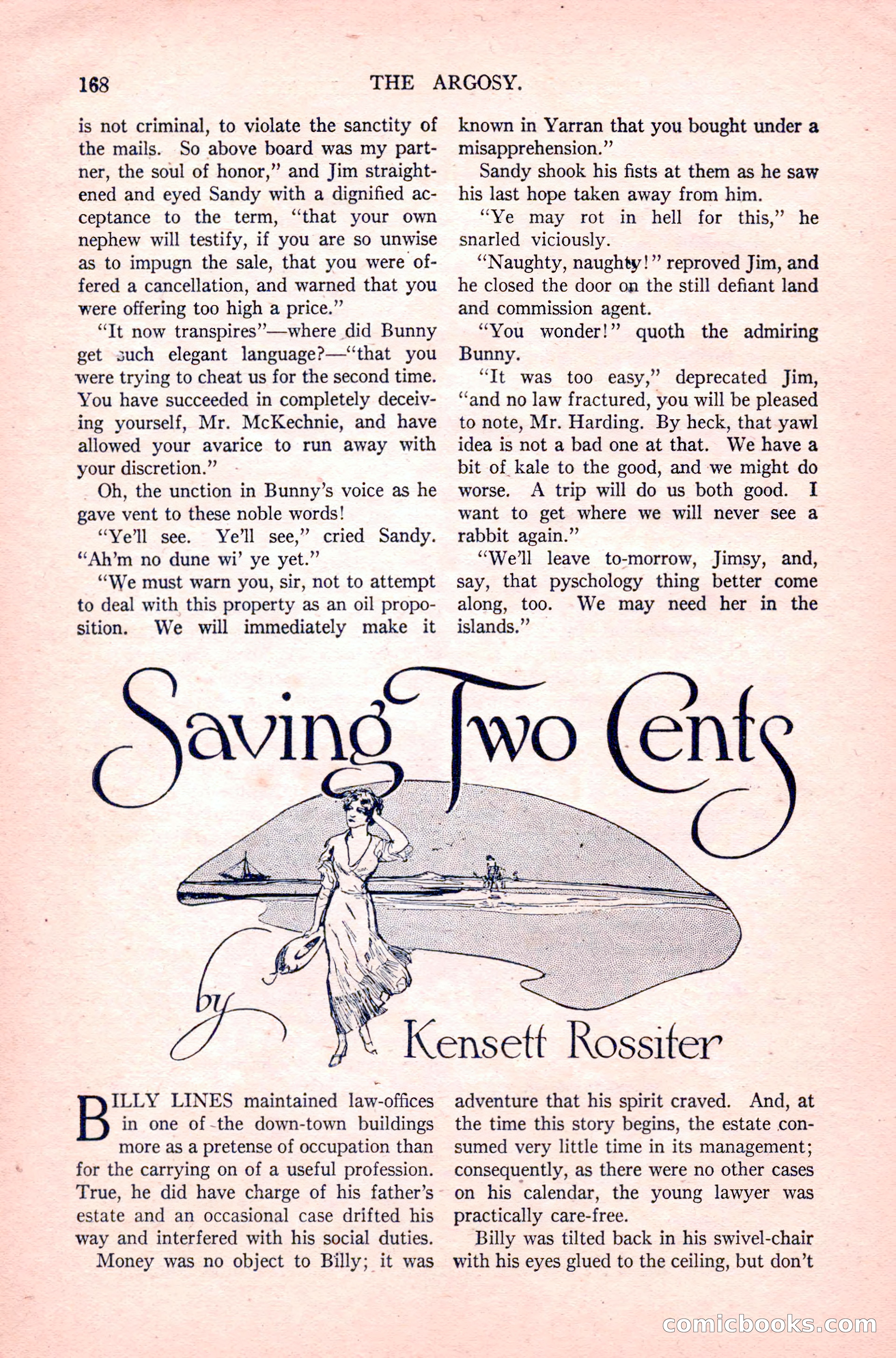
A restored page from Pulp Fiction, 1916. Page through the whole issue in the reader above.
📄 Transcribed text from this page (OCR, searchable)
Machine-transcribed from the original scan — historical spelling and the odd misread are preserved.
168 is not criminal, to violate the sanctity of the mails. So above board was my part- ner, the soul of honor,” and Jim straight- ened and eyed Sandy with a dignified ac- ceptance to the term, “that your own nephew will testify, if you are so unwise as to impugn the sale, that you were of- fered a cancellation, and warned that you were offering too high a price.” “Tt now transpires”—where did Bunny get such elegant language?—“that you were trying to cheat us for the second time. You have succeeded in completely deceiv- ing yourself, Mr. McKechnie, and have allowed your avarice to run away with your discretion.” Oh, the unction in Bunny’s voice as he gave vent to these noble words! “Ve'll see. Ye'll see,” cried Sandy. *‘Ah’m no dune wi’ ye yet.” ‘“‘We must warn you, sir, not to attempt to deal with this property as an oil propo- sition. We will immediately make it THE ARGOSY. known in Yarran that you bought under a misapprehension.” Sandy shook his fists at them as he saw his last hope taken away from him. “Ye may rot in hell for this,” he snarled viciously. “Naughty, naughty!” reproved Jim, and he closed the door on the still defiant land and commission agent. “You wonder!” quoth the admiring Bunny. “It was too easy,” deprecated Jim, “and no law fractured, you will be pleased to note, Mr. Harding. By heck, that yawl idea is not a bad one at that. We have a bit of kale to the good, and we might do worse. A trip will do us both good. I want to get where we will never see a rabbit again.” “We'll leave to-morrow, Jimsy, and, say, that pyschology thing better come along, too. We may need her in the islands.” Kensett Rossiter ILLY LINES maintained law-offices in one of-the down-town buildings more as a pretense of occupation than for the carrying on of a useful profession. True, he did have charge of his father’s estate and an occasional case drifted his way and interfered with his social duties. Money was no object to Billy; it was adventure that his spirit craved. And, at the time this story begins, the estate con- sumed very little time in its management; consequently, as there were no other cases on his calendar, the young lawyer was practically care-free. Billy was tilted back in his swivel-chair with his eyes glued to the ceiling, but don’t GomiGcbooks (C@