
Pulp Fiction, 1915 · page 207 of 246
The Argosy, September 1915 — page 207: what you’re looking at
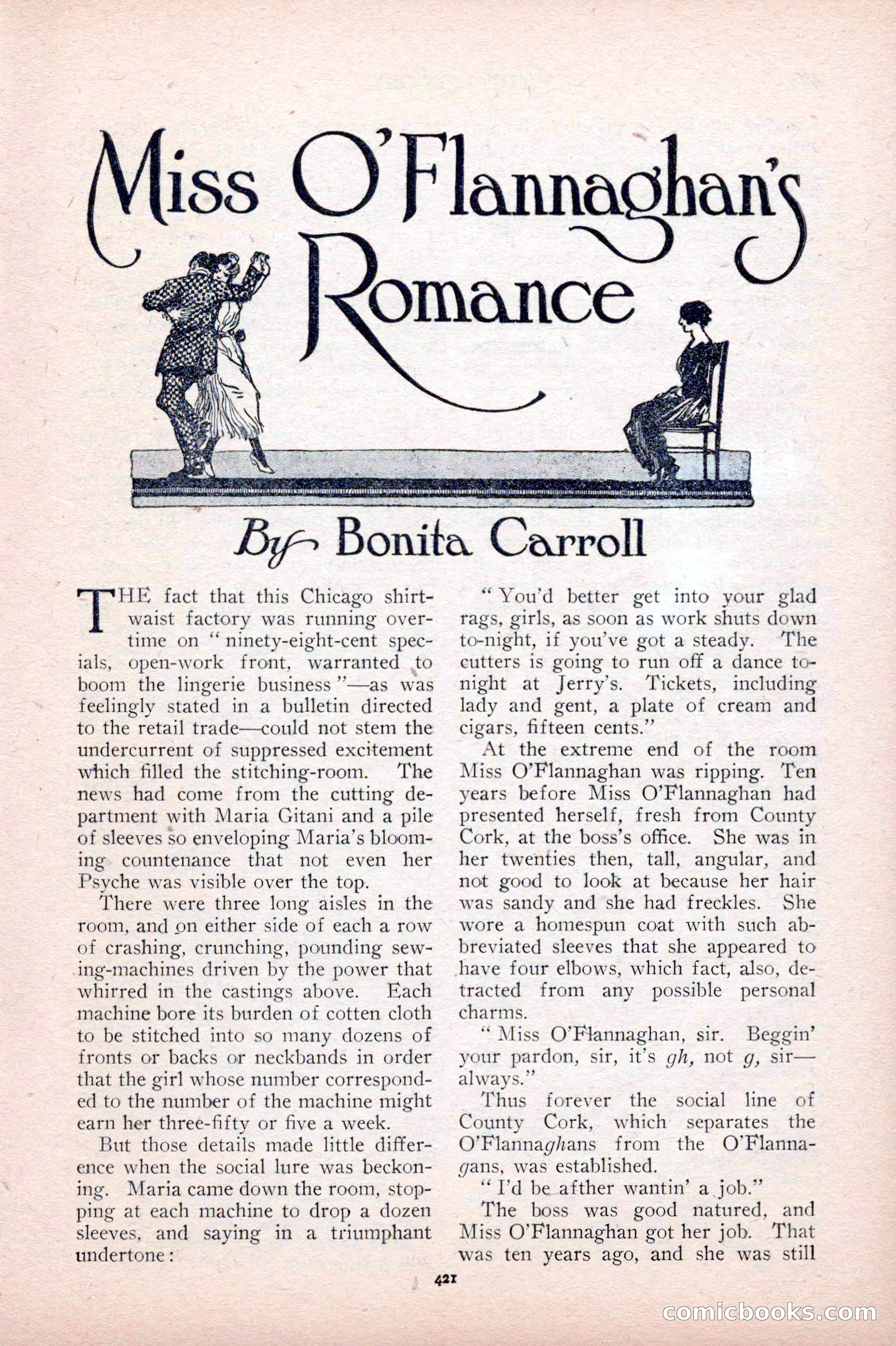
A restored page from Pulp Fiction, 1915. Page through the whole issue in the reader above.
📄 Transcribed text from this page (OCR, searchable)
Machine-transcribed from the original scan — historical spelling and the odd misread are preserved.
Y ; H i ‘ a . . r “" Hs qeebeenlMARALLATTCUATOMA at gccec raged treaty alesea esti atr sarge kre igemnliPrmETE Hd TC EMANNEND LBERE WIND TE MLD N IP iUeENaEoat Hina ueTm APG N ETE suyeNLp veya muveRDettatMbaijes) dibs DUT ie Pe ele CT | By Bonita. Carroll HE fact that this Chicago shirt- gs waist factory was running over- time on “ ninety-eight-cent spec- lals, open-work front, warranted ,to boom the lingerie business ”’—as was feelingly stated in a bulletin directed to the retail trade—could not stem the undercurrent of suppressed excitement which filled the stitching-room. The news had come from the cutting de- partment with Maria Gitani and a pile of sleeves so enveloping Maria’s bloom- ing countenance that not even her Psyche was visible over the top. There were three long aisles in the room, and on either side of each a row of crashing, crunching, pounding sew- ing-machines driven by the power that whirred in the castings above. Each machine bore its burden of cotten cloth to be stitched into so many dozens of fronts or backs or neckbands in order that the girl whose number correspond- ed to the number of the machine might earn her three-fifty or five a week. But those details made little differ- ence when the social lure was beckon- ing. Maria came down the room, stop- ping at each machine to drop a dozen sleeves, and saying in a triumphant undertone: “You'd better get into your glad rags, girls, as soon as work shuts down to-night, if you’ve got a steady. ‘The cutters is going to run off a dance to- night at Jerry’s. ‘Tickets, including lady and gent, a plate of cream and cigars, fifteen cents.” At the extreme end of the room Miss O’Flannaghan was ripping. Ten years before Miss O’Flannaghan had presented herself, fresh from County Cork, at the boss’s office. She was in her twenties then, tall, angular, and not good to look at because her hair was sandy and she had freckles. She wore a homespun coat with such ab- breviated sleeves that she appeared to have four elbows, which fact, also, de- tracted from any possible personal charms. ‘Miss O’Flannaghan, sir. Beggin’ your pardon, sir, it’s gh, not g, sir— always.” Thus forever the social line of County Cork, which separates the O’Flannaghans from the O’Flanna- gans, was established. “Td be afther wantin’ a job.” The boss was good natured, and Miss O’Flannaghan got her job. That was ten years ago, and she was still COPMICLOOOKS G (C@)