
Pulp Fiction, 1914 · page 230 of 268
The Argosy, Vol. 75, No. 4 — page 230: what you’re looking at
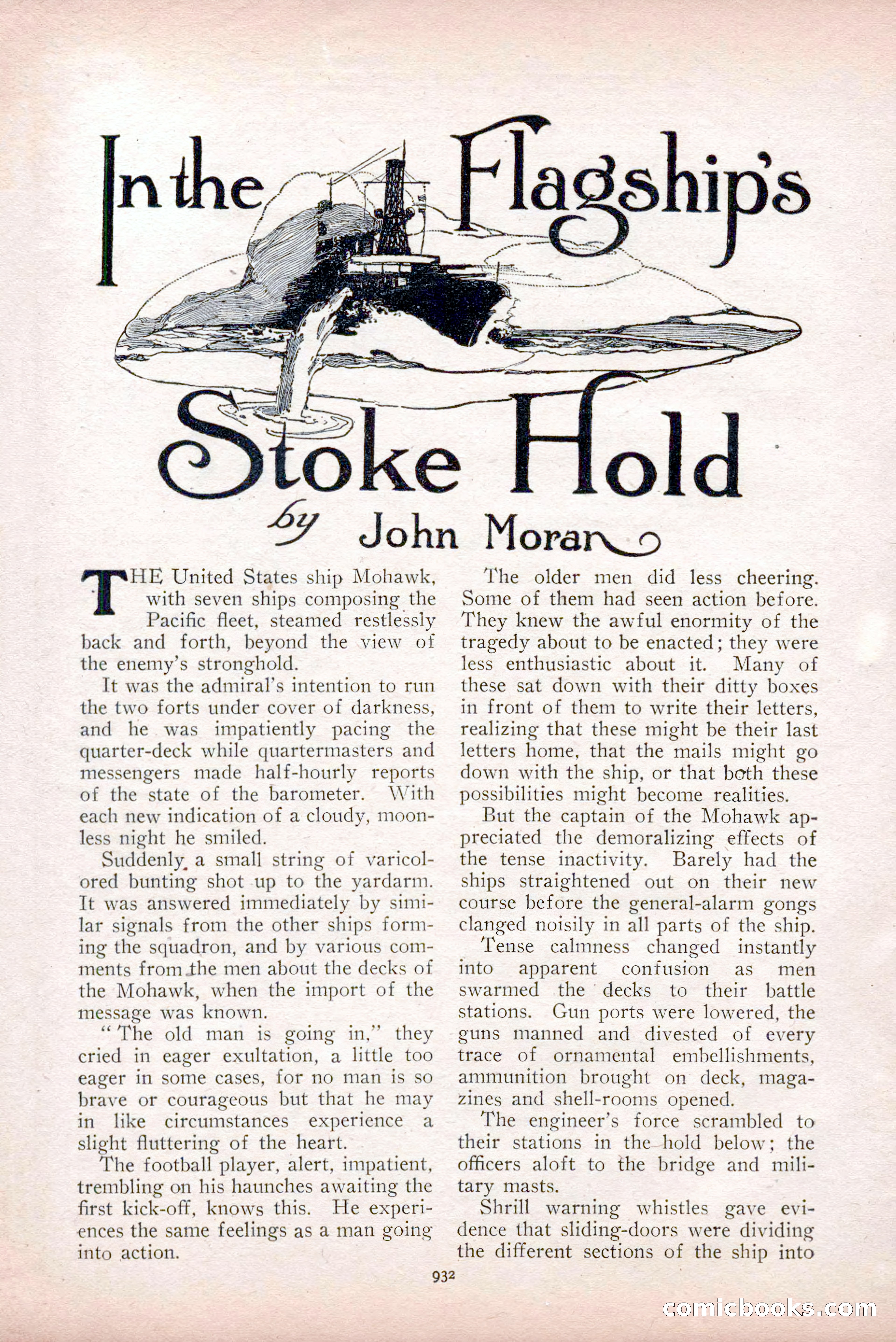
A restored page from Pulp Fiction, 1914. Page through the whole issue in the reader above.
📄 Transcribed text from this page (OCR, searchable)
Machine-transcribed from the original scan — historical spelling and the odd misread are preserved.
4¥ John Morar lo HE United States ship Mohawk, with seven ships composing the Pacific fleet, steamed restlessly back and forth, beyond the view of the enemy’s stronghold. It was the admiral’s intention to run the two forts under cover of darkness, and he was impatiently pacing the quarter-deck while quartermasters and messengers made half-hourly reports of the state of the barometer. With each new indication of a cloudy, moon- less night he smiled. Suddenly, a small string of varicol- ored bunting shot up to the yardarm. It was answered immediately by simi- lar signals from the other ships form- ing the squadron, and by various com- ments from.the men about the decks of the Mohawk, when the import of the message was known. “The old man is going in,’ they cried in eager exultation, a little too eager in some cases, for no man is so brave or courageous but that he may in like circumstances experience a slight fluttering of the heart. The football player, alert, impatient, trembling on his haunches awaiting the first kick-off, knows this. He expert- ences the same feelings as a man going into action. 932 The older men did less cheering. Some of them had seen action before. They knew the awful enormity of the tragedy about to be enacted; they were less enthusiastic about it. Many of these sat down with their ditty boxes in front of them to write their letters, realizing that these might be their last letters home, that the mails might go down with the ship, or that both these possibilities might become realities. But the captain of the Mohawk ap- preciated the demoralizing effects of the tense inactivity. Barely had the ships straightened out on their new course before the general-alarm gongs clanged noisily in all parts of the ship. Tense calmness changed instantly into apparent confusion as men swarmed the decks to their battle stations. Gun ports were lowered, the guns manned and divested of every trace of ornamental embellishments, ammunition brought on deck, maga- zines and shell-rooms opened. The engineer’s force scrambled to their stations in the hold below; the officers aloft to the bridge and mili- tary masts. Shrill warning whistles gave evi- dence that sliding-doors were dividing the different sections of the ship into EOPMICLOOKS (C@)