
Pulp Fiction, 1914 · page 225 of 268
The Argosy, Vol. 75, No. 4 — page 225: what you’re looking at
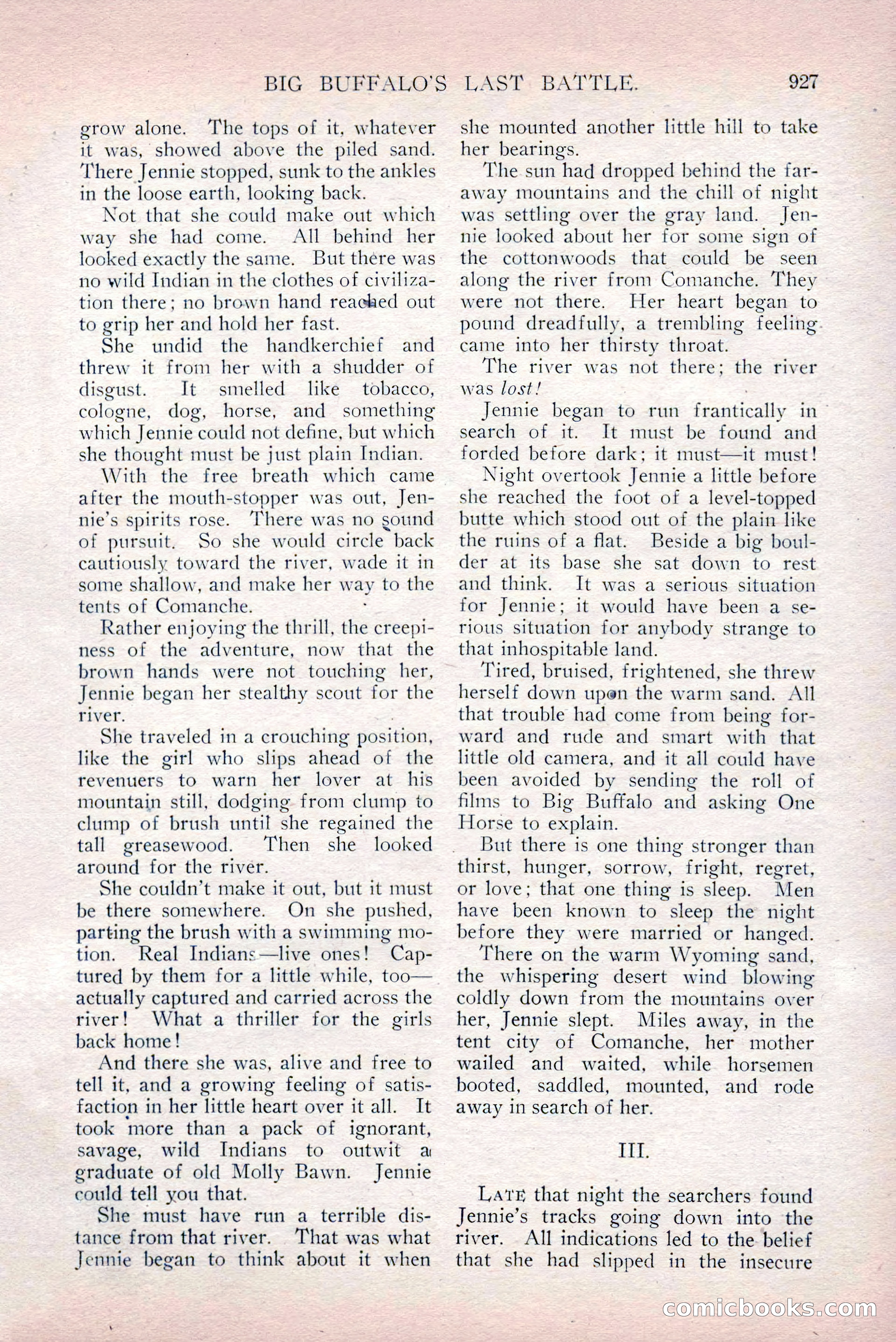
A restored page from Pulp Fiction, 1914. Page through the whole issue in the reader above.
📄 Transcribed text from this page (OCR, searchable)
Machine-transcribed from the original scan — historical spelling and the odd misread are preserved.
BIG BUFFALO'S LAST grow alone. The tops of it, whatever it was, showed above the piled sand. There Jennie stopped, sunk to the ankles in the loose earth, looking back. Not that she could make out which way she had come. All behind her looked exactly the same. But there was no wild Indian in the clothes of civiliza- tion there; no brown hand reached out to grip her and hold her fast. She undid the handkerchief and threw it from her with a shudder of disgust. It smelled lke tobacco, cologne, dog, horse, and something which Jennie could not define, but which she thought must be just plain Indian. With the free breath which came after the mouth-stopper was out, Jen- nie’s spirits rose. There was no sound of pursuit. So she would circle back cautiously toward the river, wade it in some shallow, and make her way to the tents of Comanche. Rather enjoying the thrill, the creept- ness of the adventure, now that the brown hands were not touching her, Jennie began her stealthy scout for the river. She traveled in a crouching position, like the girl who slips ahead of the revenuers to warn her lover at his mountain still, dodging from clump to clump of brush until she regained the tall greasewood. Then she looked around for the river. She couldn’t make it out, but it must be there somewhere. On she pushed, parting the brush with a swimming mo- tion. Real Indians—live ones! Cap- tured by them for a little while, too— actually captured and carried across the river! What a thriller for the girls back home! And there she was, alive and free to tell it, and a growing feeling of satis- faction in her little heart over it all. It took more than a pack of ignorant, savage, wild Indians to outwit a eraduate of old Molly Bawn. Jennie could tell you that. She must have run a terrible dis- tance from that river. That was what Jennie began to think about it when BATTLE. 927 she mounted another little hill to take her bearings. The sun had dropped behind the far- away mountains and the chill of night was settling over the gray land. Jen- nie looked about her for some sign of the cottonwoods that could be seen along the river from Comanche. They were not there. Her heart began to pound dreadfully, a trembling feeling. came into her thirsty throat. The river was not there: was lost! the river Jennie began to run feanticaily in | search of it. It must be found and forded before dark; it must—it must! Night overtook Jennie a little before she reached the foot of a level-topped butte which stood out of the plain like the ruins of a flat. Beside a big boul- der at its base she sat down to rest and think. It was a serious situation for Jennie; it would have been a se- rious situation for anybody strange to that inhospitable land. Tired, bruised, frightened, she threw herself down upen the warm sand. All that trouble had come from being for- ward and rude and smart with that little old camera, and it all could have been avoided by sending the roll of films to Big Buffalo and asking One Horse to explain. But there is one thing stronger than thirst, hunger, sorrow, fright, regret, or love; that one thing is sleep. Men have been known to sleep the night before they were married or hanged. There on the warm Wyoming sand, the whispering desert wind blowing coldly down from the mountains over her, Jennie slept. Miles away, in the tent city of Comanche, her mother wailed and waited, while horsemen booted, saddled, mounted, and rode away in search of her. TIT. Late that night the searchers found Jennie’s tracks going down into the river. All indications led to the belief that she had slipped in the insecure COPMICGLOOOKS (S@)