
Pulp Fiction, 1914 · page 197 of 268
The Argosy, Vol. 75, No. 4 — page 197: what you’re looking at
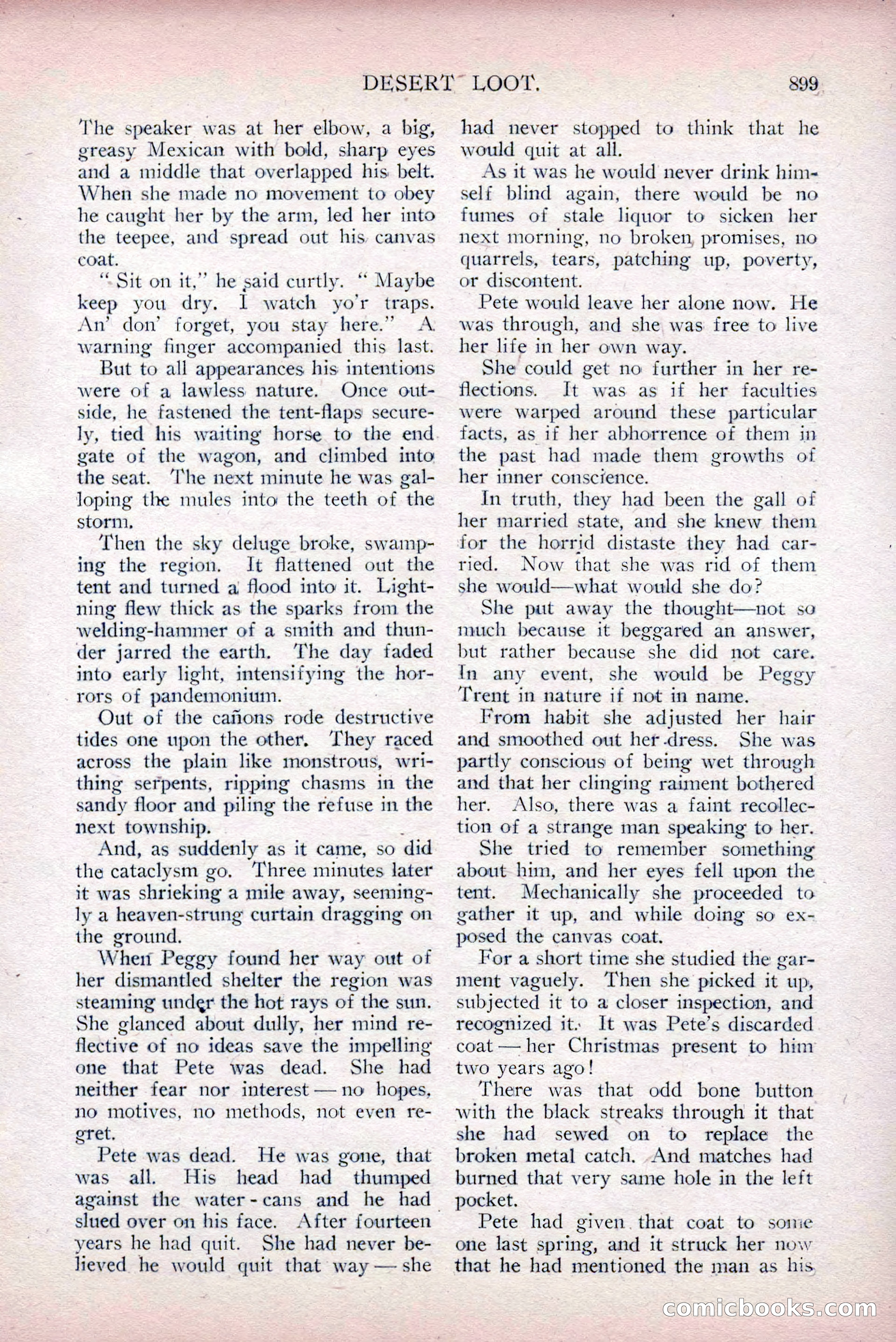
A restored page from Pulp Fiction, 1914. Page through the whole issue in the reader above.
📄 Transcribed text from this page (OCR, searchable)
Machine-transcribed from the original scan — historical spelling and the odd misread are preserved.
DESERT LOOT, The speaker was at her elbow, a big, greasy Mexican with bold, sharp eyes and a middle that overlapped his. belt. When she made no movement to obey he caught her by the arm, led her into the teepee, and spread out his canvas coat. “Sit on it,” he said curtly. “ Maybe keep you dry. 1 watch yo'r traps. An’ don’ forget, you stay here.” A warning finger accompanied this last. But to all appearances his intentions were of a lawless nature. Once out- side, he fastened the tent-flaps secure- ly, tied his waiting’ horse to the end. gate of the wagon, and climbed into the seat. The next minute he was gal- loping the mules into the teeth of the storm, Then the sky deluge broke, swamp- ing the region. It flattened out the tent and turned a flood into it. Light- ning flew thick as the sparks from the welding-hammer of a smith and thun- der jarred the earth. The day faded into early light, intensifying the hor- rors of pandemonium. Out of the canons rode ieaanene tides one upon the other. They raced across the plain like monstrous, wri- thing serpents, ripping chasms in the sandy floor and piling the refuse in the next township. And, as suddenly as it came, so did the cataclysm go, ‘Three minutes later it was shrieking a mile away, seeming- ly a heaven-strung curtain dragging on the ground. W Thert Peggy found her way out of her dismantled shelter the region was steaming under the hot rays of the sun. She glanced about dully, her mind re- flective of no ideas save the impelling one that Pete was dead. She had neither fear nor interest — no hopes, no motives, no methods, not even re- oret. Pete was dead. He was gone, that was all. His head had thumped against the water-cans and he had slued over on his face. After fourteen years he had quit. She had never be- lreved he would quit that way — she had never stopped to think that he would quit at all. As it was he would never drink him- self blind again, there would be no fumes of stale liquor to sicken her next morning, no broken, promises, no quarrels, tears, patching up, poverty, or discontent. Pete would leave her alone now. He was through, and she was free to live her life in her own way. She could get no further in her re- flections. It was as if her faculties were warped around these particular facts, as if her abhorrence of them in the past had made them growths of her inner conscience. In truth, they had been the gall of her married state, and she knew them for the horrid distaste they had car- ried. Now that she was rid of them she would—what would she do? She put away the thought—not so much because it beggared an answer, but rather because she did not care. {n any event, she would be Peggy Trent in nature if not in name. From habit she adjusted her hair and smoothed out her-dress. She was partly conscious of being wet through and that her clinging raiment bothered her. Also, there was a faint recollec- tion of a strange man speaking to her. She tried to remember something about him, and her eyes fell upon the tent. Mechanically she proceeded to gather it up, and while doing so ex- posed the canvas coat. For a short time she studied the gar- ment vaguely. Then she picked it up, subjected it to a closer inspection, and recognized it. It was Pete’s discarded coat — her Christmas present to him two years ago! There was that odd bone button with the black streaks through it that she had sewed on to replace the broken metal catch. And matches had burned that very same hole in the left pocket. Pete had given. that coat to sonie one last spring, and it struck her now that he had mentioned the man as his EOPMICGLOOKS 899. COL