
Pulp Fiction, 1914 · page 139 of 268
The Argosy, Vol. 75, No. 4 — page 139: what you’re looking at
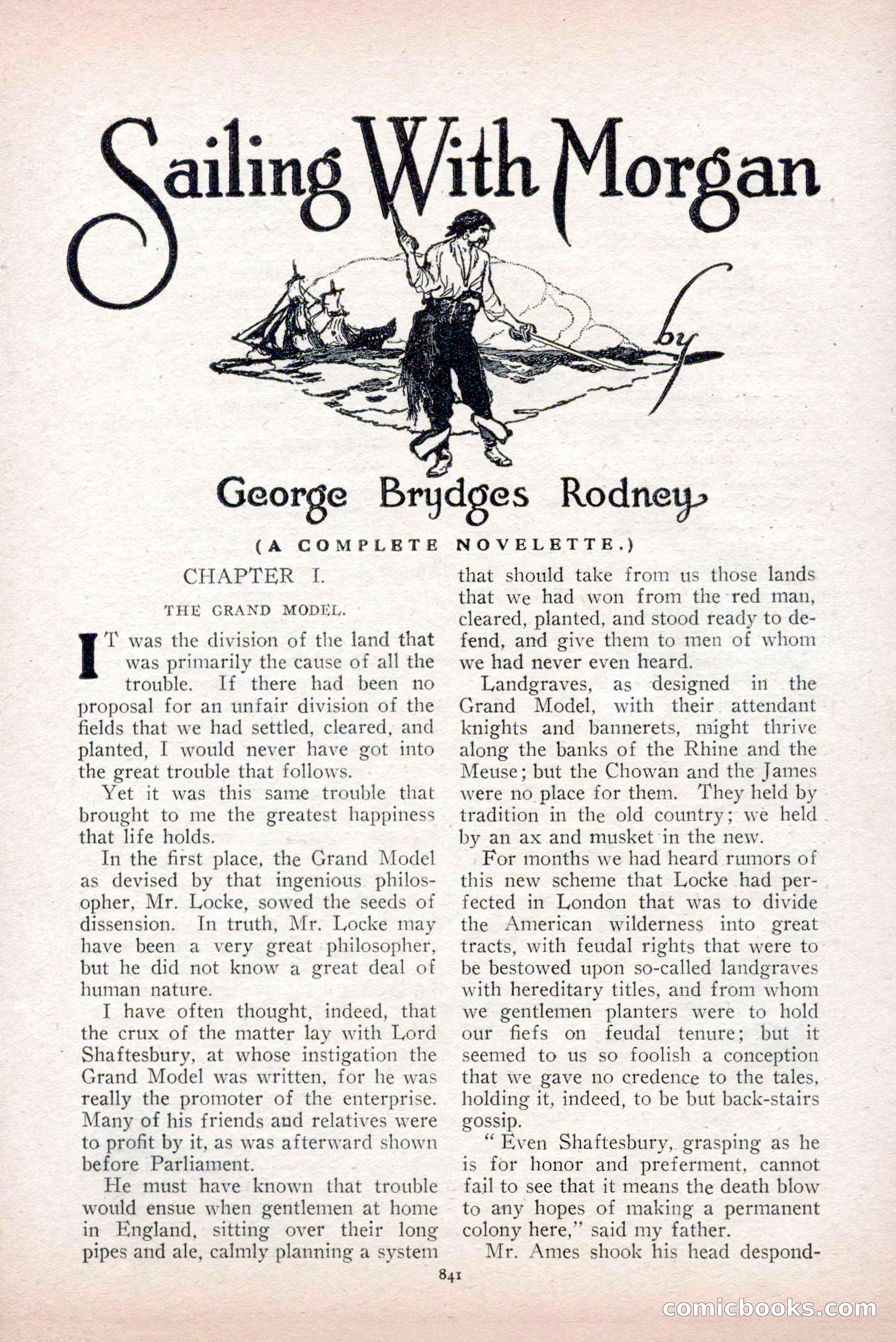
A restored page from Pulp Fiction, 1914. Page through the whole issue in the reader above.
📄 Transcribed text from this page (OCR, searchable)
Machine-transcribed from the original scan — historical spelling and the odd misread are preserved.
\ ailing - vt i George Bry ges Rodney> vi SS (A COMPLETE NOVELETTE.) CHAPTER I. THE GRAND MODEL. T’ was the division of the land that was primarily the cause of all the trouble. If there had been no proposal for an unfair division of the fields that we had settled, cleared, and planted, [ would never have got into the great trouble that follows. Yet it was this same trouble that brought to me the greatest happiness that life holds. In the first place, the Grand Model as devised by that ingenious. philos- opher, Mr. Locke, sowed the seeds of dissension. In truth, Mr. Locke may have been a very great philosopher, but he did not know a great deal of human nature. I have often thought, indeed, that the crux of the matter lay with Lord Shaftesbury, at whose instigation the Grand Model was written, for he was really the promoter of the enterprise. Many of his friends and relatives were to profit by it, as was afterward shown before Parliament. He must have known that trouble would ensue when gentlemen at home in England, sitting over their long pipes and ale, calmly planning a system 841 that should take from us those lands that we had won from the red man, cleared, planted, and stood ready to de- fend, and give them to men of whom we had never even heard. Landgraves, as designed in the Grand Model, with their attendant knights and bannerets, might thrive along the banks of the Rhine and the Meuse; but the Chowan and the James were no place for them. They held by tradition in the old country; we held by an ax and musket in the new. For months we had heard rumors of this new scheme that Locke had per- fected in London that was to divide the American wilderness into great tracts, with feudal rights that were to be bestowed upon so-called landgraves with hereditary titles, and from whom we gentlemen planters were to hold our fiefs on feudal tenure; but it seemed to us so foolish a conception that we gave no credence to the tales, holding it, indeed, to be but back-stairs gOssip. “Even Shaftesbury, grasping as he is for honor and preferment, cannot fail to see that it means the death blow to any hopes of making a permanent colony here,’’ said my father. Mr. Ames shook his head despond- GEomichoo (C S ith Morgan (E@)