
Pulp Fiction, 1909 · page 63 of 266
The Argosy, Vol. 61, No. 4 — page 63: what you’re looking at
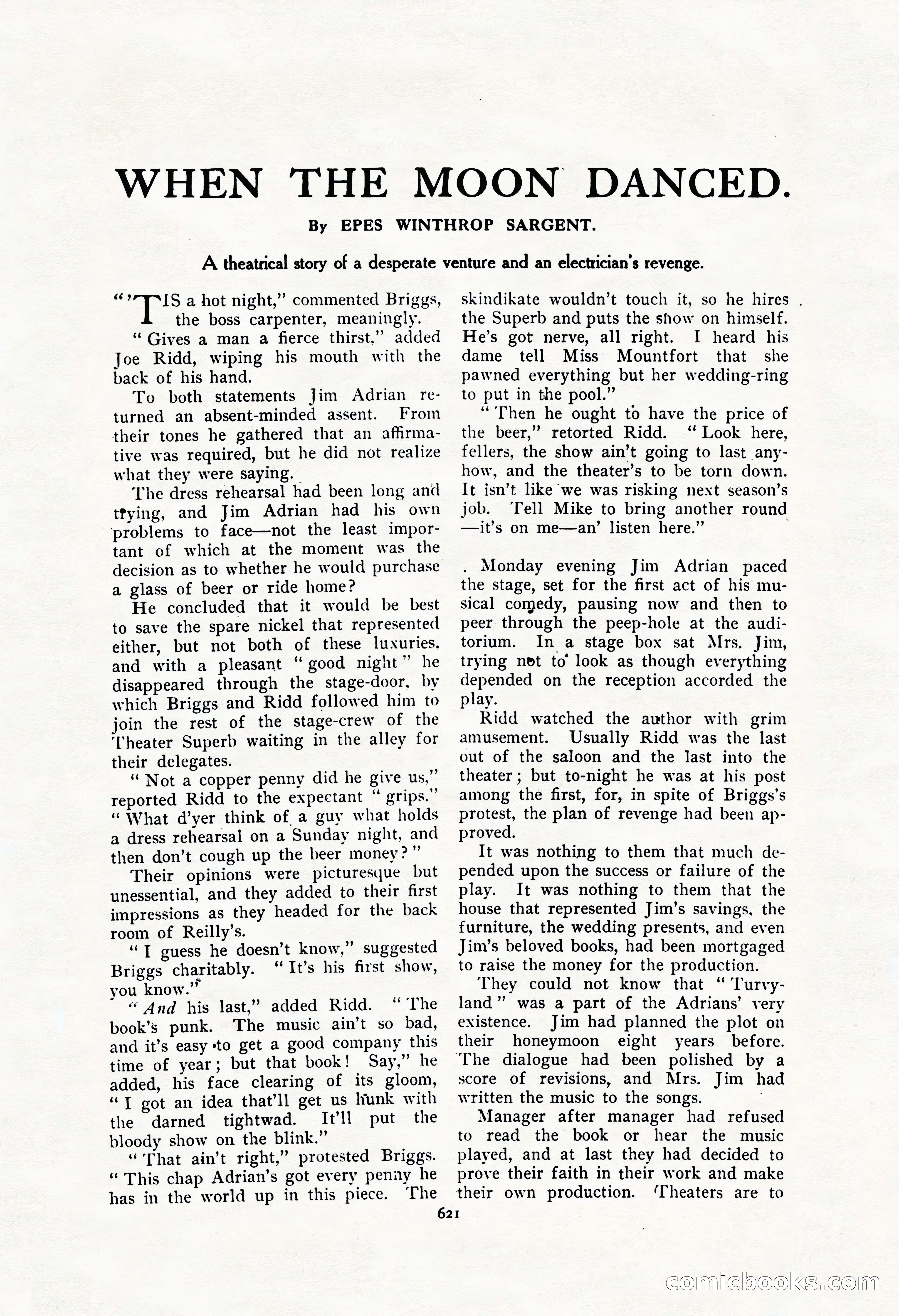
A restored page from Pulp Fiction, 1909. Page through the whole issue in the reader above.
📄 Transcribed text from this page (OCR, searchable)
Machine-transcribed from the original scan — historical spelling and the odd misread are preserved.
WHEN THE MOON DANCED. By EPES WINTHROP SARGENT. A theatrical story of a desperate venture and an electrician’s revenge. 669 [S a hot night,” commented Briggs, the boss carpenter, meaningly. ‘Gives a man a fierce thirst,” added Joe Ridd, wiping his mouth with the back of his hand. To both statements Jim Adrian re- turned an absent-minded assent. From their tones he gathered that an affirma- tive was required, but he did not realize what they were saying. | The dress rehearsal had been long and ttying, and Jim Adrian had his own problems to face—not the least impor- tant of which at the moment was the decision as to whether he would purchase a glass of beer or ride home? He concluded that it would be best to save the spare nickel that represented either, but not both of these luxuries, and with a pleasant ‘“‘ good night” he disappeared through the stage-door, by which Briggs and Ridd followed him to join the rest of the stage-crew of the Theater Superb waiting in the alley for their delegates. “Not a copper penny did he give us,” reported Ridd to the expectant © grips.” “ What d’yer think of, a guy what holds a dress rehearsal on a Sunday night, and then don’t cough up the beer money?” Their opinions were picturesque but unessential, and they added to their first impressions as they headed for the back room of Reilly’s. “T guess he doesn’t know,” suggested Briggs charitably. “It’s his first show, you know.” " «© 4nd his last,” added Ridd. ‘“ The book’s punk. The music ain’t so bad, and it’s easy ‘to get a good company this time of year; but that book! Say,” he added, his face clearing of its gloom, “T got an idea that'll get us ltunk with the darned tightwad. It'll put the bloody show on the blink.” “That ain’t right,” protested Briggs. “This chap Adrian’s got every penny he has in the world up in this piece. The skindikate wouldn’t touch it, so he hires . the Superb and puts the show on himself. He’s got nerve, all right. I heard his dame tell Miss Mountfort that she pawned everything but her wedding-ring to put in the pool.” ‘Then he ought to have the price of the beer,” retorted Ridd. ‘‘ Look here, fellers, the show ain’t going to last any- how, and the theater’s to be torn down. It isn’t like we was risking next season’s job. ‘Tell Mike to bring another round —it’s on me—an’ listen here.” Monday evening Jim Adrian paced the stage, set for the first act of his mu- sical comedy, pausing now and then to peer through the peep-hole at the audi- torium. In a stage box sat Mrs. Jim, trying not to look as though everything depended on the reception accorded the play. Ridd watched the author with grim amusement. Usually Ridd was the last out of the saloon and the last into the theater; but to-night he was at his post among the first, for, in spite of Briggs’s protest, the plan of revenge had been ap- proved. It was nothing to them that much de- pended upon the success or failure of the play. It was nothing to them that the house that represented Jim’s savings, the furniture, the wedding presents, and even Jim’s beloved books, had been mortgaged to raise the money for the production. They could not know that “ Turvy- land” was a part of the Adrians’ very existence. Jim had planned the plot on their honeymoon eight years. before. ‘The dialogue had been polished by a score of revisions, and Mrs. Jim had written the music to the songs. | Manager after manager had refused to read the book or hear the music played, and at last they had decided to prove their faith in their work and make their own production. ‘Theaters are to 621 EO OO (©