
Pulp Fiction, 1909 · page 125 of 266
The Argosy, Vol. 61, No. 4 — page 125: what you’re looking at
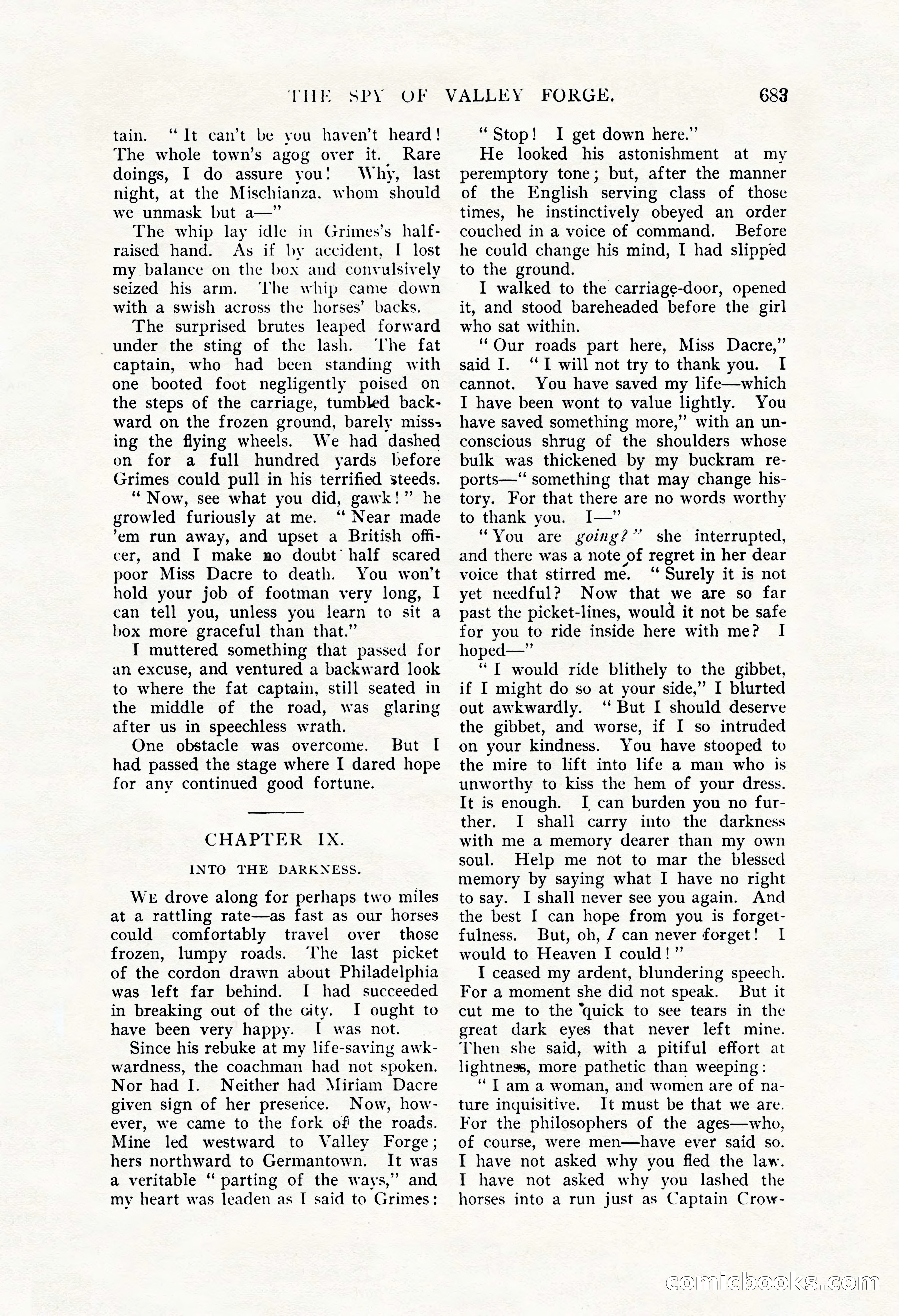
A restored page from Pulp Fiction, 1909. Page through the whole issue in the reader above.
📄 Transcribed text from this page (OCR, searchable)
Machine-transcribed from the original scan — historical spelling and the odd misread are preserved.
Tet SS Pacer tain. “It can’t be vou haven't heard! The whole town’s agog over it. Rare doings, I do assure you! Why, last night, at the Mischianza. whom should we unmask but a—”’ The whip lay idle in Grimes’s half- raised hand. As if by accident, I lost my balance on the box and convulsively seized his arm. ‘The whip came down with a swish across the horses’ backs. The surprised brutes leaped forward under the sting of the lash. The fat captain, who had been standing with one booted foot negligently poised on the steps of the carriage, tumbled back- ward on the frozen ground, barely miss; ing the flying wheels. We had dashed on for a full hundred yards before Grimes could pull in his terrified steeds. ‘“ Now, see what you did, gawk!” he growled furiously at me. ‘“‘ Near made ‘em run away, and upset a British offi- cer, and I make no doubt’ half scared poor Miss Dacre to death. You won't hold your job of footman very long, I can tell you, unless you learn to sit a box more graceful than that.” I muttered something that passed for an excuse, and ventured a backward look to where the fat captain, still seated in the middle of the road, was glaring after us in speechless wrath. One obstacle was overcome. But [| had passed the stage where I dared hope for any continued good fortune. CHAPTER IX. INTO THE DARKNESS. We drove along for perhaps two miles at a rattling rate—as fast as our horses could comfortably travel over those frozen, lumpy roads. The last picket of the cordon drawn about Philadelphia was left far behind. I had succeeded in breaking out of the city. I ought to have been very happy. I was not. Since his rebuke at my life-saving awk- wardness, the coachman had not spoken. Nor had I. Neither had Miriam Dacre given sign of her presence. Now, how- ever, we came to the fork of the roads. Mine led westward to Valley Forge; hers northward to Germantown. It was a veritable ‘‘ parting of the ways,” and my heart was leaden as I said to Grimes: VALLEY FORGE. 683 ‘Stop! I get down here.” He looked his astonishment at my peremptory tone; but, after the manner of the English serving class of those times, he instinctively obeyed an order couched in a voice of command. Before he could change his mind, I had slipped to the ground. I walked to the carriage-door, opened it, and stood bareheaded before the girl who sat within. ‘‘Our roads part here, Miss Dacre,” said I. ‘I will not try to thank you. I cannot. You have saved my life—which I have been wont to value lightly. You have saved something more,” with an un- conscious shrug of the shoulders whose bulk was thickened by my buckram re- ports—‘‘ something that may change his- tory. For that there are no words worthy to thank you. I—” “You are going?” she interrupted, and there was a note of regret in her dear voice that stirred me. ‘ Surely it is not yet needful? Now that we are so far past the picket-lines, would it not be safe for you to ride inside here with me? I hoped—”’ ‘“T would ride blithely to the gibbet, if I might do so at your side,” I blurted out awkwardly. ‘‘ But I should deserve the gibbet, and worse, if I so intruded on your kindness. You have stooped to the mire to lift into life a man who is unworthy to kiss the hem of your dress. It is enough. I can burden you no fur- ther. I shall carry into the darkness with me a memory dearer than my own soul. Help me not to mar the blessed memory by saying what I have no right to say. I shall never see you again. And the best I can hope from you is forget- fulness. But, oh, / can never forget! I would to Heaven I could!” I ceased my ardent, blundering speech. For a moment she did not speak. But it cut me to the ‘quick to see tears in the great dark eyes that never left mine. Then she said, with a pitiful effort at lightness, more pathetic than weeping: ‘“T am a woman, and women are of na- ture inquisitive. It must be that we are. For the philosophers of the ages—who, of course, were men—have ever said so. I have not asked why you fled the law. I have not asked why you lashed the horses into a run just as Captain Crow- EO NOOO (©