
Pulp Fiction, 1906 · page 103 of 230
The Argosy, January 1906 — page 103: what you’re looking at
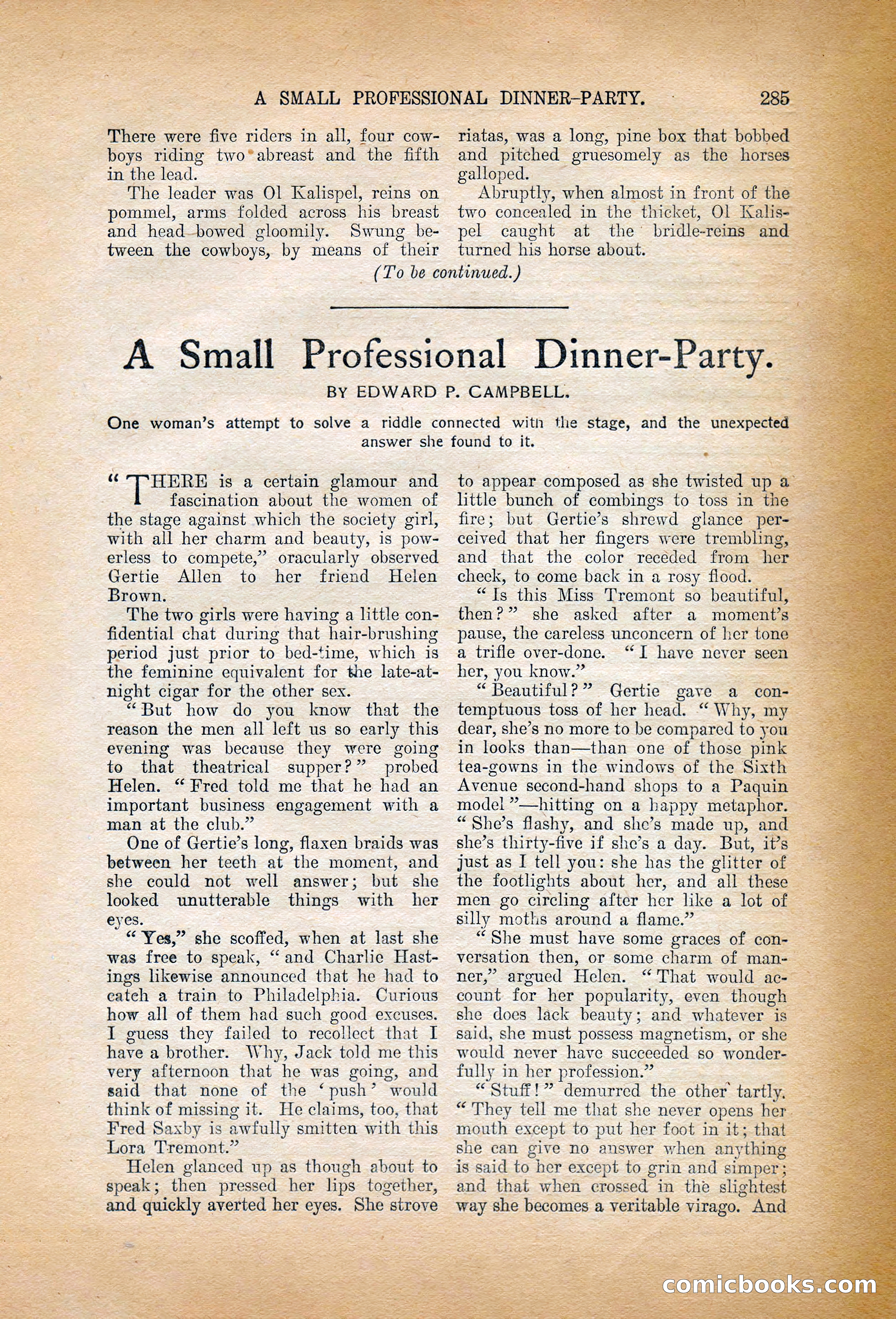
A restored page from Pulp Fiction, 1906. Page through the whole issue in the reader above.
📄 Transcribed text from this page (OCR, searchable)
Machine-transcribed from the original scan — historical spelling and the odd misread are preserved.
A SMALL PROFESSIONAL DINNER-PARTY. There were five riders in all, four cow- boys riding two*abreast and the fifth in the lead. The leader was Ol Kalispel, reins on pommel, arms folded across his breast and head—bowed gloomily. Swung be- tween the cowboys, by means of their 285 riatas, was a long, pine box that bobbed and pitched gruesomely as the horses galloped. Abruptly, when almost in front of the two concealed in the thicket, Ol Kalis- pel caught at the bridle-reins and turned his horse about. (To be continued.) A Small Professional Dinner-Party. BY EDWARD P. CAMPBELL, One woman’s attempt to solve a riddle connected with the stage, and the unexpected answer she found to it. “ THERE is a certain glamour and fascination about the women of the stage against which the society girl, with all her charm and beauty, is pow- erless to compete,” oracularly observed Gertie Allen to her friend Helen Brown. The two girls were having a little con- fidential chat during that hair-brushing period just prior to bed-time, which is the feminine equivalent for the late-at- night cigar for the other sex. “But how do you know that the reason the men all left us so early this evening was because they were going to that theatrical supper?” probed Helen. “ Fred told me that he had an important business engagement with a man at the club.” One of Gertie’s long, flaxen braids was between her teeth at the moment, and she could not well answer; but she looked unutterable things with her eyes. “Yes,” she scoffed, when at last she was free to speak, “and Charlie Hast- ings likewise announced that he had to eateh a train to Philadelphia. Curious how all of them had such good excuses. I guess they failed to recollect that I have a brother. Why, Jack told me this very afternoon that he was going, and said that none of the ‘push’ would think of missing it. He claims, too, that Fred Saxby is awfully smitten with this Lora Tremont.” Helen glanced up as though about to speak; then pressed her lips together, and quickly averted her eyes. She strove to appear composed as she twisted up a httle bunch of combings to toss in the fire; but Gertie’s shrewd glance per- ceived that her fingers were trembling, and that the color receded from her check, to come back in a rosy flood. “Is this Miss Tremont so beautiful, then?” she asked after a moment’s pause, the careless unconcern of her tone a trifle over-done. “I have never seen her, you know.” “ Beautiful?” Gertie gave a con- temptuous toss of her head. “ Why, my dear, she’s no more to be compared to you in looks than—than one of those pink tea-gowns in the windows of the Sixth Avenue second-hand shops to a Paquin model ”—hitting on a happy metaphor. “She’s flashy, and she’s made up, and she’s thirty-five if she’s a day. But, it’s just as I tell you: she has the glitter of the footlights about her, and all these men go circling after her like a lot of silly moths around a flame.” “She must have some graces of con- versation then, or some charm of man- ner,’ argued Helen. “That would ac- count for her popularity, even though she does lack beauty; and whatever is sald, she must possess magnetism, or she would never have succeeded so wonder- fully in her profession.” “Stuff!” demurred the other’ tartly, “They tell me that she never opens her mouth except to put her foot in it; that she can give no answer when anything is said to her except to grin and simper; and that when crossed in the slightest way she becomes a veritable virago. And comicbook