
Pulp Fiction, 1955 · page 54 of 148
Argosy (UK), January 1955 — page 54: what you’re looking at
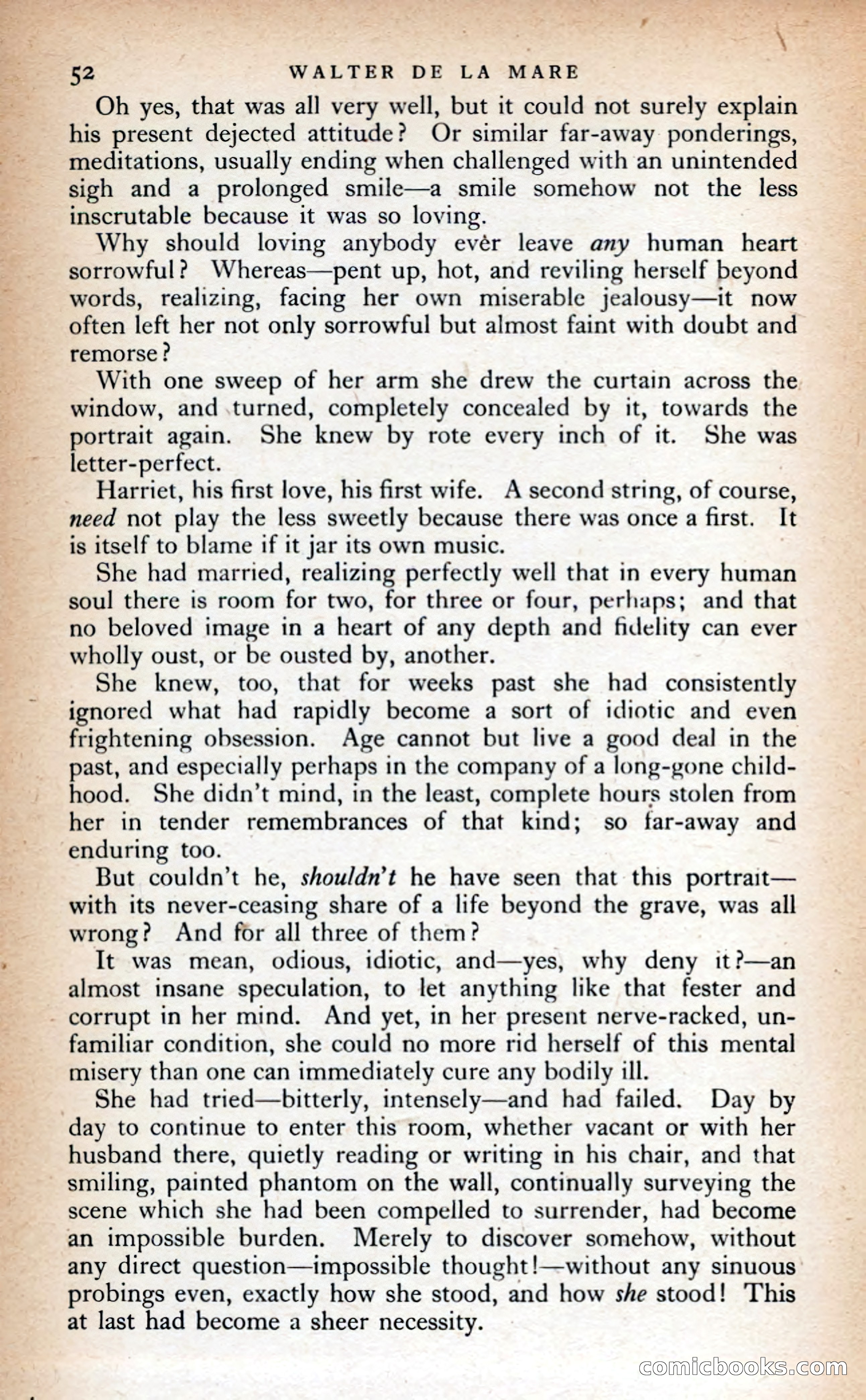
A restored page from Pulp Fiction, 1955. Page through the whole issue in the reader above.
📄 Transcribed text from this page (OCR, searchable)
Machine-transcribed from the original scan — historical spelling and the odd misread are preserved.
ey TRL aa oleae 4a ey ae an se i) a . 64, Ve he aS Pe eS §. >) * So i Pee es, ES 52 WALTER DE LA MARE Oh yes, that was all very well, but it could not surely explain his present dejected attitude? Or similar far-away ponderings, meditations, usually ending when challenged with an unintended sigh and a prolonged smile—a smile somehow not the less inscrutable because it was so loving. Why should loving anybody evér leave any human heart sorrowful? Whereas—pent up, hot, and reviling herself beyond words, realizing, facing her own miserable jealousy—it now often left her not only sorrowful but almost faint with doubt and remorse? With one sweep of her arm she drew the curtain across the window, and .turned, completely concealed by it, towards the portrait again. She knew by rote every inch of it. She was letter-perfect. Harriet, his first love, his first wife. A second string, of course, need not play the less sweetly because there was once a first. It is itself to blame if it jar its own music. She had married, realizing perfectly well that in every human soul there is room for two, for three or four, perhaps; and that no beloved image in a heart of any depth and fidelity can ever wholly oust, or be ousted by, another. She knew, too, that for weeks past she had consistently ignored what had rapidly become a sort of idiotic and even frightening obsession. Age cannot but live a good deal in the past, and especially perhaps in the company of a long-gone child- hood. She didn’t mind, in the least, complete hours stolen from her in tender remembrances of that kind; so far-away and enduring too. But couldn’t he, shouldn’t he have seen that this portrait— with its never-ceasing share of a life beyond the grave, was all wrong? And for all three of them? It was mean, odious, idiotic, and—yes, why deny it?—an almost insane speculation, to let anything like that fester and - corrupt in her mind. And yet, in her present nerve-racked, un- familiar condition, she could no more rid herself of this mental misery than one can immediately cure any bodily ill. She had tried—bitterly, intensely—and had failed. Day by day to continue to enter this room, whether vacant or with her husband there, quietly reading or writing in his chair, and that smiling, painted phantom on the wall, continually surveying the scene which she had been compelled to surrender, had become an impossible burden. Merely to discover somehow, without any direct question—impossible thought!—without any sinuous probings even, exactly how she stood, and how she stood! This at last had become a sheer necessity. comiclooks.comhn