
Pulp Fiction, 1955 · page 115 of 148
Argosy (UK), January 1955 — page 115: what you’re looking at
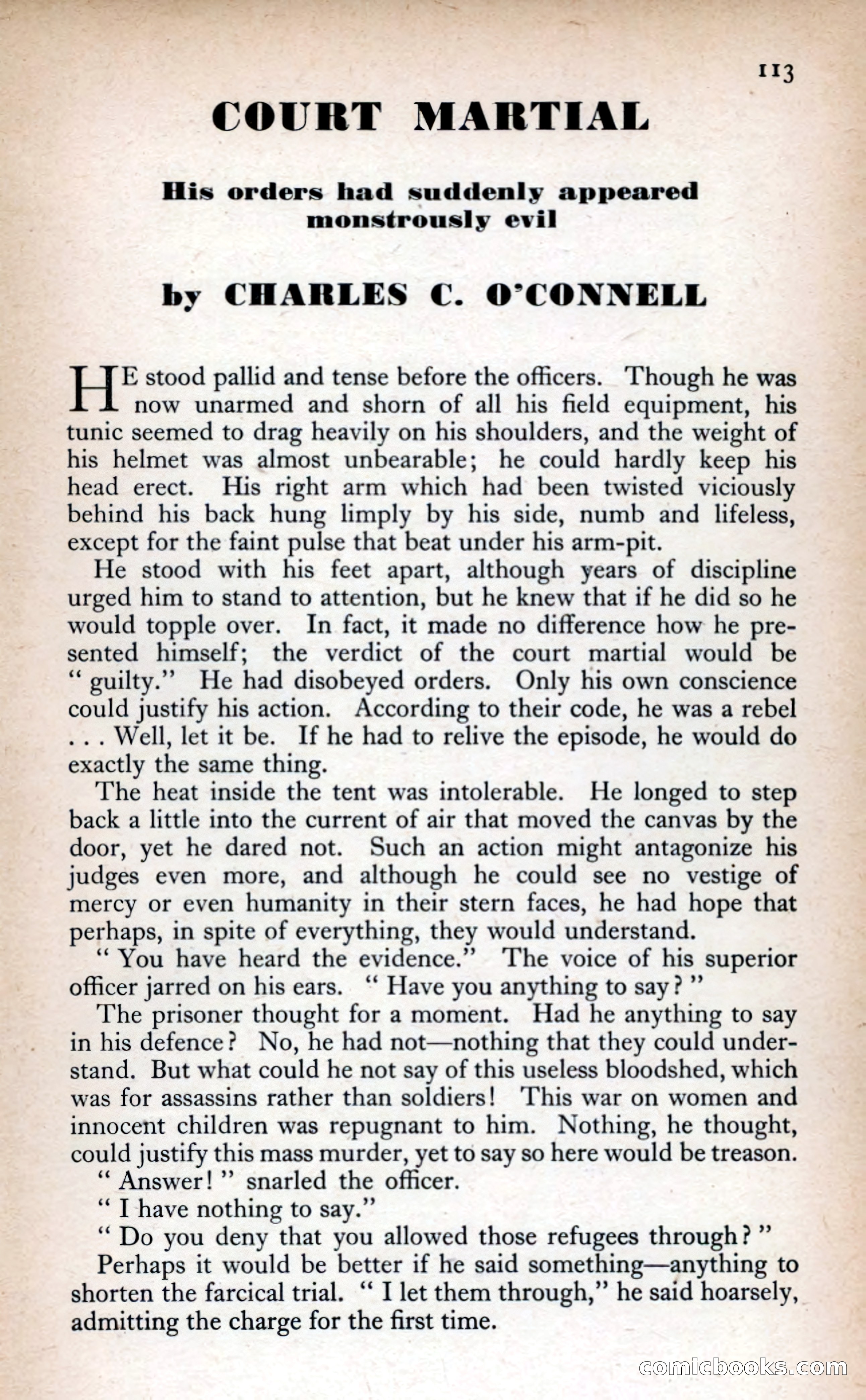
A restored page from Pulp Fiction, 1955. Page through the whole issue in the reader above.
📄 Transcribed text from this page (OCR, searchable)
Machine-transcribed from the original scan — historical spelling and the odd misread are preserved.
113 COURT MARTIAL His orders had suddenly appeared monstrously evil by CHARLES C. O°CONNELL E stood pallid and tense before the officers. ‘Though he was now unarmed and shorn of all his field equipment, his tunic seemed to drag heavily on his shoulders, and the weight of his helmet was almost unbearable; he could hardly keep his head erect. His right arm which had been twisted viciously behind his back hung limply by his side, numb and lifeless, except for the faint pulse that beat under his arm-pit. He stood with his feet apart, although years of discipline urged him to stand to attention, but he knew that if he did so he would topple over. In fact, it made no difference how he pre- sented himself; the verdict of the court martial would be “ guilty.”” He had disobeyed orders. Only his own conscience could justify his action. According to their code, he was a rebel ... Well, let it be. If he had to relive the episode, he would do exactly the same thing. The heat inside the tent was intolerable. He longed to step back a little into the current of air that moved the canvas by the door, yet he dared not. Such an action might antagonize his judges even more, and although he could see no vestige of mercy or even humanity in their stern faces, he had hope that perhaps, in spite of everything, they would understand. ‘You have heard the evidence.”’ ‘The voice of his superior officer jarred on his ears. “ Have you anything to say? ”’ The prisoner thought for a moment. Had he anything to say in his defence? No, he had not—nothing that they could under- stand. But what could he not say of this useless bloodshed, which was for assassins rather than soldiers!) This war on women and innocent children was repugnant to him. Nothing, he thought, could justify this mass murder, yet to say so here would be treason. ‘“‘ Answer!’ snarled the officer. ‘‘ T have nothing to say.” ‘““Do you deny that you allowed those refugees through? ” Perhaps it would be better if he said something—anything to shorten the farcical trial. ‘‘ I let them through,” he said hoarsely, admitting the charge for the first time. comiclooks.com