
Pulp Fiction, 1955 · page 113 of 148
Argosy (UK), January 1955 — page 113: what you’re looking at
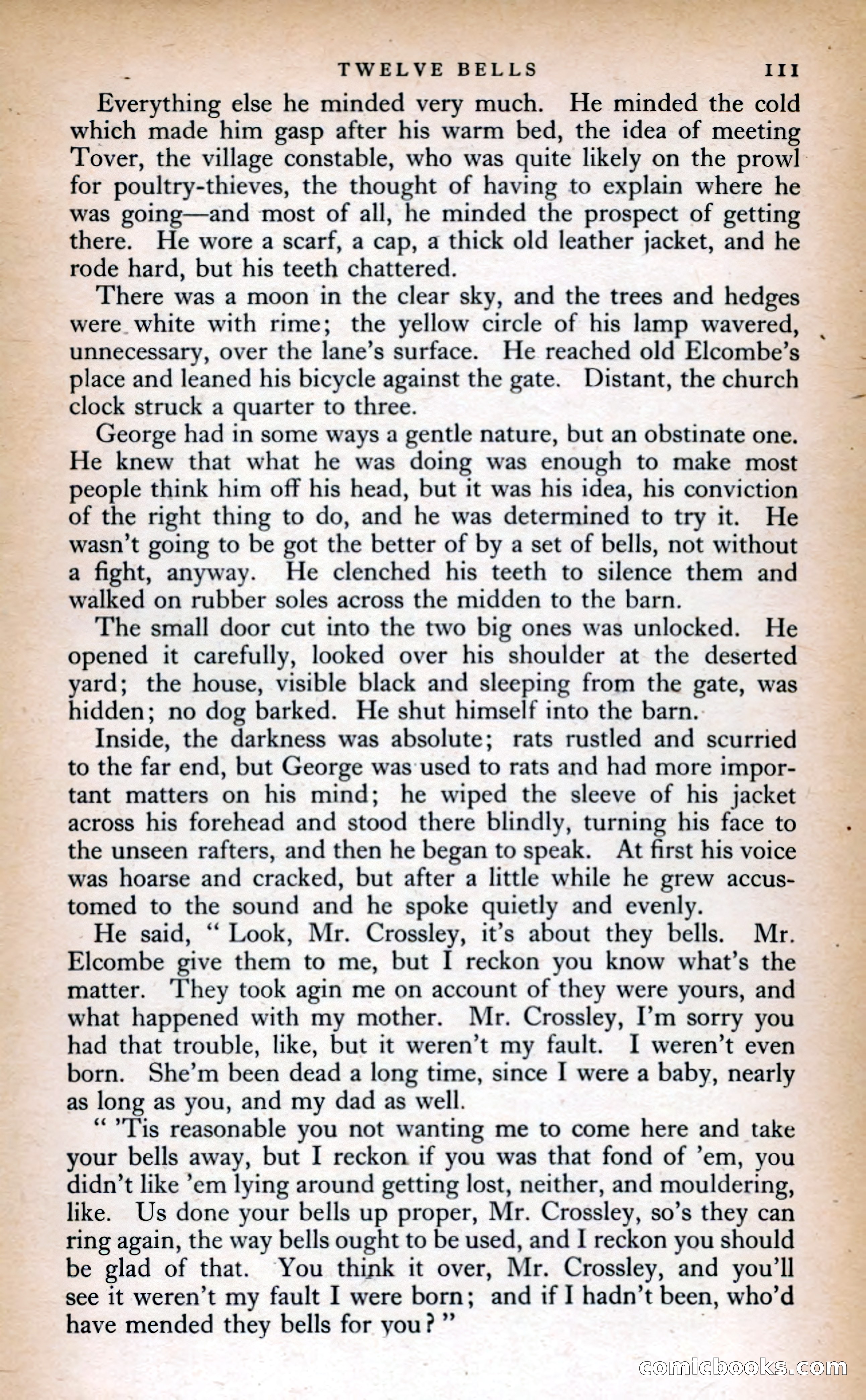
A restored page from Pulp Fiction, 1955. Page through the whole issue in the reader above.
📄 Transcribed text from this page (OCR, searchable)
Machine-transcribed from the original scan — historical spelling and the odd misread are preserved.
TWELVE BELLS III Bverything else he minded very much. He minded the cold which made him gasp after his warm bed, the idea of meeting Tover, the village constable, who was quite likely on the prowl for poultry-thieves, the thought of having to explain where he was going—and most of all, he minded the prospect of getting there. He wore a scarf, a cap, a thick old leather jacket, and he rode hard, but his teeth chattered. There was a moon in the clear sky, and the trees and hedges were white with rime; the yellow circle of his lamp wavered, unnecessary, over the lane’s surface. He reached old Elcombe’s place and leaned his bicycle against the gate. Distant, the church clock struck a quarter to three. George had in some ways a gentle nature, but an obstinate one. He knew that what he was doing was enough to make most people think him off his head, but it was his idea, his conviction of the right thing to do, and he was determined to try it. He wasn’t going to be got the better of by a set of bells, not without a fight, anyway. He clenched his teeth to silence them and walked on rubber soles across the midden to the barn. The small door cut into the two big ones was unlocked. He opened it carefully, looked over his shoulder at the deserted yard; the house, visible black and sleeping from the gate, was hidden; no dog barked. He shut himself into the barn. Inside, the darkness was absolute; rats rustled and scurried to the far end, but George was used to rats and had more impor- tant matters on his mind; he wiped the sleeve of his jacket across his forehead and stood there blindly, turning his face to the unseen rafters, and then he began to speak. At first his voice was hoarse and cracked, but after a little while he grew accus- tomed to the sound and he spoke quietly and evenly. He said, “ Look, Mr. Crossley, it’s about they bells. Mr. Elcombe give them to me, but I reckon you know what’s the matter. ‘They took agin me on account of they were yours, and what happened with my mother. Mr. Crossley, ’m sorry you had that trouble, like, but it weren’t my fault. I weren’t even born. She’m been dead a long time, since I were a baby, nearly as long as you, and my dad as well. “Tis reasonable you not wanting me to come here and take your bells away, but I reckon if you was that fond of ’em, you didn’t like em lying around getting lost, neither, and mouldering, like. Us done your bells up proper, Mr. Crossley, so’s they can ring again, the way bells ought to be used, and I reckon you should be glad of that. You think it over, Mr. Crossley, and you'll see it weren’t my fault I were born; ‘and if I hadn’t been, who’d have mended they bells for you? ” Le TEP Lene Lee comiclbooks.c@n) ~