
Pulp Fiction, 1955 · page 111 of 148
Argosy (UK), January 1955 — page 111: what you’re looking at
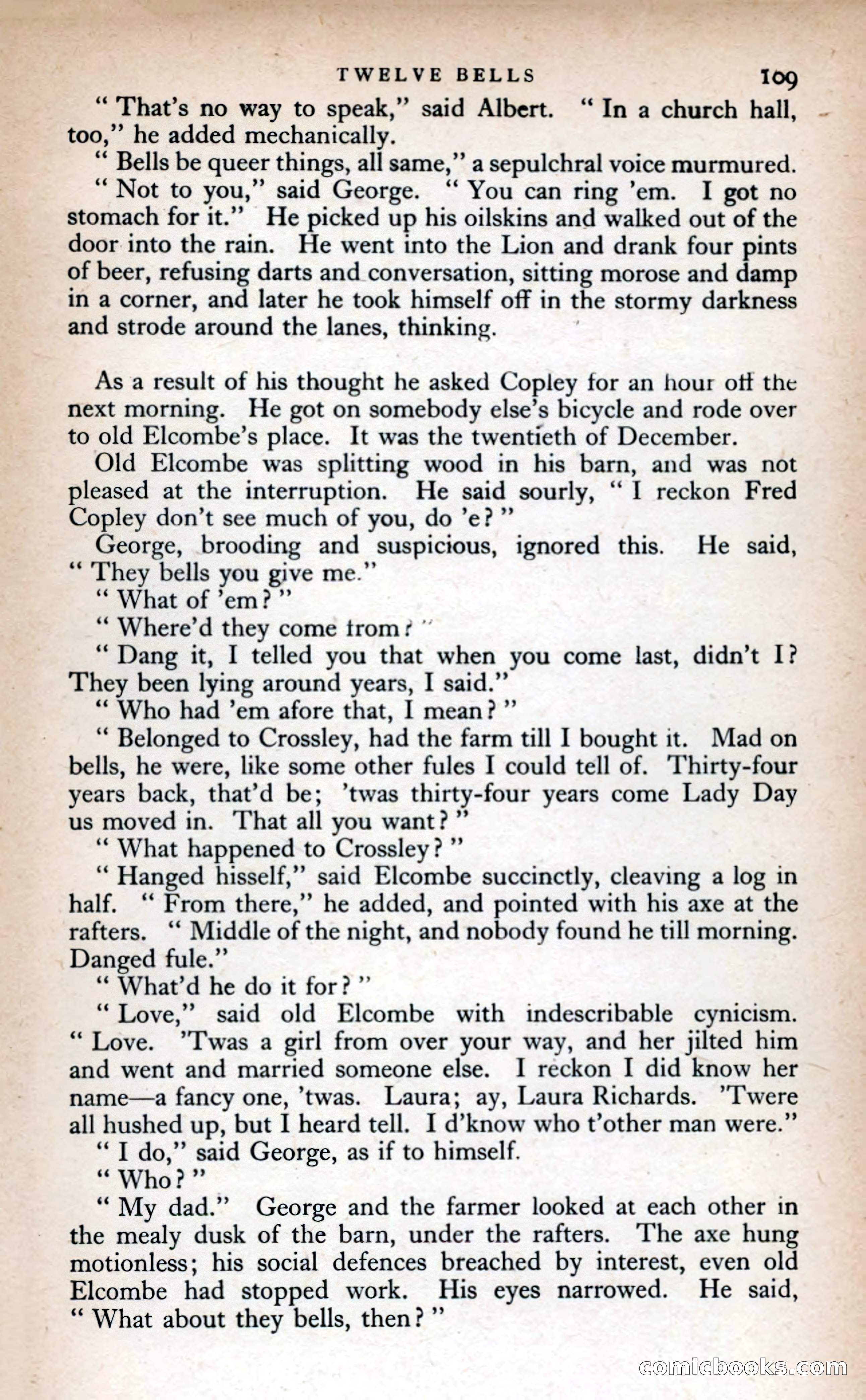
A restored page from Pulp Fiction, 1955. Page through the whole issue in the reader above.
📄 Transcribed text from this page (OCR, searchable)
Machine-transcribed from the original scan — historical spelling and the odd misread are preserved.
ett Pg eee ee ee OE er to err ®t 41S eee - be r ee aE i ie a i me ha - . t + os ™ . “ - “ « - 1 bg - - TWELVE BELLS 1609 cs That's no way to speak,” said Albert. ‘In a church hall, - too,” he added mechanically. “ Bells be queer things, all same,’ ’ a sepulchral voice murmured. “Not to you, ” said George. ‘“‘ You can ring ’em. I got no stomach for it.” He picked up his oilskins and walked out of the door into the rain. He went into the Lion and drank four pints of beer, refusing darts and conversation, sitting morose and damp in a corner, and later he took himself off in the stormy darkness and strode around the lanes, thinking. As a result of his thought he asked Copley for an hour oft the next morning. He got on somebody else’s bicycle and rode over to old Elcombe’s place. It was the twentieth of December. Old Elcombe was splitting wood in his barn, and was not pleased at the interruption. He said sourly, “I reckon Fred Copley don’t see much of you, do ’e? ” George, brooding and suspicious, ignored this. He said, “They bells you give me.”’ What of ’em?” “Where'd they come trom? ” “Dang it, I telled you that when you come last, didn’t I? They been lying around years, I said.” “Who had ’em afore that, I mean? ”’ “ Belonged to Crossley, had the farm till I bought it. Mad on bells, he were, like some other fules I could tell of. Thirty-four years back, that’d be; ‘twas thirty-four years come Lady Day us moved in. That all you want?” ‘““ What happened to Crossley? ”’ ‘ Hanged hisself,”’ said Elcombe succinctly, cleaving a log in half. ‘‘ From there,” he added, and pointed with his axe at the rafters. ‘‘ Middle of the night, and nobody found he till morning. Danged fule.” “What'd he do it for?” “Love,” said old Elcombe with indescribable cynicism. “Love. "Twas a girl from over your way, and her jilted him and went and married someone else. I reckon I did know her name—a fancy one, ‘twas. Laura; ay, Laura Richards. "T'were all hushed up, but I heard tell. I d’know who t’other man were.” ‘““T do,” said George, as if to himself. ‘c Who? >»? “My dad.” George and the farmer looked at each other in the mealy dusk of the barn, under the rafters. The axe hung motionless; his social defences breached by interest, even old Elcombe had stopped work. His eyes narrowed. He said, “What about they bells, then?” conmcloooks.comn