
Pulp Fiction, 1928 · page 81 of 156
Argosy All-Story Weekly, May 5, 1928 — page 81: what you’re looking at
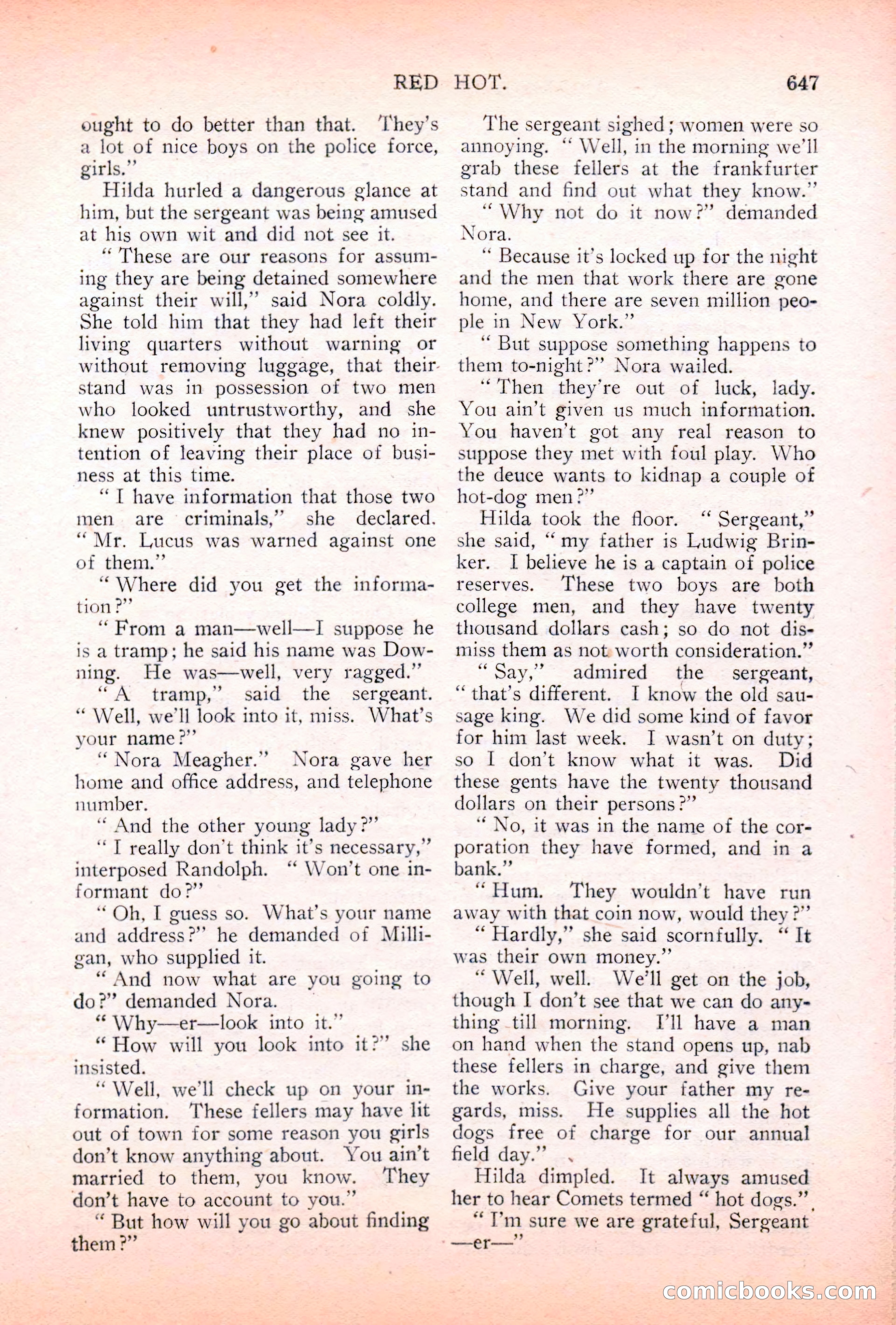
A restored page from Pulp Fiction, 1928. Page through the whole issue in the reader above.
📄 Transcribed text from this page (OCR, searchable)
Machine-transcribed from the original scan — historical spelling and the odd misread are preserved.
RED ought to do better than that. They’s a lot of nice boys on the police force, girls,” Hilda hurled a dangerous glance at him, but the sergeant was being amused at his own wit and did not see it. “These are our reasons for assum- ing they are being detained somewhere against their will,’ said Nora coldly. She told him that they had left their living quarters without warning or without removing luggage, that their stand was in possession of two men who looked untrustworthy, and she knew positively that they had no in- tention of leaving their place of busi- ness at this time. ‘“[ have information that those two men are criminals,’ she declared. “Mr. Lucus was warned against one of them.” “Where did you get the informa- tion ?” ‘From a man—well—I suppose he is a tramp; he said his name was Dow- ning. He was—well, very ragged.” ‘A: tramp,..-: saidthe. .-sergeant. “ Well, we'll look into it, miss. What's your name?” “Nora Meagher.” Nora gave her home and office address, and telephone number. ‘And the other young lady?” ‘“T really don’t think it’s necessary,” interposed Randolph. ‘‘ Won't one in- formant do?” ‘Oh, I guess so. What’s your name and address?’ he demanded of Milli- gan, who supplied it. “And now what are you going to do?” demanded Nora. “ Why—er—look into it.” “ How will you look into it?” she insisted. ‘Well, we'll check up on your in- formation. ‘These fellers may have lit out of town for some reason you girls don’t know anything about. You ain’t married to them, you know. They don’t have to account to you.” “ But how will you go about finding them ?” HOT. 647 The sergeant sighed; women were so annoying. “‘ Well, in the morning we'll grab these fellers at the frankfurter stand and find out what they know.”’ “Why not do it now?” demanded Nora. ‘* Because it’s locked up for the night and the men that work there are gone home, and there are seven million peo- ple in New York.” ‘““ But suppose something happens to them to-night?” Nora wailed. “Then they're out of luck, lady. You ain't given us much information. You haven't got any real reason to suppose they met with foul play. Who the deuce wants to kidnap a couple of hot-dog men?” Hilda took the floor. “ Sergeant,” she said, ““my father is Ludwig Brin- ker. I believe he is a captain of police reserves. These two boys are both college men, and they have twenty thousand dollars cash; so do not dis- miss them as not worth consideration.” “Say,” admired the — sergeant, “that’s different. I know the old sau- sage king. We did some kind of favor for him last week. J wasn’t on duty; so | don’t know what it was. Did these gents have the twenty thousand dollars on their persons?” ‘“ No, it was in the name of the cor- poration they have formed, and in a bank.” “Hum. They wouldn’t have run away with that coin now, would they ?” “ Hardly,” she said scornfully. “ It was their own money.” “Well, well. We'll get on the job, though I don’t see that we can do any- thing till morning. Ill have a man on hand when the stand opens up, nab these fellers in charge, and give them the works. Give your father my re- gards, miss. He supplies all the hot dogs free of charge for our annual field day.” ., Hilda dimpled. It always amused her to hear Comets termed “ hot dogs.” J? m sure we are grateful, Sergeant COPMICLOOOKS (F@)