
Pulp Fiction, 1928 · page 59 of 148
Argosy All-Story Weekly, April 28, 1928 — page 59: what you’re looking at
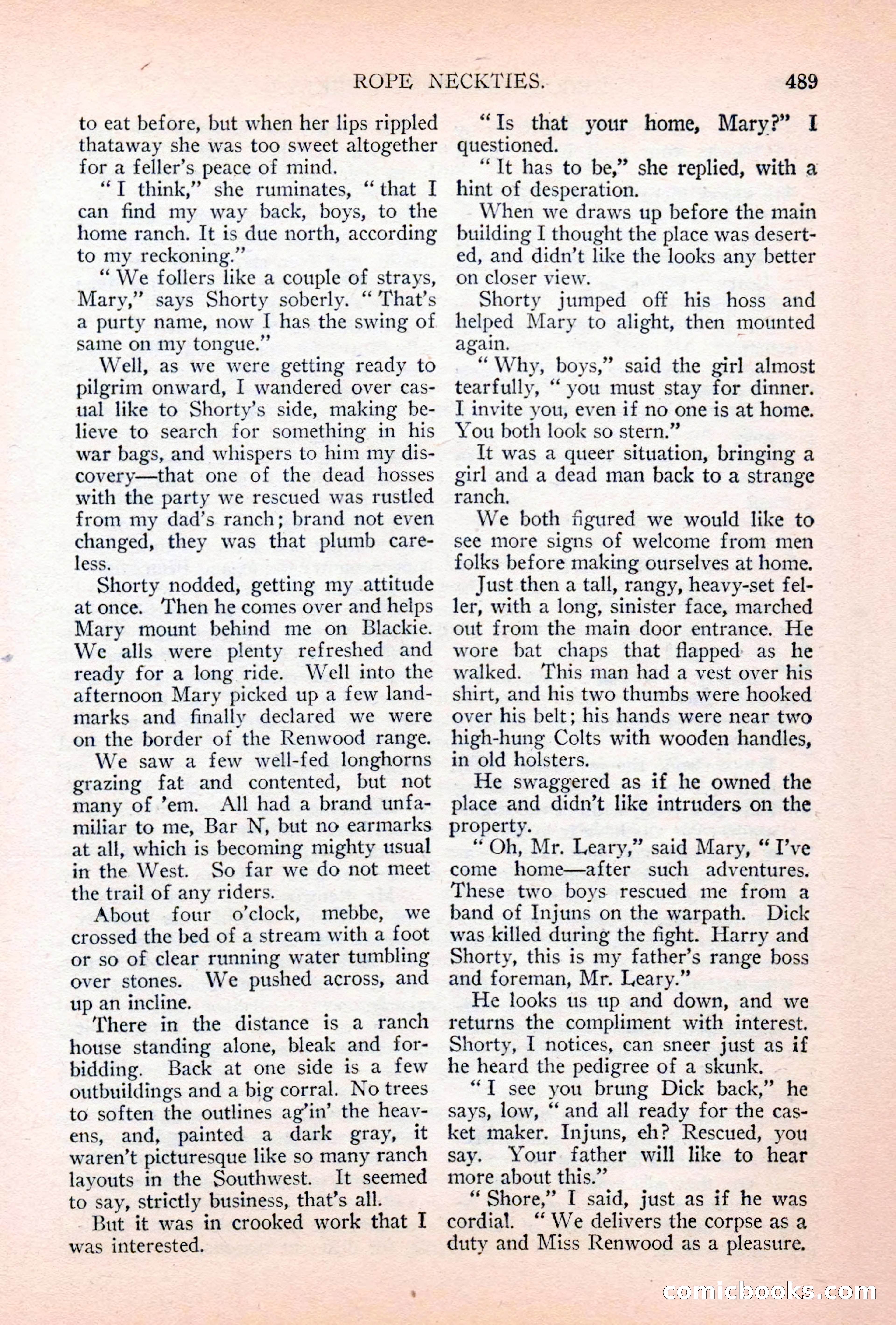
A restored page from Pulp Fiction, 1928. Page through the whole issue in the reader above.
📄 Transcribed text from this page (OCR, searchable)
Machine-transcribed from the original scan — historical spelling and the odd misread are preserved.
to eat before, but when her lips rippled thataway she was too sweet altogether for a feller’s peace of mind. “TI think,” she ruminates, “ that I can find my way back, boys, to the home ranch. It is due north, according to my reckoning.” “We follers like a couple of strays, Mary,” says Shorty soberly. “ That’s a purty name, now I has the swing of same on my tongue.” Well, as we were getting ready to pilgrim onward, I wandered over cas- ual like to Shorty’s side, making be- lieve to search for something in his war bags, and whispers to him my dis- covery—that one of the dead hosses with the party we rescued was rustled from my dad’s ranch; brand not even changed, they was that plumb care- less. Shorty nodded, getting my attitude at once. ‘Then he comes over and helps Mary mount behind me on Blackie. We alls were plenty refreshed and ready for a long ride. Well into the afternoon Mary picked up a few land- marks and finally declared we were on the border of the Renwood range. We saw a few well-fed longhorns grazing fat and contented, but not many of ’em. All had a brand unfa- miliar to me, Bar N, but no earmarks at all, which is becoming mighty usual in the West. So far we do not meet the trail of any riders. About four o'clock, mebbe, we crossed the bed of a stream with a foot or so of clear running water tumbling over stones. We pushed across, and up an incline. There in the distance is a ranch house standing alone, bleak and for- bidding. Back at one side is a few outbuildings and a big corral. No trees to soften the outlines ag’in’ the heav- ens, and, painted a dark gray, it waren’t picturesque like so many ranch layouts in the Southwest. It seemed to say, strictly business, that’s all. But it was in crooked work that I was interested. ROPE NECKTIES. 489 “Ts that your home, Mary?” I questioned. “It has to be,” she replied, with a hint of desperation. When we draws up before the main building I thought the place was desert- ed, and didn’t like the looks any better on closer view. Shorty jumped off his hoss and helped Mary to alight, then mounted again. “Why, boys,” said the girl almost tearfully, “you must stay for dinner. I invite you, even if no one is at home. You both look so stern.” It was a queer situation, bringing a girl and a dead man back to a strange ranch, We both figured we would like to see more signs of welcome from men folks before making ourselves at home. Just then a tall, rangy, heavy-set fel- ler, with a long, sinister face, marched out from the main door entrance. He wore bat chaps that flapped as he walked. This man had a vest over his shirt, and his two thumbs were hooked over his belt; his hands were near two high-hung Colts with wooden handles, in old holsters. He swaggered as if he owned the place and didn’t like intruders on the property. “Oh, Mr. Leary,” said Mary, “ I’ve come home—after such adventures. These two boys rescued me from a band of Injuns on the warpath. Dick was killed during the fight. Harry and Shorty, this is my father’s range boss and foreman, Mr. Leary.” He looks us up and down, and we returns the compliment with interest. Shorty, I notices, can sneer just as if he heard the pedigree of a skunk. “T see you brung Dick back,” he says, low, “and all ready for the cas- ket maker. Injuns, eh? Rescued, you say. Your father will like to hear more about this.” ** Shore,” I said, just as if he was cordial. “ We delivers the corpse as a duty and Miss Renwood as a pleasure. NEOMIGaOO SS (E@)