
Pulp Fiction, 1928 · page 119 of 160
Argosy All-Story Weekly, April 7, 1928 — page 119: what you’re looking at
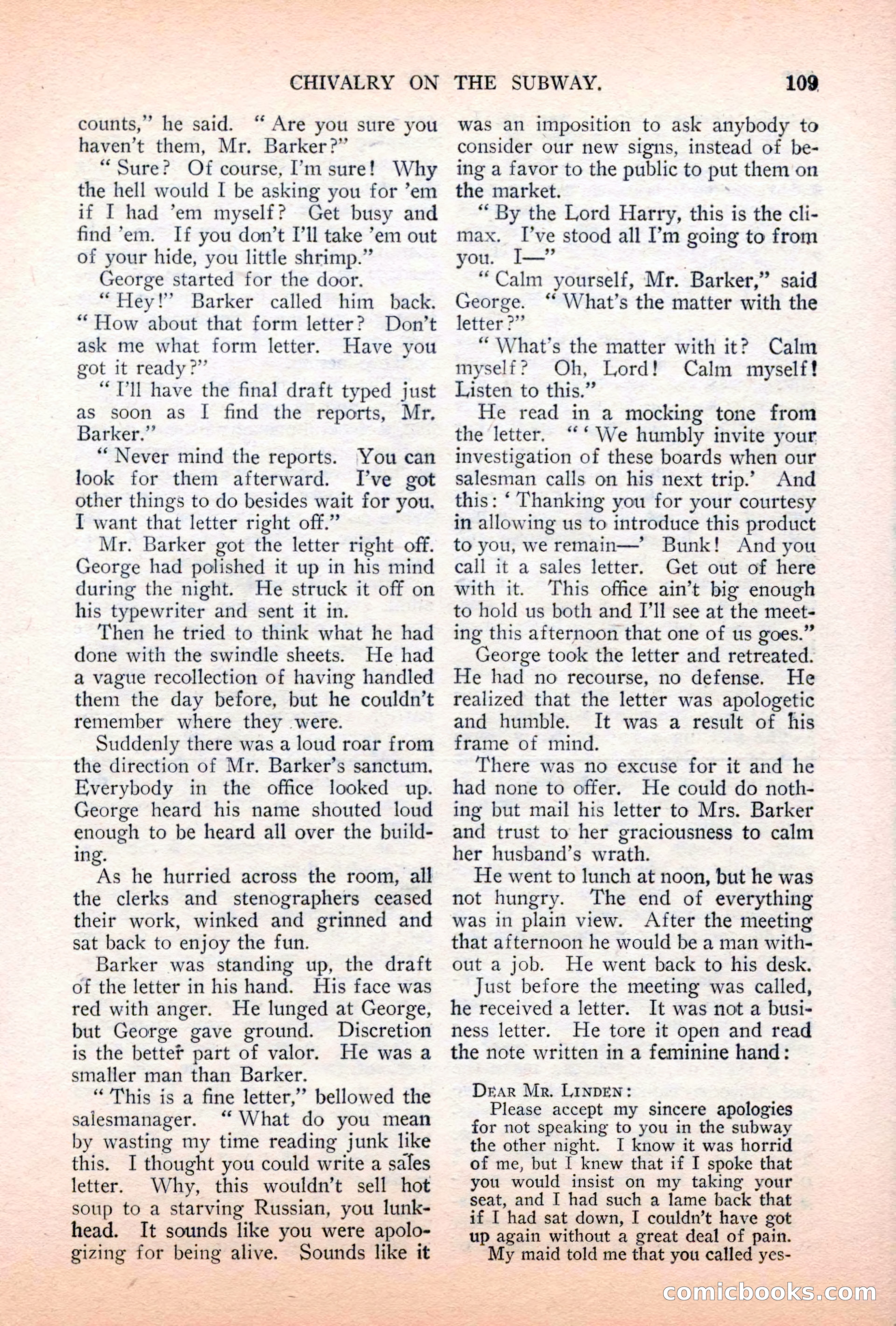
A restored page from Pulp Fiction, 1928. Page through the whole issue in the reader above.
📄 Transcribed text from this page (OCR, searchable)
Machine-transcribed from the original scan — historical spelling and the odd misread are preserved.
CHIVALRY ON counts,’ he said. “ Are you sure you haven’t them, Mr. Barker?” “Sure? Of course, I’m sure! Why the hell would I be asking you for ’em if I had *em myself? Get busy and find ’’em. If you don’t [ll take ’em out of your hide, you little shrimp.” George started for the door. “Hey!” Barker called him back. “How about that form letter? Don’t ask me what form letter. Have you got it ready?” “Tl have the final draft typed just as soon as | find the reports, Mr. Barker.” “Never mind the reports. You can look for them afterward. Ive got other things to do besides wait for you. [ want that letter right off.” Mr. Barker got the letter right off. George had polished it up in his mind during the night. He struck it off on his typewriter and sent it in. Then he tried to think what he had done with the swindle sheets. He had a vague recollection of having handled them the day before, but he couldn’t remember where they were. Suddenly there was a loud roar from the direction of Mr. Barker’s sanctum. Everybody in the office looked up. George heard his name shouted loud enough to be heard all over the build- ing. As he hurried across the room, all the clerks and stenographers ceased their work, winked and grinned and sat back to enjoy the fun. Barker was standing up, the draft of the letter in his hand. His face was red with anger. He lunged at George, but George gave ground. Discretion is the bettef part of valor. He was a smaller man than Barker. “ This is a fine letter,’’ bellowed the salesmanager. “ What do you mean by wasting my time reading junk like this. I thought you could write a sales letter. Why, this wouldn’t sell hot soup to a starving Russian, you lunk- head. It sounds like you were apolo- gizing for being alive. Sounds like it THE SUBWAY. 109 was an imposition to ask anybody to consider our new signs, instead of be- ing a favor to the public to put them on the market. “ By the Lord Harry, this is the cli- max. I’ve stood all ’m going to from you. J—” | “Calm yourself, Mr. Barker,” said George. “ What’s the matter with the letter?” “What's the matter with it? Calm myself? Oh, Lord! Calm myself! Listen to this.” He read in a mocking tone from the letter. “‘ We humbly invite your investigation of these boards when our salesman calls on his next trip.’ And this: ‘ Thanking you for your courtesy in allowing us to introduce this product to you, we remain—’ Bunk! And you call it a sales letter. Get out of here with it. This office ain’t big enough to hold us both and I'll see at the meet- ing this afternoon that one of us goes.” George took the letter and retreated. He had no recourse, no defense. He realized that the letter was apologetic and humble. It was a result of his frame of mind. There was no excuse for it and he had none to offer. He could do noth- ing but mail his letter to Mrs. Barker and trust to her graciousness to calm her husband’s wrath. He went to lunch at noon, but he was not hungry. The end of everything was in plain view. After the meeting that afternoon he would be a man with- out a job. He went back to his desk. Just before the meeting was called, he received a letter. It was not a busi- ness letter. He tore it open and read the note written in a feminine hand: Dear Mr. LINDEN: Please accept my sincere apologies for not speaking to you in the subway the other night. I know it was horrid of me, but I knew that if I spoke that you would insist on my taking your seat, and I had such a lame back that if I had sat down, I couldn’t have got up again without a great deal of pain. My maid told me that you called yes- Gomichbooks (E)