
Pulp Fiction, 1928 · page 124 of 164
Argosy All-Story Weekly, February 18, 1928 — page 124: what you’re looking at
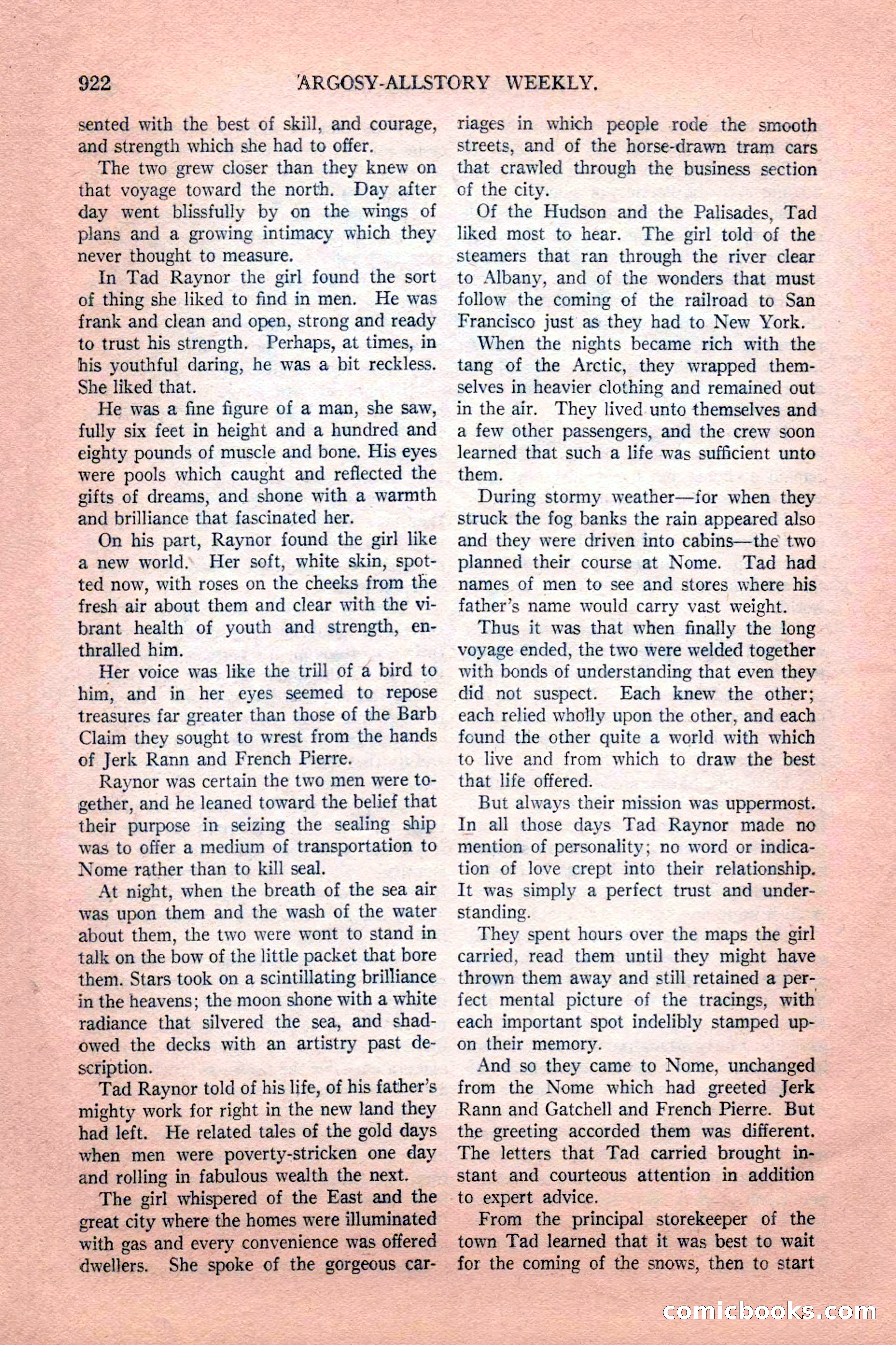
A restored page from Pulp Fiction, 1928. Page through the whole issue in the reader above.
📄 Transcribed text from this page (OCR, searchable)
Machine-transcribed from the original scan — historical spelling and the odd misread are preserved.
922 sented with the best of skill, and courage, and strength which she had to offer. The two grew closer than they knew on that voyage toward the north. Day after day went blissfully by on the wings of plans and a growing intimacy which they never thought to measure. In Tad Raynor the girl found the sort of thing she liked to find in men. He was frank and clean and open, strong and ready to trust his strength. Perhaps, at times, in his youthful daring, he was a bit reckless. She liked that. He was a fine figure of a man, she saw, fully six feet in height and a hundred and eighty pounds of muscle and bone. His eyes were pools which caught and reflected the gifts of dreams, and shone with a warmth and brilliance that fascinated her. On his part, Raynor found the girl like a new world. Her soft, white skin, spot- ted now, with roses on the cheeks from the fresh air about them and clear with the vi- brant health of youth and strength, en- thralled him. Her voice was like the trill of a bird to him, and in her eyes seemed to repose treasures far greater than those of the Barb Claim they sought to wrest from the hands of Jerk Rann and French Pierre. Raynor was certain the two men were to- gether, and he leaned toward the belief that their purpose in seizing the sealing ship was to offer a medium of transportation to Nome rather than to kill seal. At night, when the breath of the sea air was upon them and the wash of the water about them, the two were wont to stand in talk on the bow of the little packet that bore them. Stars took on a scintillating brilliance in the heavens; the moon shone with a white radiance that silvered the sea, and shad- owed the decks with an artistry past de- scription. Tad Raynor told of his life, of his father’s mighty work for right in the new land they had left. He related tales of the gold days when men were poverty-stricken one day and rolling in fabulous wealth the next. _ The girl whispered of the East and the great city where the homes were illuminated with gas and every convenience was offered dwellers. She spoke of the gorgeous car- ARGOSY-ALLSTORY WEEKLY. riages in which people rode the smooth streets, and of the horse-drawn tram cars that crawled through the business section of the city. Of the Hudson and the Palisades, Tad liked most to hear. The girl told of the steamers that ran through the river clear to Albany, and of the wonders that must follow the coming of the railroad to San Francisco just as they had to New York. When the nights became rich with the tang of the Arctic, they wrapped them- selves in heavier clothing and remained out in the air. They lived unto themselves and a few other passengers, and the crew soon learned that such a life was sufficient unto them. During stormy weather—for when they struck the fog banks the rain appeared also and they were driven into cabins—the two planned their course at Nome. Tad had names of men to see and stores where his father’s name would carry vast weight. Thus it was that when finally the long voyage ended, the two were welded together with bonds of understanding that even they did not suspect. Each knew the other; each relied wholly upon the other, and each found the other quite a world with which to live and from which to draw the best that life offered. But always their mission was uppermost. In all those days Tad Raynor made no mention of personality; no word or indica- tion of love crept into their relationship. It was simply a perfect trust and under- standing. They spent hours over the maps the girl carried, read them until they might have thrown them away and still retained a per- fect mental picture of the tracings, with each important spot indelibly stamped up- on their memory. And so they came to Nome, unchanged from the Nome which had greeted Jerk Rann and Gatchell and French Pierre. But the greeting accorded them was different. The letters that Tad carried brought in- stant and courteous attention in addition to expert advice. From the principal storekeeper of the town Tad learned that it was best to wait for the coming of the snows, then to start .DOOKS (ECO A MLUCE (EO)