
Pulp Fiction, 1927 · page 57 of 168
Argosy All-Story Weekly, November 12, 1927 — page 57: what you’re looking at
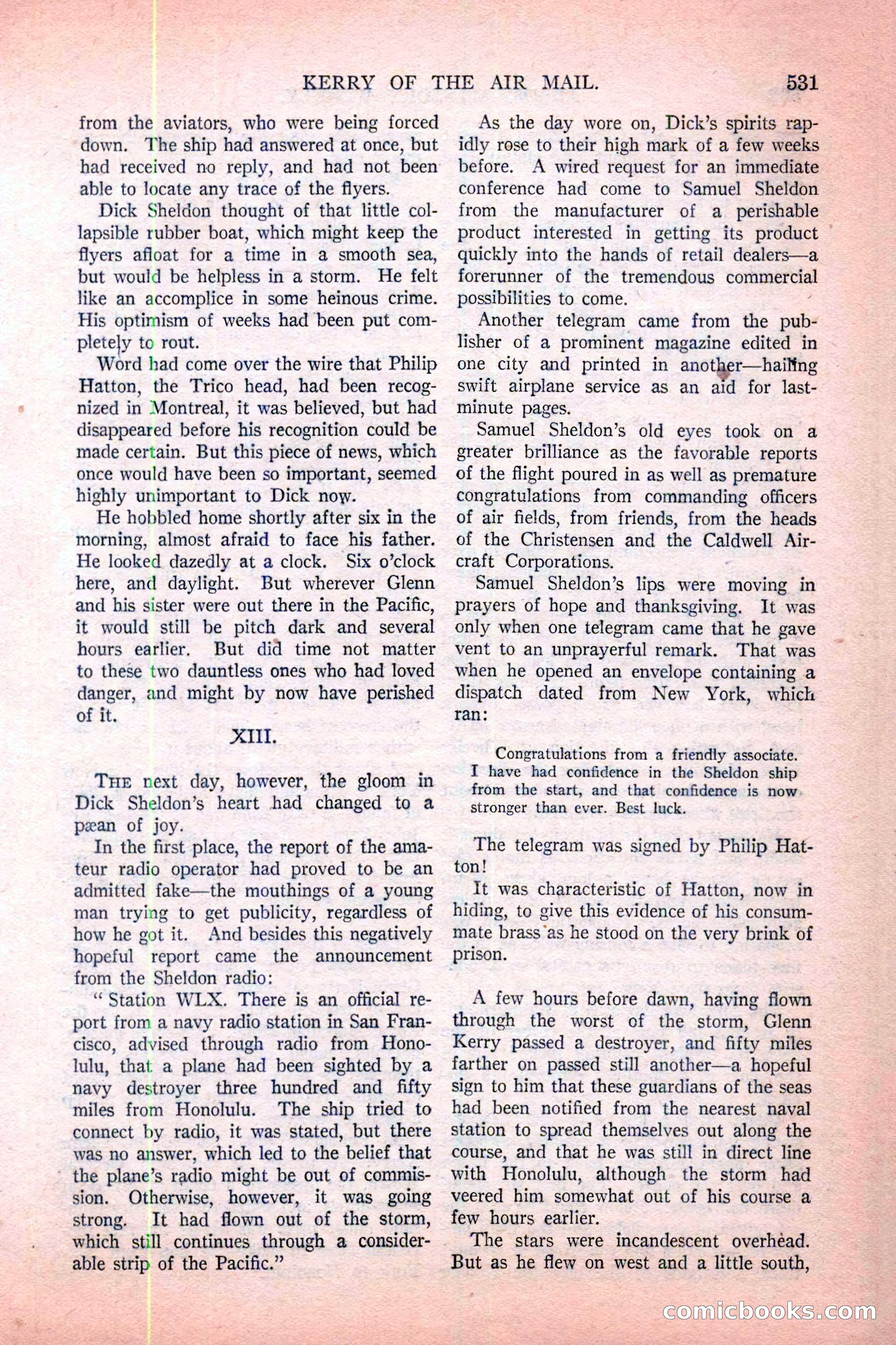
A restored page from Pulp Fiction, 1927. Page through the whole issue in the reader above.
📄 Transcribed text from this page (OCR, searchable)
Machine-transcribed from the original scan — historical spelling and the odd misread are preserved.
KERRY OF THE AIR MAIL. from the aviators, who were being forced down. The ship had answered at once, but had received no reply, and had not been able to locate any trace of the flyers. Dick Sheldon thought of that little col- lapsible rubber boat, which might keep the flyers afloat for a time in a smooth sea, but would be helpless in a storm. He felt like an accomplice in some heinous crime. His optimism of weeks had been put com- pletely to rout. Word had come over the wire that Philip Hatton, the Trico head, had been recog- nized in Montreal, it was believed, but had disappeared before his recognition could be made certain. But this piece of news, which once would have been so important, seemed highly unimportant to Dick now. He hobbled home shortly after six in the morning, almost afraid to face his father. He looked dazedly at a clock. Six o’clock here, and daylight. But wherever Glenn and his sister were out there in the Pacific, it would still be pitch dark and several hours earlier. But did time not matter to these two dauntless ones who had loved danger, and might by now have perished of it. ALI, THE next day, however, the gloom in Dick Sheldon’s heart had changed to a peean of joy. In the first place, the report of the ama- teur radio operator had proved to be an admitted fake—the mouthings of a young man trying to get publicity, regardless of how he got it. And besides this negatively hopeful report came the announcement from the Sheldon radio: “Station WLX. There is an official re- port from a navy radio station in San Fran- cisco, advised through radio from Hono- lulu, that a plane had been sighted by a navy destroyer three hundred and fifty miles from Honolulu. The ship tried to connect by radio, it was stated, but there was no answer, which led to the belief that the plane’s radio might be out of commis- sion. Otherwise, however, it was going strong. It had flown out of the storm, which still continues through a consider- able strip of the Pacific.” 531 As the day wore on, Dick’s spirits rap- idly rose to their high mark of a few weeks before. A wired request for an immediate conference had come to Samuel Sheldon from the manufacturer of a_ perishable product interested in getting its product quickly into the hands of retail dealers—a forerunner of the tremendous COTIOETUHe possibilities to come. Another telegram came from the pub- lisher of a prominent magazine edited in one city and printed in another—hailing swift airplane service as an ald for last- minute pages. Samuel Sheldon’s old eyes took on a greater brilliance as the favorable reports of the flight poured in as well as premature congratulations from commanding officers of air fields, from friends, from the heads of the Christensen and the Caldwell Air- craft Corporations. Samuel Sheldon’s lips were moving in prayers of hope and thanksgiving. It was only when one telegram came that he gave vent to an unprayerful remark. That was when he opened an envelope containing a dispatch dated from New York, which ran: Congratulations from a friendly associate. I have had confidence in the Sheldon ship from the start, and that confidence is now. stronger than ever. Best luck. The telegram was signed by Philip Hat- ton! It was characteristic of Hatton, now in hiding, to give this evidence of his consum- mate brass‘as he stood on the very brink of prison. A few hours before dawn, having flown through the worst of the storm, Glenn Kerry passed a destroyer, and fifty miles farther on passed still another—a hopeful sign to him that these guardians of the seas had been notified from the nearest naval station to spread themselves out along the course, and that he was still in direct line with Honolulu, although the storm had veered him somewhat out of his course a ~ few hours earlier. The stars were incandescent overhead. But as he flew on west and a little south, Gomichbooks Gor