
Pulp Fiction, 1927 · page 147 of 180
Argosy All-Story Weekly, Vol. 189, No. 4 — page 147: what you’re looking at
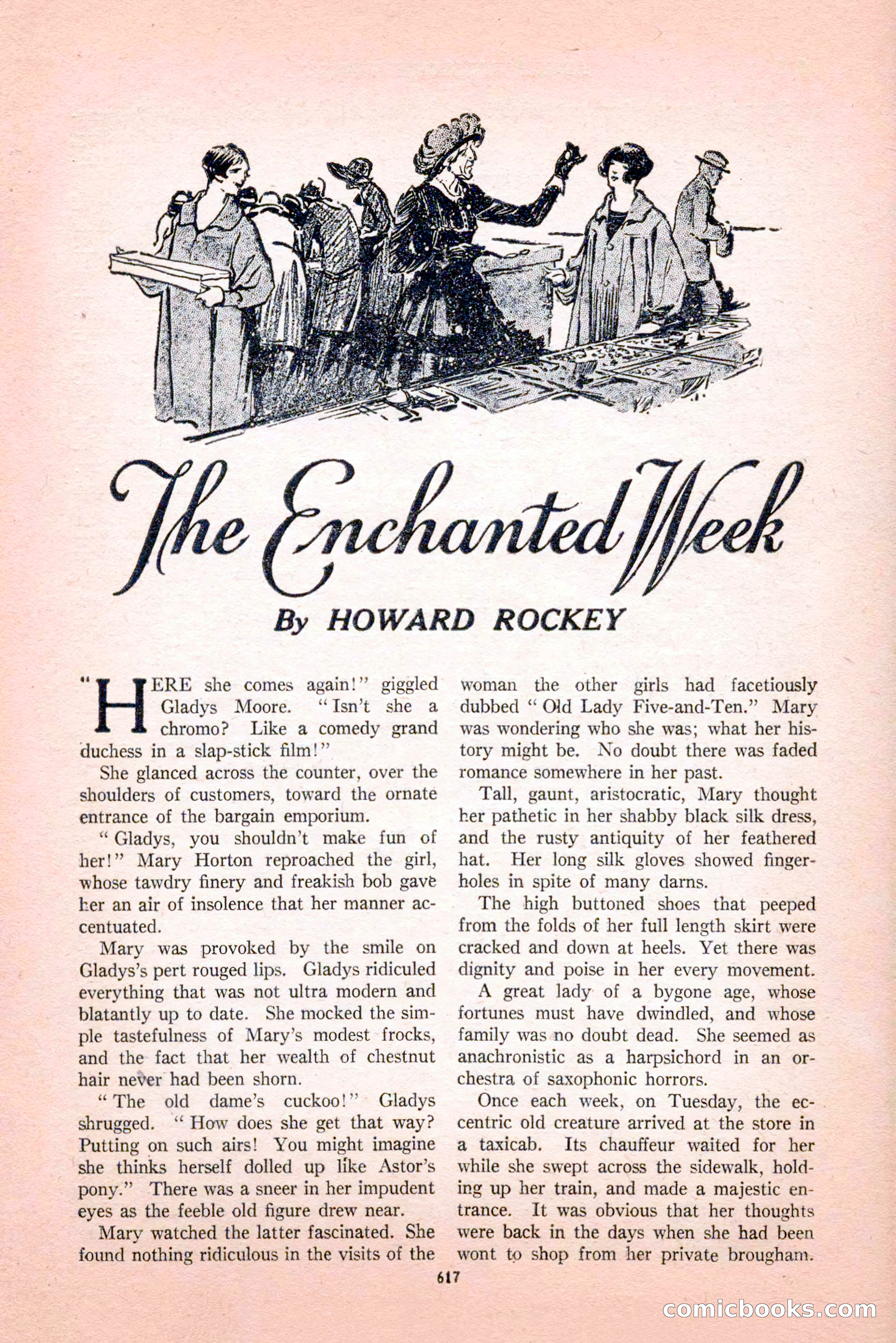
A restored page from Pulp Fiction, 1927. Page through the whole issue in the reader above.
📄 Transcribed text from this page (OCR, searchable)
Machine-transcribed from the original scan — historical spelling and the odd misread are preserved.
By HOWARD ROCKEY ss ERE she comes again!” giggled Gladys Moore. ‘“Isn’t she a chromo? Like a comedy grand duchess in a slap-stick film!” She glanced across the counter, over the shoulders of customers, toward the ornate entrance of the bargain emporium. “Gladys, you shouldn’t make fun of her!” Mary Horton reproached the girl, whose tawdry finery and freakish bob gave ker an air of insolence that her manner ac- centuated. Mary was provoked by the smile on Gladys’s pert rouged lips. Gladys ridiculed everything that was not ultra modern and blatantly up to date. She mocked the sim- ple tastefulness of Mary’s modest frocks, and the fact that her wealth of chestnut hair never had been shorn. “The old dame’s_ cuckoo!” Gladys shrugged. ‘‘ How does she get that way? Putting on such airs! You might imagine she thinks herself dolled up like Astor’s pony.” ‘There was a sneer in her impudent eyes as the feeble old figure drew near. Mary watched the latter fascinated. She found nothing ridiculous in the visits of the 617 woman the other girls had _ facetiously dubbed “ Old Lady Five-and-Ten.” Mary was wondering who she was; what her his- tory might be. No doubt there was faded romance somewhere in her past. Tall, gaunt, aristocratic, Mary thought her pathetic in her shabby black silk dress, and the rusty antiquity of her feathered hat. Her long silk gloves showed finger- holes in spite of many darns. The high buttoned shoes that peeped from the folds of her full length skirt were cracked and down at heels. Yet there was dignity and poise in her every movement. A great lady of a bygone age, whose fortunes must have dwindled, and whose family was no doubt dead. She seemed as anachronistic as a harpsichord in an or- chestra of saxophonic horrors. Once each week, on Tuesday, the ec- - centric old creature arrived at the store in a taxicab. Its chauffeur waited for her while she swept across the sidewalk, hold- ing up her train, and made a majestic en- trance. It was obvious that her thoughts were back in the days when she had been wont to shop from her private brougham. Gomichbooks (E©)