
Pulp Fiction, 1927 · page 28 of 168
Argosy All-Story Weekly, February 12, 1927 — page 28: what you’re looking at
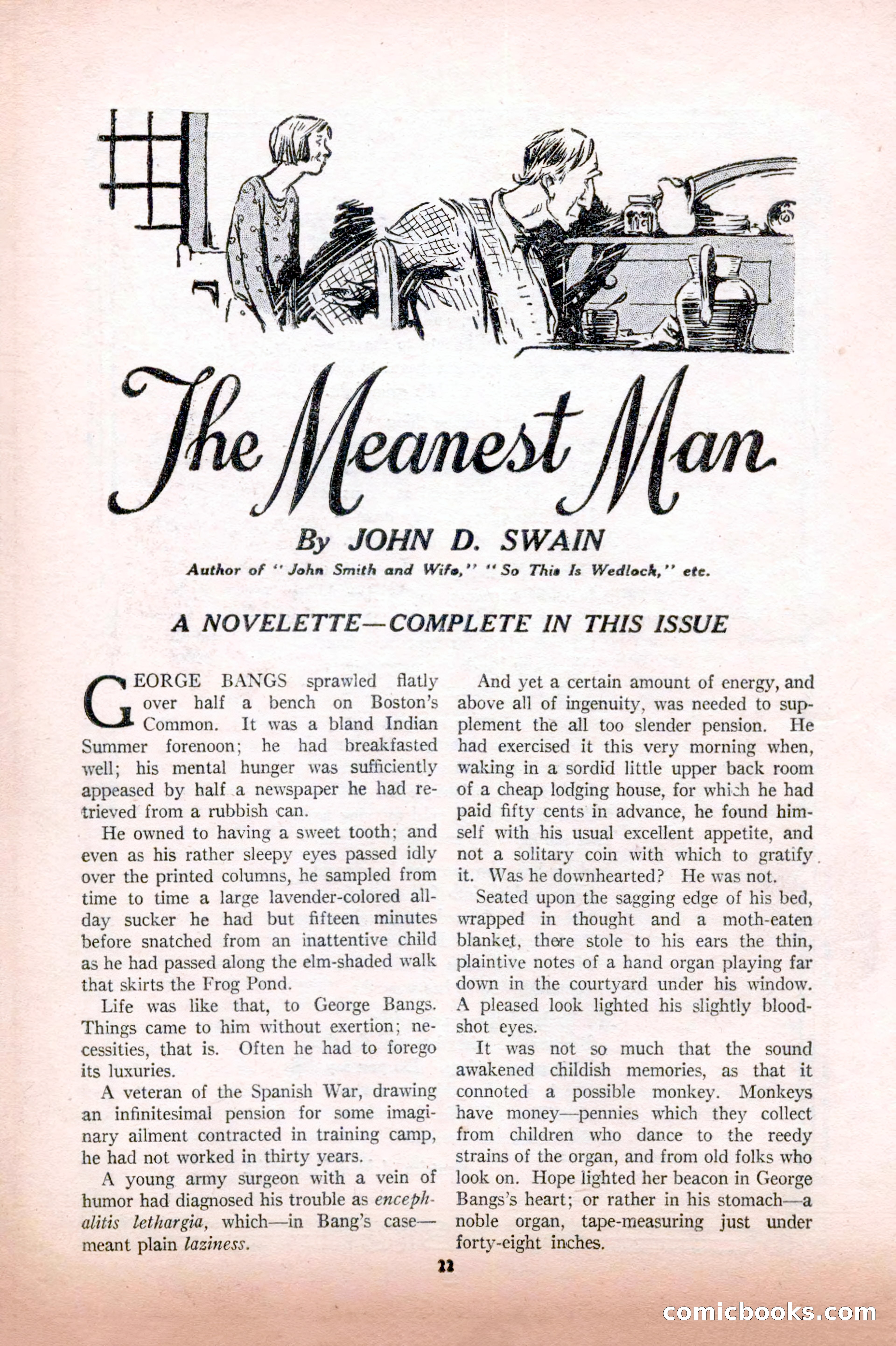
A restored page from Pulp Fiction, 1927. Page through the whole issue in the reader above.
📄 Transcribed text from this page (OCR, searchable)
Machine-transcribed from the original scan — historical spelling and the odd misread are preserved.
By JOHN D. SWAIN Author of ‘' John Smith and Wife,’’ *‘So Thie Is Wedlock,’’ ete. A NOVELETTE—COMPLETE IN THIS ISSUE EORGE BANGS sprawled flatly & over half a bench on _ Boston’s Common. It was a bland Indian Summer forenoon; he had _ breakfasted well; his mental hunger was sufficiently appeased by half a newspaper he had re- trieved from a rubbish can. He owned to having a sweet tooth; and even as his rather sleepy eyes passed idly over the printed columns, he sampled from time to time a large lavender-colored all- day sucker he had but fifteen minutes before snatched from an inattentive child as he had passed along the elm-shaded walk that skirts the Frog Pond. Life was like that, to George Bangs. Things came to him without exertion; ne- cessities, that is. Often he had to forego its luxuries. A veteran of the Spanish War, drawing an infinitesimal pension for some imagi- nary ailment contracted in training camp, he had not worked in thirty years. : A young army surgeon with a vein of humor had diagnosed his trouble as enceph- alitis lethargia, which—in Bang’s case— meant plain laziness. And yet a certain amount of energy, and above all of ingenuity, was needed to sup- plement the all too slender pension. He had exercised it this very morning when, waking in a sordid little upper back room of a cheap lodging house, for which he had paid fifty cents in advance, he found him- self with his usual excellent appetite, and not a solitary coin with which to gratify . it. Was he downhearted? He was not, Seated upon the sagging edge of his bed, wrapped in thought and a _ moth-eaten blanket, there stole to his ears the thin, plaintive notes of a hand organ playing far down in the courtyard under his window. A pleased look lighted his slightly blood- shot eyes. It was not so much that the sound awakened childish memories, as that it connoted a possible monkey. Monkeys have money—pennies which they collect from children who dance to the reedy strains of the organ, and from old folks who look on. Hope lighted her beacon in George Bangs’s heart; or rather in his stomach—a noble organ, tape-measuring just under forty-eight inches,