
Pulp Fiction, 1925 · page 151 of 184
Argosy All-Story Weekly, February 7, 1925 — page 151: what you’re looking at
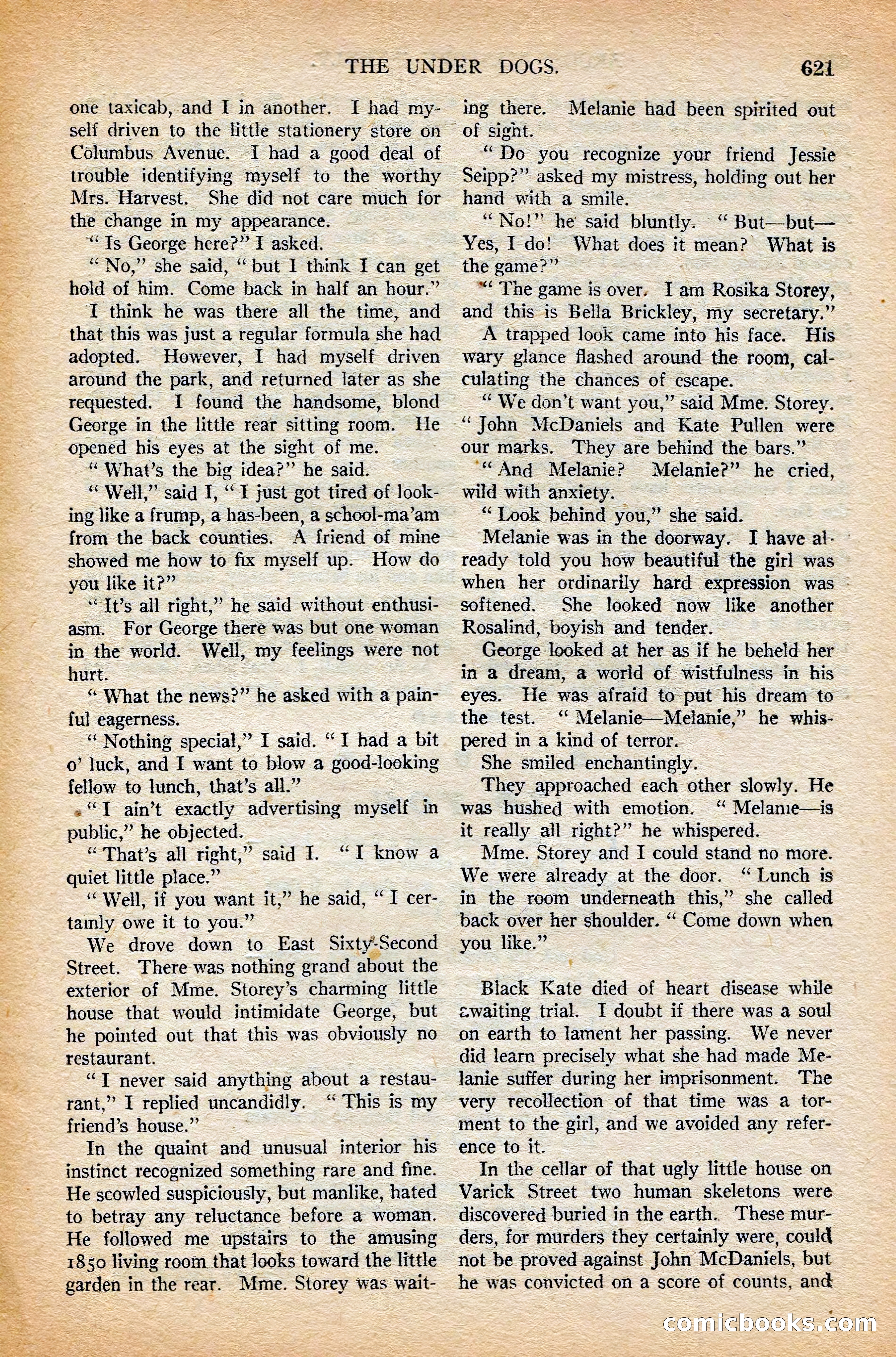
A restored page from Pulp Fiction, 1925. Page through the whole issue in the reader above.
📄 Transcribed text from this page (OCR, searchable)
Machine-transcribed from the original scan — historical spelling and the odd misread are preserved.
bie ae td AMG > ne AVE _ ae ¥ ae ri eS wf >) i) a +4 A's pa Ae . aN he het SY ka i LeRoy LH meee eT ‘, Ws = '\s / 4 eal vn Fo ; ‘ ye [Vy Ys hee ayy ae s 4 f ' #1) is ¥ F if , 18} one taxicab, and I in another, I had my- self driven to the little stationery store on Columbus Avenue. I had a good deal of trouble identifying myself to the worthy Mrs. Harvest. She did not care much for the change in my appearance. “Ts George here?” I asked. “No,” she said, ‘but I think I can get hold of him. Come back in half an hour.” I think he was there all the time, and that this was just a regular formula she had adopted. However, I had myself driven around the park, and returned later as she requested. I found the handsome, blond George in the little rear sitting room. He Guid his eyes at the sight of me. “ What’s the big idea?” he said. “Well,” said I, “I just got tired of look- ing like a frump, a has-been, a school-ma’am from the back counties. A friend of mine showed me how to fix myself up. How do you like it?” “It’s all right,” he said without enthusi- asm. For George there was but one woman in the world. Well, my feelings were not hurt. “ What the news?” he asked with a pain- ful eagerness. “ Nothing special,” I said. “I had a bit o’ luck, and I want to blow a good-looking fellow to lunch, that’s all.” e“T ain't exactly advertising myself in public,” he objected. “That’s all right, ” said I. quiet little place.” “Well, if you went it,” he said, “ I cer- tainly owe it to you.” We drove down to East Sixty- Second Street. There was nothing grand about the exterior of Mme. Storey’s charming little house that would intimidate George, but he pointed out that this was obviously no restaurant. ‘““T never said anything about a restau- rant,” I replied uncandidly. “ This is my friend’s house.”’ In the quaint and unusual interior his instinct recognized something rare and fine. He scowled suspiciously, but manlike, hated to betray any reluctance before a woman. He followed me upstairs to the amusing 1850 living room that looks toward the little ~ garden in the rear. Mme. Storey was wait- “T know a THE “UNDER DOGS. on earth to lament her passing. 621 ing there. Melanie had — spirited out of sight. “Do you recognize your friend Jessie Seipp?” asked my mistress, holding out her hand with a smile. “No!” he’ said bluntly. Yes, I do! the game?” “The game is over, i: am Rosika Storey, and this is Bella Brickley, my secretary.” A trapped look came into his face. His wary glance flashed around the room, Ccal- culating the chances of escape. “We don’t want you,”’ said Mme. Storey. ast Ber bee What does it mean? What iS “John McDaniels and Kate Pullen were | our marks. They are behind the bars.” “And Melanie? Melanie?” he cried, wild with anxiety. : “Yook behind you,” she said. “Melanie was in the doorway. JI have al- ready told you how beautiful the girl was when her ordinarily hard expression was - softened. She looked now like another Rosalind, boyish and tender. George looked at her as if he beheld her — in a dream, a world of wistfulness in his eyes. He was afraid to put his dream to - the test. ‘‘ Melanie—Melanie,” he whis- pered in a kind of terror. She smiled enchantingly. They approached each other slowly. He was hushed with emotion. “ Melanie—is it really all right?’ he whispered. Mme. Storey and I could stand no more. We were already at the door. “ Lunch is in the room underneath this,” she called back over her shoulder. ‘‘ Come down when you like.” Black Kate died of heart disease while ewaiting trial. I doubt if there was a soul We never did learn precisely what she had made Me- lanie suffer during her imprisonment. The very recollection of that time was a tor- ment to the girl, and we avoided any refer- ence to it. In the cellar of that ugly little house on Varick Street two human skeletons were discovered buried in the earth. These mur- ders, for murders they certainly were, could not be proved against John McDaniels, but he was convicted on a score of counts, and Eomicbooks.co 3