
Pulp Fiction, 1924 · page 168 of 172
Argosy All-Story Weekly, April 19, 1924 — page 168: what you’re looking at
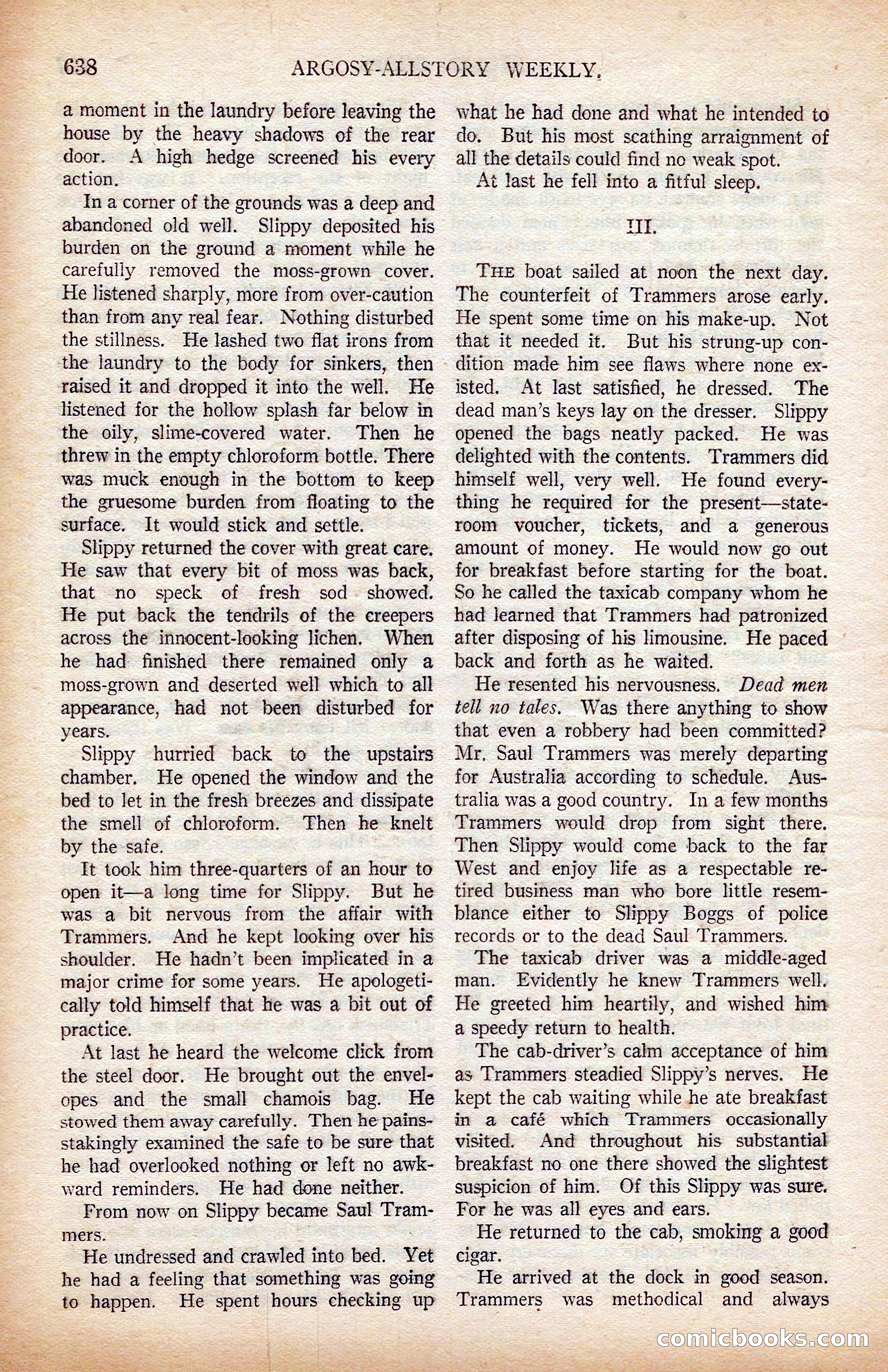
A restored page from Pulp Fiction, 1924. Page through the whole issue in the reader above.
📄 Transcribed text from this page (OCR, searchable)
Machine-transcribed from the original scan — historical spelling and the odd misread are preserved.
638 a moment in the laundry before leaving the house by the heavy shadows of the rear door. A high hedge screened his every action. In a corner of the grounds was a deep and abandoned old well. Slippy deposited his burden on the ground a moment while he carefully removed the moss-grown cover. He listened sharply, more from over-caution than from any real fear. Nothing disturbed the stillness. He lashed two flat irons from the laundry to the body for sinkers, then raised it and dropped it into the well. He listened for the hollow splash far below in the oily, slime-covered water. Then he threw in the empty chloroform bottle. There was muck enough in the bottom to keep the gruesome burden from floating to the surface. It would stick and settle. Slippy returned the cover with great care. He saw that every bit of moss was back, that no speck of fresh sod showed. He put back the tendrils of the ereepers across the innocent-looking lichen, When he had: finished there remained only a moss-grown and deserted well which to all appearance, had not been disturbed for years. Slippy hurried back to the upstairs chamber. He opened the window and the bed to let in the fresh breezes and dissipate the smell of chloroform. Then he knelt by the safe. It took him three-quarters of an hour to open it—a long time for Slippy. But he was a bit nervous from the affair with Trammers. And he kept looking over his shoulder. He hadn’t been implicated in a major crime for some years. He apologeti- cally told himself that he was a bit out of practice. At last he heard the welcome click from the steel door. He brought out the envel- epes and the small chamois bag. He stowed them away carefully. Then he pains- stakingly examined the safe to be sure that he had overlooked nothing or left no awk- ward reminders. He had done neither. From now on Slippy became Saul Tram- mers. : He undressed and crawled into bed. Yet he had a feeling that something was going to happen. He spent hours checking up ARGOSY-ALLSTORY WEEKLY. what he had done and what he intended ta do. But his most scathing arraignment of all the details could find no weak spot. t last he fell into a fitful sleep. 1G 8 = THE boat sailed at noon the next day. The counterfeit of Trammers arose early. He spent some time on his make-up. Not that it needed it. But his strung-up con- dition made him see flaws where none ex- isted. At last satisfied, he dressed. The dead man’s keys lay on the dresser. Slippy opened the bags neatly packed. He was dehghted with the contents. Trammers did himself well, very well. He found every- thing he required for the present—state- room voucher, tickets, and a generous amount of money. He would now go out for breakfast before starting for the boat. So he called the taxicab company whom he had learned that Trammers had patronized after disposing of his limousine. He paced — back and forth as he waited. He resented his nervousness. Dead men tell no tales. Was there anything to show that even a robbery had been committed? Mr, Saul Trammers was merely departing for Australia according to schedule. Aus- tralia was a good country. In a few months Trammers would drop from sight there. Then Slippy would come back to the far West and enjoy life as a respectable re- tired business man who bore little resem- blance either to Slippy Boggs of police records or to the dead Saul Trammers. The taxicab driver was a middle-aged man. Evidently he knew Trammers well. He greeted him heartily, and wished him a speedy return to health. The cab-driver’s calm acceptance of him as Trammers steadied Slippy’s nerves. He kept the cab waiting while he ate breakfast in a café which Trammers occasionally visited. And throughout his substantial breakfast no one there showed the slightest suspicion of him. Of this Slippy was sure. For he was all eyes and ears. He returned to the cab, smoking a good cigar. He arrived at the dock in good season. Trammers was methcdical and always cS (GC) Eomichoo