
Pulp Fiction, 1923 · page 43 of 176
Argosy All-Story Weekly — page 43: what you’re looking at
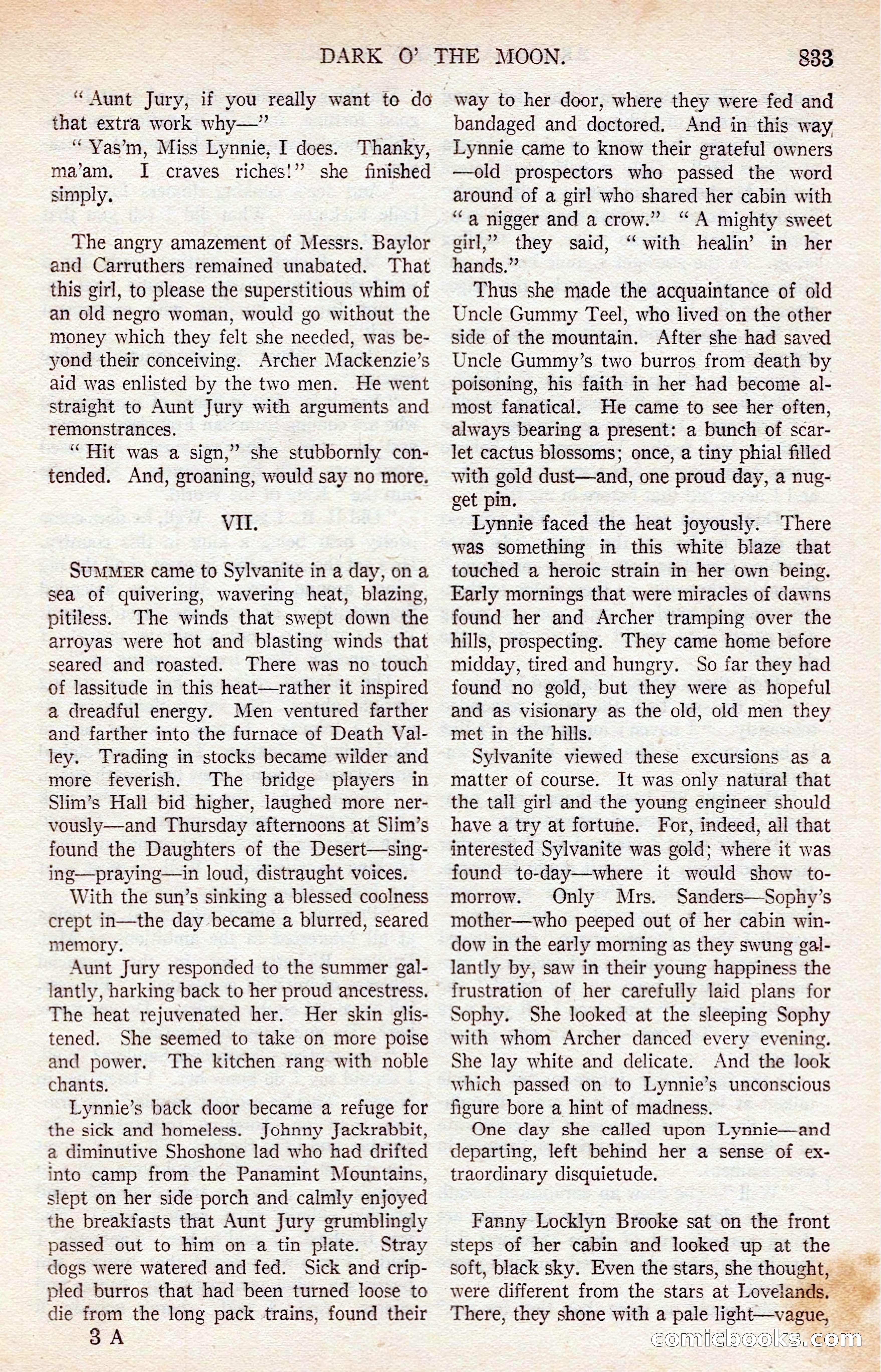
A restored page from Pulp Fiction, 1923. Page through the whole issue in the reader above.
📄 Transcribed text from this page (OCR, searchable)
Machine-transcribed from the original scan — historical spelling and the odd misread are preserved.
DARK 0’ THE MOON. “Aunt Jury, if you really want to do that extra work why—” ‘““‘Yas’m, Miss Lynnie, I does. Thanky, ma’am. I craves riches!” she finished simply. The angry amazement of Messrs. Baylor and Carruthers remained unabated. That this girl, to please the superstitious whim of an old negro woman, would go without the money which they felt she needed, was be- yond their conceiving. Archer Mackenzie’s aid was enlisted by the two men. He went straight to Aunt Jury with arguments and remonstrances. ‘Hit was a sign,’ she stubbornly con- tended. And, groaning, would say no more. VIl. SUMMER came to Sylvanite in a day, ona sea of quivering, wavering heat, blazing, pitiless. The winds that swept down the arroyas were hot and blasting winds that seared and roasted. There was no touch of lassitude in this heat—rather it inspired a dreadful energy. Men ventured farther and farther into the furnace of Death Val- ley. Trading in stocks became wilder and more feverish. The bridge players in Slim’s Hall bid higher, Jaughed more ner- vously—and Thursday afternoons at Slim’s found the Daughters of the Desert—sing- ing—praying—in loud, distraught voices. With the sun’s sinking a blessed coolness crept in—the day became a blurred, seared memory. Aunt Jury responded to the summer gal- lantly, harking back to her proud ancestress. © The heat rejuvenated her. Her skin glis- tened. She seemed to take on more poise and power. The kitchen rang with noble chants. Lynnie’s back door became a refuge for the sick and homeless. Johnny Jackrabbit, a diminutive Shoshone lad who had drifted into camp from the Panamint Mountains, slept on her side porch and calmly enjoyed the breakfasts that Aunt Jury grumblingly passed out to him on a tin plate. Stray dogs were watered and fed. Sick and crip- pled burros that had been turned loose to die from the long pack trains, found their 3 A 833 way to her door, where they were fed and bandaged and doctored. And in this way Lynnie came to know their grateful owners —old prospectors who passed the word around of a girl who shared her cabin with “a nigger and a crow.” “A mighty sweet girl,” they said, “ with healin’ in her hands.” Thus she made the acquaintance of old Uncle Gummy Teel, who lived on the other side of the mountain. After she had saved Uncle Gummy’s two burros from death by poisoning, his faith in her had become al- most fanatical. He came to see her often, always bearing a present: a bunch of scar- let cactus blossoms; once, a tiny phial filled with gold dust—and, one proud day, a nug- get pin. Lynnie faced the heat joyously. There was something in this white blaze that touched a heroic strain in her own being. Early mornings that were miracles of dawns found her and Archer tramping over the hills, prospecting. They came home before midday, tired and hungry. So far they had found no gold, but they were as hopeful and as visionary as the old, old men they met in the hills. Sylvanite viewed these excursions as a matter of course. It was only natural that the tall girl and the young engineer should have a try at fortune. For, indeed, ail that interested Sylvanite was gold; where it was found to-day—where it would show to- morrow. Only Mrs. Sanders—Sophy’s mother—who peeped out of her cabin win- dow in the early morning as they swung gal- lantly by, saw in their young happiness the frustration of her carefully laid plans for Sophy. She looked at the sleeping Sophy with whom Archer danced every evening. She lay white and delicate. And the look which passed on to Lynnie’s unconscious figure bore a hint of madness. One day she called upon Lynnie—and departing, left behind her a sense of ex- traordinary disquietude. Fanny Locklyn Brooke sat on the front steps of her cabin and looked up at the soft, black sky. Even the stars, she thought, were different from the stars at Tovelands There, they shone with a pale light—vague, — COMmmc OOS «e€© m