
Pulp Fiction, 1923 · page 71 of 180
Argosy All-Story Weekly — page 71: what you’re looking at
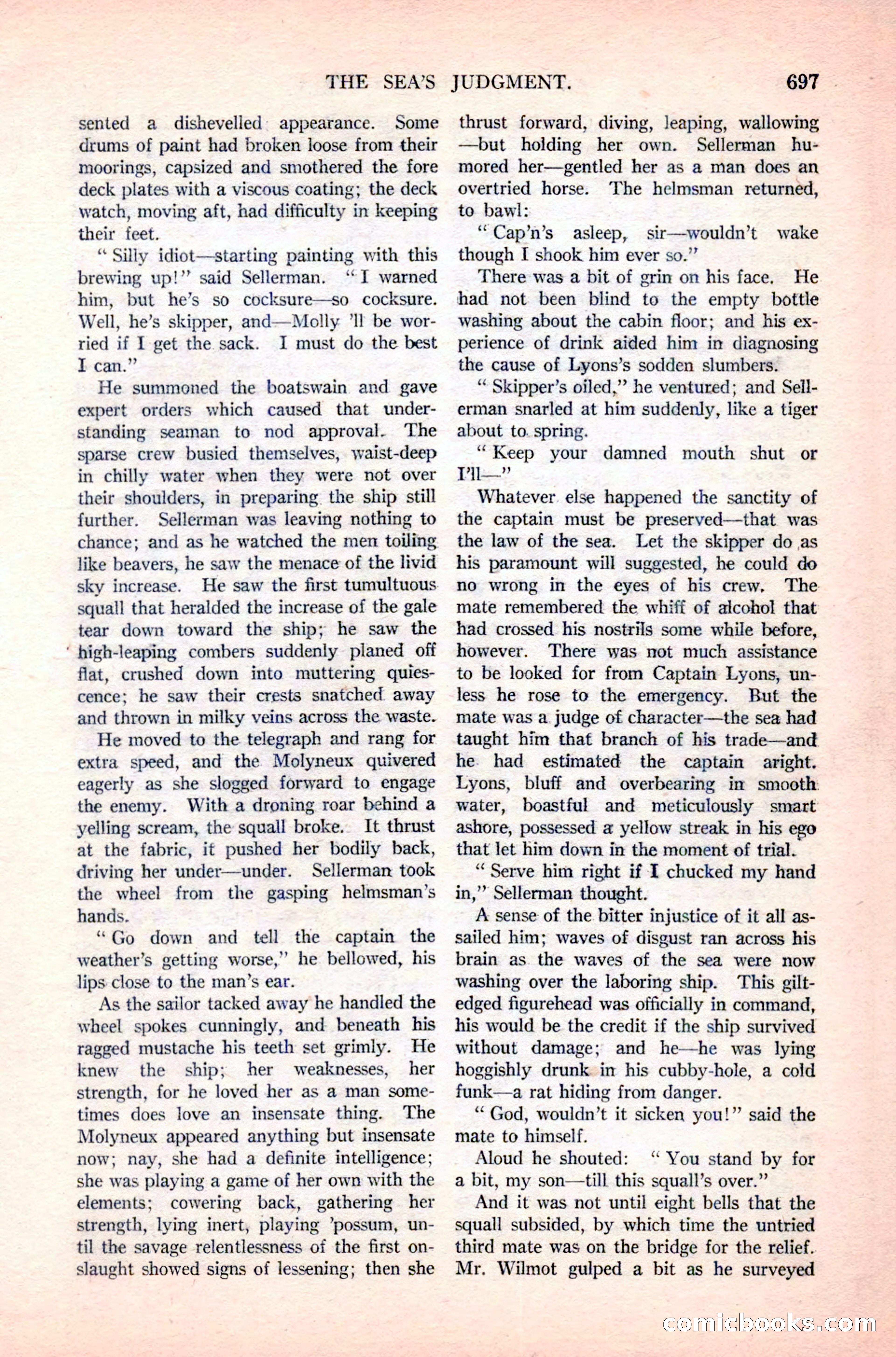
A restored page from Pulp Fiction, 1923. Page through the whole issue in the reader above.
📄 Transcribed text from this page (OCR, searchable)
Machine-transcribed from the original scan — historical spelling and the odd misread are preserved.
THE SEA’S sented a dishevelled) appearance. Some drums of paint had broken loose from their moorings, capsized and smothered the fore deck plates with a viscous coating; the deck watch, moving aft, had difficulty in keeping their feet. “Silly idiot—starting painting with this brewing up!”’ said Sellerman. “I warned him, but he’s so cocksure—so cocksure. Well, he’s skipper, and—Molly ‘Il be wor- ried if I get the sack. I must do the best I can.” He summoned the boatswain and gave expert orders which caused that under- standing seaman to nod approval. The sparse crew busied themselves, waist-deep in chilly water when they were not over their shoulders, in preparing. the ship still further. Sellerman was leaving nothing to chance; and as he watched the men toiling like beavers, he saw the menace of the livid sky increase. He saw the first tumultuous squall that heralded the increase of the gale tear down toward the ship; he saw the ‘ high-leaping combers suddenly planed off flat, crushed down into muttering quies- cence; he saw their crests snatched away and thrown in milky veins across the waste. He moved to the telegraph and rang for extra speed, and the Molyneux quivered eagerly as she slogged forward to engage the enemy. With a droning roar behind a yelling scream, the squall broke. It thrust at the fabric, if pushed her bodily back, driving her under—under. Sellerman took the wheel from the gasping helmsman’s hands. “Go down and tell the captain the weather’s getting worse,”’ he bellowed, his lips close to the man’s ear. As the sailor tacked away he handled the wheel spokes cunningly, and beneath his ragged mustache his teeth set grimly. He knew the ship; her weaknesses, her strength, for he loved her as a man some- times does love an insensate thing. The Molyneux appeared anything but insensate now; nay, she had a definite intelligence; she was playing a game of her own with the elements; cowering back, gathering her strength, lying inert, playing "possum, un- til the savage relentlessness of the first on- slaught showed signs of lessening; then she JUDGMENT. thrust forward, diving, leaping, wallowing —but holding her own. Sellerman hu- mored her—gentled her as a man does an overtried horse. The helmsman returned, to bawl: ““Cap’n’s asleep, sir—wouldn’t wake though [ shook him ever so.” There was a bit of grin on his face. He had not been blind to the empty bottle washing about the cabin floor; and his ex- perience of drink aided him in diagnosing the cause of Lyons’s sodden slumbers. “ Skipper’s oiled,” he ventured; and Sell- erman snarled at him suddenly, like a tiger about to. spring. “Keep your damned mouth shut or Pil—”’ Whatever else happened the sanctity of the captain must be preserved—that was the law of the sea. Let the skipper do as his paramount will suggested, he could do no wrong in the eyes of his crew, The mate remembered the whiff of alcohol that had crossed his nostrils some while before, however. There was not much assistance to be looked for from Captain Lyons, un- less he rose to the emergency. But the mate was a judge of character—the sea had taught him that branch of his trade—and he had estimated the captain aright. Lyons, bluff and overbearing in smooth water, boastful and meticulously smart ashore, possessed a yellow streak in his ego that let him down in the moment of trial. “Serve him right if I chucked my hand in,” Sellerman thought. A sense of the bitter injustice of it all as- sailed him; waves of disgust ran across his brain as the waves of the sea were now washing over the laboring ship. This gilt- edged figurehead was officially in command, his would be the credit if the ship survived without damage; and he—he was lying hoggishly drunk in his cubby-hole, a cold funk—a rat hiding from danger. “God, wouldn’t it sicken you!” said the mate to himself. Aloud he shouted: ‘“ You stand by for a bit, my son—till this squall’s over.” And it was not until eight bells that the squall subsided, by which time the untried third mate was on the bridge for the relief. Mr. Wilmot gulped a bit as he surveyed Gomichbooks 697 | (C@