
Pulp Fiction, 1913 · page 26 of 268
All Story Magazine, December 1913 — page 26: what you’re looking at
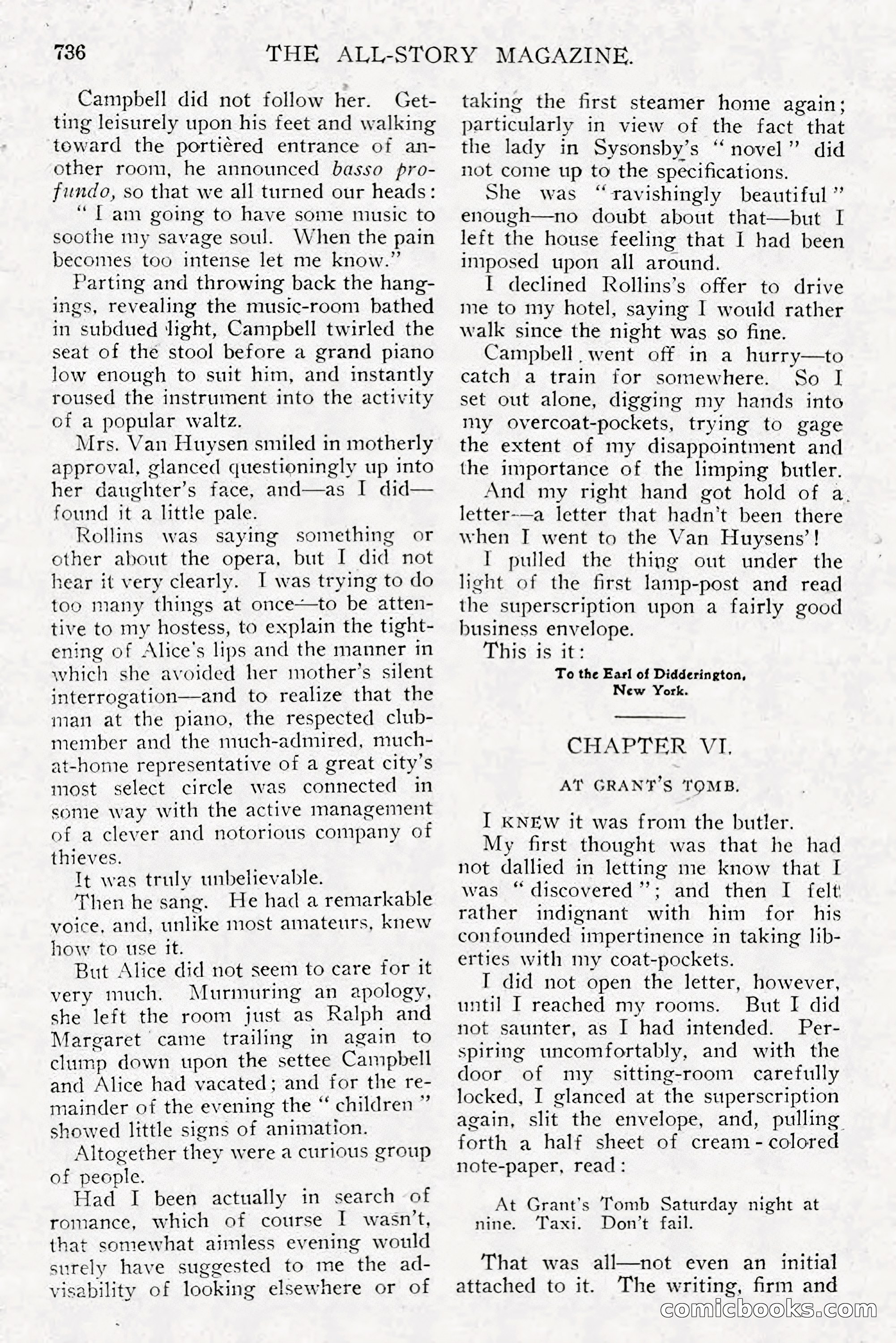
A restored page from Pulp Fiction, 1913. Page through the whole issue in the reader above.
📄 Transcribed text from this page (OCR, searchable)
Machine-transcribed from the original scan — historical spelling and the odd misread are preserved.
736 Campbell did not follow her. Get- ting leisurely upon his feet and walking toward the portiéred entrance of an- other room, he announced basso pro- fundo, so that we all turned our heads: “Tam going to have some music to soothe my savage soul. When the pain becomes too intense let me know.” Parting and throwing back the hang- ings, revealing the music-room bathed in subdued tight, Campbell twirled the seat of the stool before a grand piano low enough to suit him, and instantly roused the instrument into the activity of a popular waltz. Mrs. Van Huysen smiled in motherly approval, glanced questioningly up into her daughter’s face, and—as I did— found it a little pale. Rollins was saying something or other about the opera, but I did not hear it very clearly. I was trying to do too many things at once—to be atten- tive to my hostess, to explain the tight- ening of Alice's lips and the manner in which she avoided her mother’s silent interrogation—and to realize that the man at the piano, the respected club- member and the much-admired, much- at-home representative of a great city’s most select circle was connected in some way with the active management of a clever and notorious company of thieves. It was truly unbelievable. Then he sang. He had a remarkable voice, and, unlike most amateurs, knew how to use it. But Alice did not seem to care for it very much. Murmuring an apology, she left the room just as Ralph and Margaret came trailing in again to clump down upon the settee Campbell and Alice had vacated; and for the re- mainder of the evening the “ children ” showed little signs of animation. Altogether they were a curious group of people. Had I been actually in search of romance, which of course I wasn’t, that somewhat aimless evening would surely have suggested to me the ad- visability of looking elsewhere or of THE ALL-STORY MAGAZINE. taking the first steamer home again; particularly in view of the fact that the lady in Sysonsby’s ‘‘ novel” did not come up to the specifications. She was “ravishingly beautiful ”’ enough—no doubt about that—but I left the house feeling that I had been imposed upon all around. I declined Rollins’s offer to drive me to my hotel, saying I would rather walk since the night was so fine. Campbell, went off in a hurry—to catch a train for somewhere. So I set out alone, digging my hands into my overcoat-pockets, trying to gage the extent of my disappointment and the importance of the limping butler. And my right hand got hold of a. letter-—a letter that hadn't been there when I went to the Van Huysens’! I pulled the thing out under the light of the first lamp-post and read the superscription upon a fairly good business envelope. This is it: To the Earl of Didderington, New York. CHAPTER VI, AT GRANT’S TOMB. I KNEW it was from the butler. My first thought was that he had not dallied in letting me know that I was “ discovered’; and then I felt rather indignant with him for his confounded impertinence in taking lib- erties with my coat-pockets. I did not open the letter, however, until I reached my rooms. But I did not saunter, as I had intended. Per- spiring uncomfortably, and with the door of my _ sitting-room carefully locked, I glanced at the superscription again, slit the envelope, and, pulling forth a half sheet of cream - colored note-paper, read: At Grant's Tomb Saturday night at nine. ‘Taxi. Don’t fail. That was all—not even an initial attached to it. The writing, firm and comnlicloooks.com