
Pulp Fiction, 1938 · page 58 of 100
Air Stories — page 58: what you’re looking at
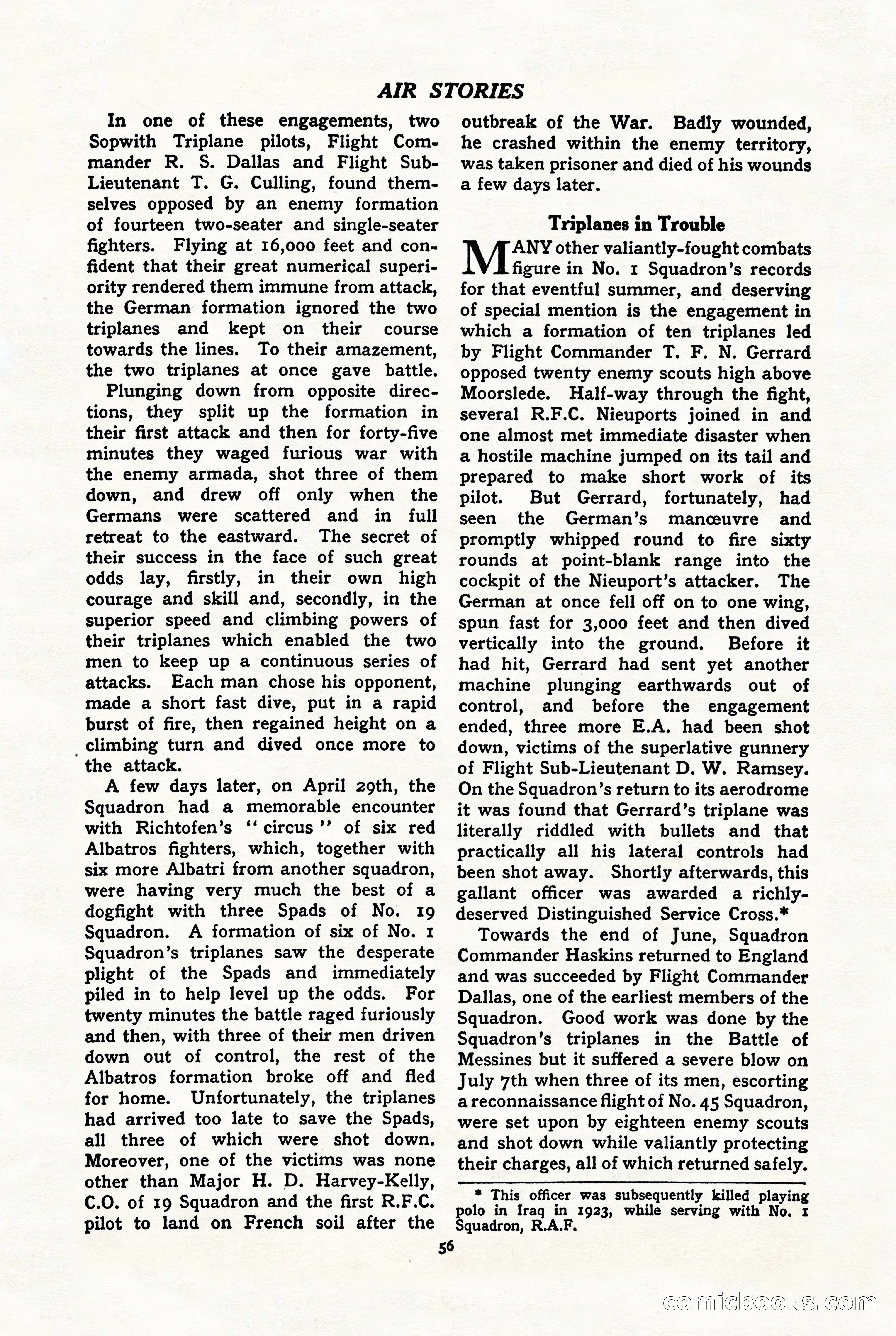
A restored page from Pulp Fiction, 1938. Page through the whole issue in the reader above.
📄 Transcribed text from this page (OCR, searchable)
Machine-transcribed from the original scan — historical spelling and the odd misread are preserved.
AIR STORIES In one of these engagements, two Sopwith Triplane pilots, Flight Com- mander R. S. Dallas and Flight Sub- Lieutenant T. G. Culling, found them- selves opposed by an enemy formation of fourteen two-seater and single-seater fighters. Flying at 16,000 feet and con- fident that their great numerical superi- ority rendered them immune from attack, the German formation ignored the two triplanes and kept on their course towards the lines. To their amazement, the two triplanes at once gave battle. Plunging down from opposite direc- tions, they split up the formation in their first attack and then for forty-five minutes they waged furious war with the enemy armada, shot three of them down, and drew off only when the Germans were scattered and in full retreat to the eastward. The secret of their success in the face of such great odds lay, firstly, in their own high courage and skill and, secondly, in the superior speed and climbing powers of their triplanes which enabled the two men to keep up a continuous series of attacks. Each man chose his opponent, made a short fast dive, put in a rapid burst of fire, then regained height on a climbing turn and dived once more to the attack. A few days later, on April 29th, the Squadron had a memorable encounter with Richtofen’s ‘‘circus’’ of six red Albatros fighters, which, together with six more Albatri from another squadron, were having very much the best of a dogfight with three Spads of No. 19 Squadron. A formation of six of No. 1 Squadron’s triplanes saw the desperate plight of the Spads and immediately piled in to help level up the odds. For twenty minutes the battle raged furiously and then, with three of their men driven down out of control, the rest of the Albatros formation broke off and fled for home. Unfortunately, the triplanes had arrived too late to save the Spads, all three of which were shot down. Moreover, one of the victims was none other than Major H. D. Harvey-Kelly, C.0. of 19 Squadron and the first R.F.C. pilot to land on French soil after the 56 outbreak of the War. Badly wounded, he crashed within the enemy territory, was taken prisoner and died of his wounds a few days later. Triplanes in Trouble ANY other valiantly-fought combats figure in No. 1 Squadron’s records for that eventful summer, and deserving of special mention is the engagement in which a formation of ten triplanes led by Flight Commander T. F. N. Gerrard opposed twenty enemy scouts high above Moorslede. Half-way through the fight, several R.F.C. Nieuports joined in and one almost met immediate disaster when a hostile machine jumped on its tail and prepared to make short work of its pilot. But Gerrard, fortunately, had seen the German’s manceuvre and promptly whipped round to fire sixty rounds at point-blank range into the cockpit of the Nieuport’s attacker. The German at once fell off on to one wing, spun fast for 3,000 feet and then dived vertically into the ground. Before it had hit, Gerrard had sent yet another machine plunging earthwards out of control, and before the engagement ended, three more E.A. had been shot down, victims of the superlative gunnery of Flight Sub-Lieutenant D. W. Ramsey. On the Squadron’s return to its aerodrome it was found that Gerrard’s triplane was literally riddled with bullets and that practically all his lateral controls had been shot away. Shortly afterwards, this gallant officer was awarded a richly- deserved Distinguished Service Cross.* Towards the end of June, Squadron Commander Haskins returned to England and was succeeded by Flight Commander Dallas, one of the earliest members of the Squadron. Good work was done by the Squadron’s triplanes in the Battle of Messines but it suffered a severe blow on July 7th when three of its men, escorting a reconnaissance flight of No. 45 Squadron, were set upon by eighteen enemy scouts and shot down while valiantly protecting their charges, all of which returned safely. * This officer was subsequently killed playing polo in Iraq in 1923, while serving with No. 1 Squadron, R.A.F. CO LOO)