
Pulp Fiction, 1926 · page 164 of 212
Adventure Magazine Cover — page 164: what you’re looking at
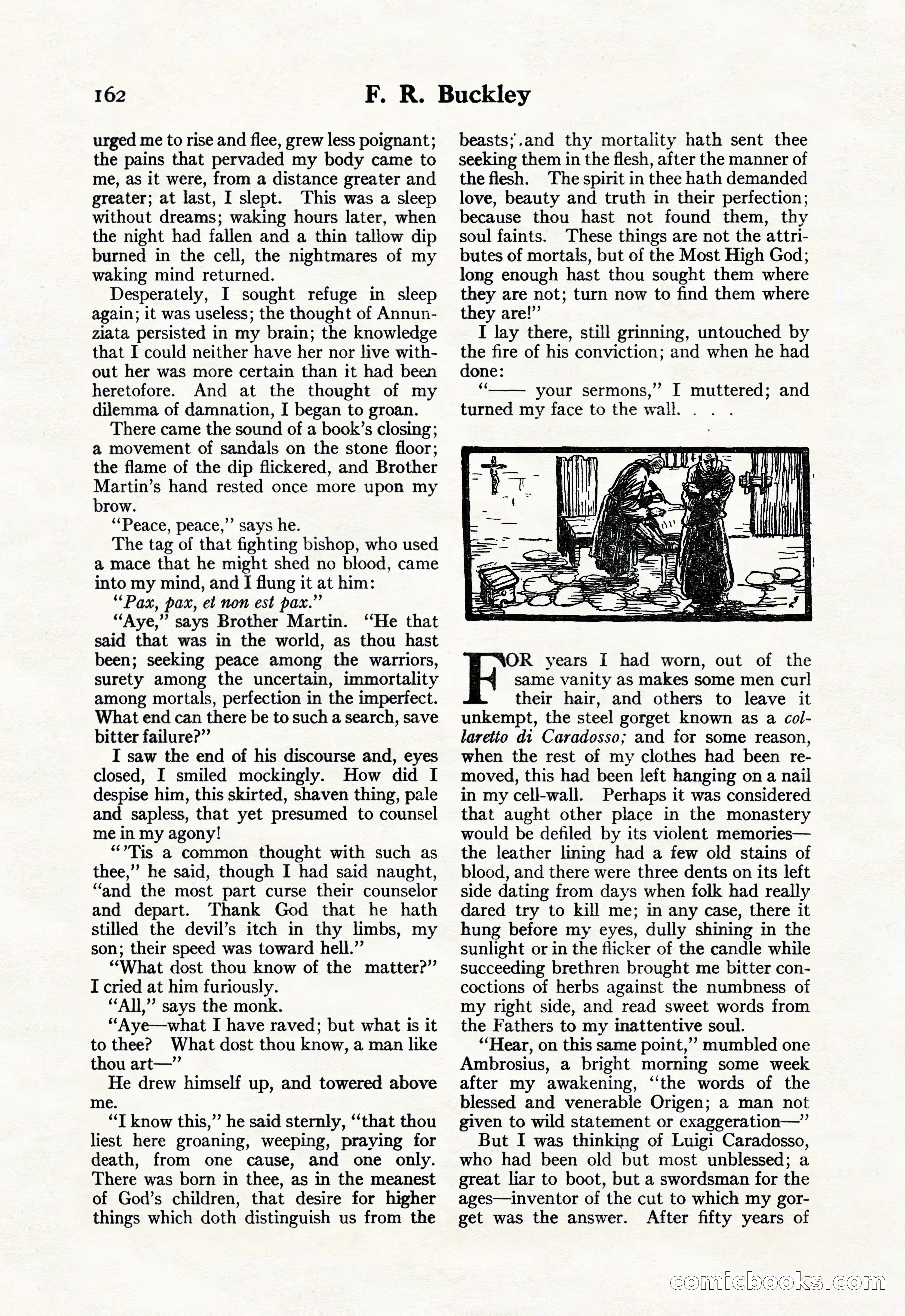
A restored page from Pulp Fiction, 1926. Page through the whole issue in the reader above.
📄 Transcribed text from this page (OCR, searchable)
Machine-transcribed from the original scan — historical spelling and the odd misread are preserved.
162 urged me to rise and flee, grew less poignant; the pains that pervaded my body came to me, as it were, from a distance greater and greater; at last, I slept. This was a sleep without dreams; waking hours later, when the night had fallen and a thin tallow dip burned in the cell, the nightmares of my waking mind returned. Desperately, I sought refuge in sleep again; it was useless; the thought of Annun- ziata persisted in my brain; the knowledge that I could neither have her nor live with- out her was more certain than it had been heretofore. And at the thought of my dilemma of damnation, I began to groan. There came the sound of a book’s closing; a movement of sandals on the stone floor; the flame of the dip flickered, and Brother Martin’s hand rested once more upon my brow. ‘‘Peace, peace,’ says he. The tag of that fighting bishop, who used a mace that he might shed no blood, came into my mind, and I flung it at him: “Pax, pax, et non est pax.” ‘“‘Aye,” says Brother Martin. “He that said that was in the world, as thou hast been; seeking peace among the warriors, surety among the uncertain, immortality among mortals, perfection in the imperfect. What end can there be to such a search, save bitter failure?”’ I saw the end of his discourse and, eyes closed, I smiled mockingly. How did I despise him, this skirted, shaven thing, pale and sapless, that yet presumed to counsel me in my agony! ‘“°Tis a common thought with such as thee,’ he said, though I had said naught, “and the most part curse their counselor and depart. Thank God that he hath stilled the devil’s itch in thy limbs, my son; their speed was toward hell.” ‘What dost thou know of the matter?” I cried at him furiously. “All,” says the monk. “‘“Aye—what I have raved; but what is it to thee? What dost thou know, a man like thou art—” He drew himself up, and towered above me. “T know this,” he said sternly, ‘‘that thou liest here groaning, weeping, praying for death, from one cause, and one only. There was born in thee, as in the meanest of God’s children, that desire for higher things which doth distinguish us from the F. R. Buckley beasts;,and thy mortality hath sent thee seeking them in the flesh, after the manner of the flesh. The spirit in thee hath demanded love, beauty and truth in their perfection; because thou hast not found them, thy soul faints. These things are not the attri- butes of mortals, but of the Most High God; long enough hast thou sought them where they are not; turn now to find them where they are!” I lay there, still grinning, untouched by the fire of his conviction; and when he had done: ¢¢ your sermons,” I muttered; and turned my face to the wall... . OR years I had worn, out of the RK same vanity as makes some men curl their hair, and others to leave it unkempt, the steel gorget known as a col- laretto di Caradosso; and for some reason, when the rest of my clothes had been re- moved, this had been left hanging on a nail in my cell-wall. Perhaps it was considered that aught other place in the monastery would be defiled by its violent memories— the leather lining had a few old stains of blood, and there were three dents on its left side dating from days when folk had really dared try to kill me; in any case, there it hung before my eyes, dully shining in the sunlight or in the flicker of the candle while succeeding brethren brought me bitter con- coctions of herbs against the numbness of my right side, and read sweet words from the Fathers to my inattentive soul. ‘“‘Hear, on this same point,’’ mumbled one Ambrosius, a bright morning some week after my awakening, ‘“‘the words of the blessed and venerable Origen; a man not given to wild statement or exaggeration—’”’ But I was thinking of Luigi Caradosso, who had been old but most unblessed; a great liar to boot, but a swordsman for the ages—inventor of the cut to which my gor- get was the answer. After fifty years of cCoOmuiclbooks CO