
Pulp Fiction, 1926 · page 136 of 232
Adventure Magazine Cover — page 136: what you’re looking at
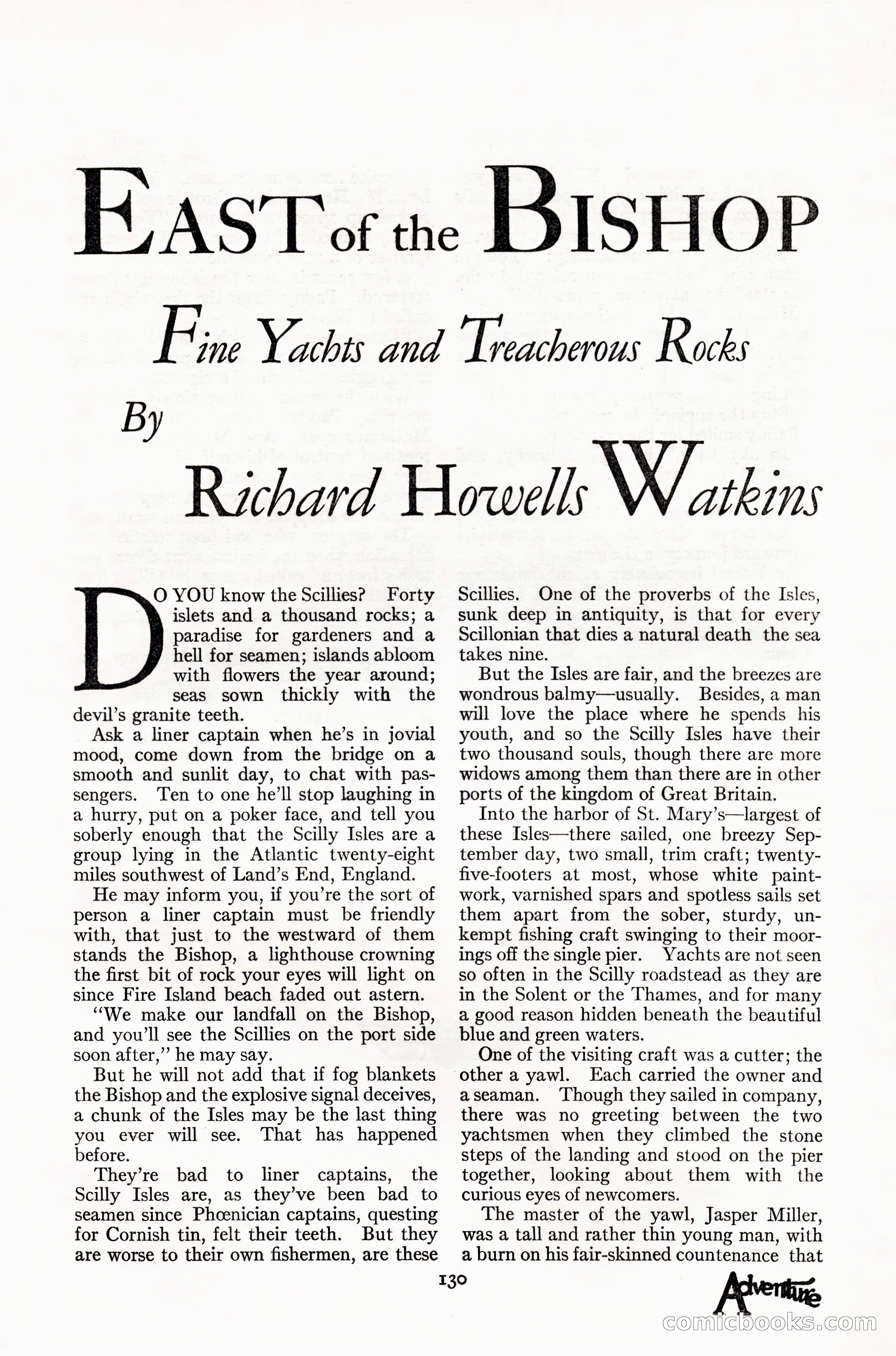
A restored page from Pulp Fiction, 1926. Page through the whole issue in the reader above.
📄 Transcribed text from this page (OCR, searchable)
Machine-transcribed from the original scan — historical spelling and the odd misread are preserved.
E,ASTor tne BISHOP Pe Yachts and Treacherous Rocks By Richard Howells Watkins O YOU know the Scillies? Forty islets and a thousand rocks; a paradise for gardeners and a hell for seamen; islands abloom with flowers the year around; seas sown thickly with the devil’s granite teeth. Ask a liner captain when he’s in jovial mood, come down from the bridge on a smooth and sunlit day, to chat with pas- sengers. Ten to one he'll stop laughing in a hurry, put on a poker face, and tell you soberly enough that the Scilly Isles are a group lying in the Atlantic twenty-eight miles southwest of Land’s End, England. He may inform you, if you’re the sort of person a liner captain must be friendly with, that just to the westward of them stands the Bishop, a lighthouse crowning the first bit of rock your eyes will light on since Fire Island beach faded out astern. ‘“‘We make our landfall on the Bishop, and you'll see the Scillies on the port side soon after,’’ he may say. But he will not add that if fog blankets the Bishop and the explosive signal deceives, a chunk of the Isles may be the last thing you ever will see. That has happened before. They’re bad to liner captains, the Scilly Isles are, as they’ve been bad to seamen since Phoenician captains, questing for Cornish tin, felt their teeth. But they are worse to their own fishermen, are these other a yawl. Scillies. One of the proverbs of the Isles, sunk deep in antiquity, is that for every Scillonian that dies a natural death the sea takes nine. But the Isles are fair, and the breezes are wondrous balmy—usually. Besides, a man will love the place where he spends his youth, and so the Scilly Isles have their two thousand souls, though there are more widows among them than there are in other ports of the kingdom of Great Britain. Into the harbor of St. Mary’s—largest of these Isles—there sailed, one breezy Sep- tember day, two small, trim craft; twenty- five-footers at most, whose white paint- work, varnished spars and spotless sails set them apart from the sober, sturdy, un- kempt fishing craft swinging to their moor- ings off the single pier. Yachts are not seen so often in the Scilly roadstead as they are in the Solent or the Thames, and for many a good reason hidden beneath the beautiful blue and green waters. One of the visiting craft was a cutter; the Each carried the owner and aseaman. ‘Though they sailed in company, there was no greeting between the two yachtsmen when they climbed the stone steps of the landing and stood on the pier together, looking about them with the curious eyes of newcomers. The master of the yawl, Jasper Miller, was a tall and rather thin young man, with a burn on his fair-skinned countenance that 130 CONNICGLWOO|KS.CO