
Pulp Fiction, 1925 · page 70 of 212
Adventure Magazine Cover, June 20, 1925 — page 70: what you’re looking at
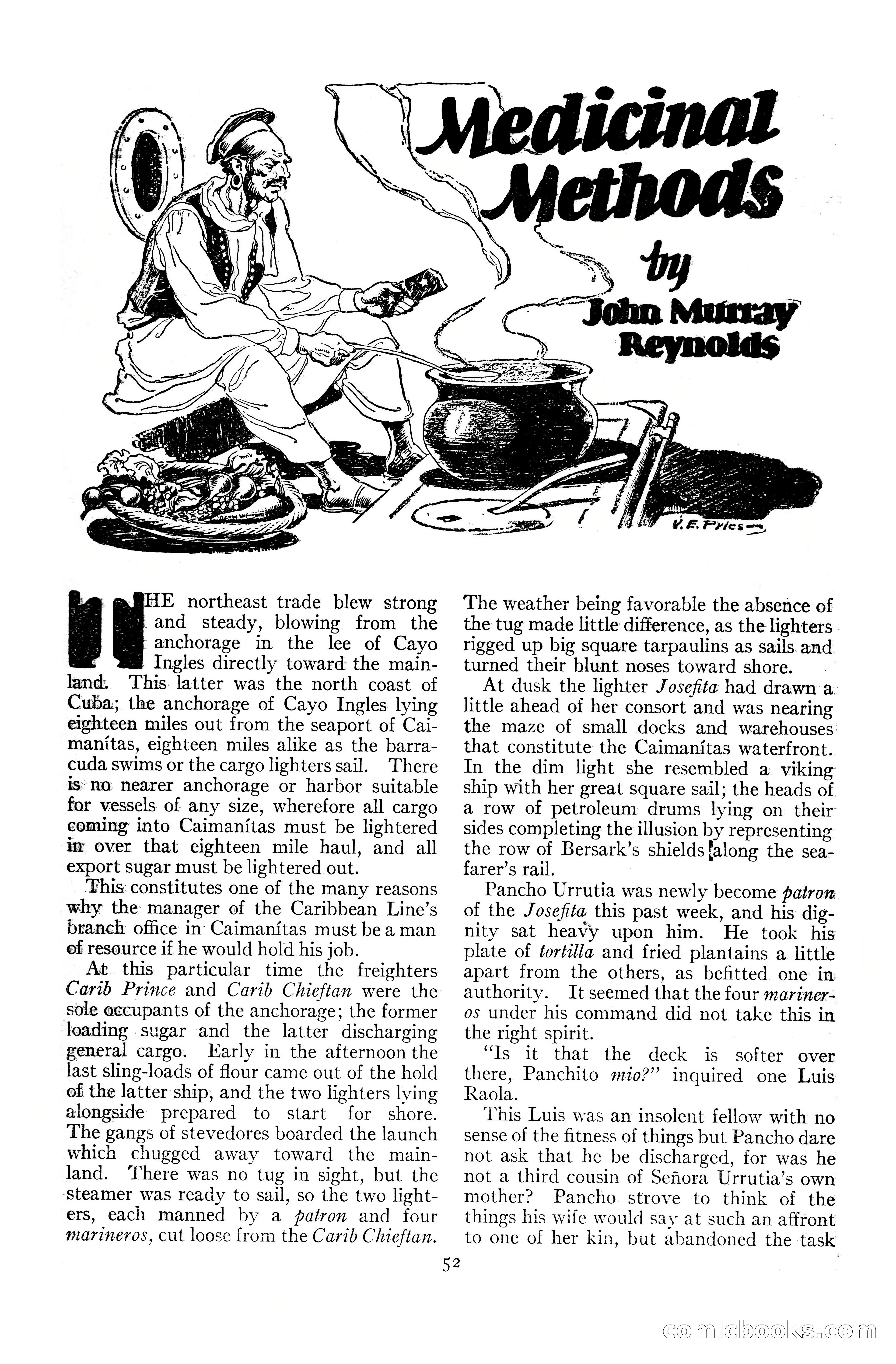
A restored page from Pulp Fiction, 1925. Page through the whole issue in the reader above.
📄 Transcribed text from this page (OCR, searchable)
Machine-transcribed from the original scan — historical spelling and the odd misread are preserved.
< eee : ee i in = > ’ Mo ee ie y> y a Ag “2 Wa a> ~ ee HE northeast trade blew strong }and steady, blowing from the anchorage in the lee of Cayo j - Ingles directly toward the main- land. This latter was the north coast of Cuba; the anchorage of Cayo Ingles lying eighteen miles out from the seaport of Cai- manitas, eighteen miles alike as the barra- cuda swims or the cargo lighters sail. There is no nearer anchorage or harbor suitable for vessels of any size, wherefore all cargo coming into Caimanitas must be lightered iz over that eighteen mile haul, and all export sugar must be lightered out. This constitutes one of the many reasons why the manager of the Caribbean Line’s branch office in Caimanftas must bea man of resource if he would hold his job. At this particular time the freighters Carib Prince and Carib Chieftan were the sole occupants of the anchorage; the former loading sugar and the latter discharging general cargo. Early in the afternoon the last sling-loads of flour came out of the hold of the latter ship, and the two lighters lving alongside prepared to start for shore. The gangs of stevedores boarded the launch which chugged away toward the main- land. There was no tug in sight, but the ‘steamer was ready to sail, so the two light- ers, each manned by a patron and four marinervos, cut loose from the Carib Chieftan. 52 V &. Prics——, The weather being favorable the absence of the tug made little difference, as the lighters. rigged up big square tarpaulins as sails and turned their blunt noses toward shore. At dusk the lighter Josefita had drawn a: little ahead of her consort and was nearing the maze of small docks and warehouses that constitute the Caimanitas waterfront. In the dim light she resembled a viking ship with her great square sail; the heads of a row of petroleum drums lying on their sides completing the illusion by representing the row of Bersark’s shields {along the sea- farer’s rail. Pancho Urrutia was newly become patron of the Josefita this past week, and his dig- nity sat heavy upon him. He took his plate of éortila and fried plantains a little apart from the others, as befitted one in authority. It seemed that the four mariner- os under his command did not take this in the right spirit. , “Is it that the deck is softer over there, Panchito mio?” inquired one Luis Raola. This Luis was an insolent fellow with no sense of the fitness of things but Pancho dare not ask that he be discharged, for was he not a third cousin of Sefiora Urrutia’s own mother? Pancho strove to think of the things his wife would say at such an affront to one of her kin, but abandoned the task COMIGDIOOKSEEO