
Pulp Fiction, 1925 · page 30 of 212
Adventure Magazine Cover, March 20, 1925 — page 30: what you’re looking at
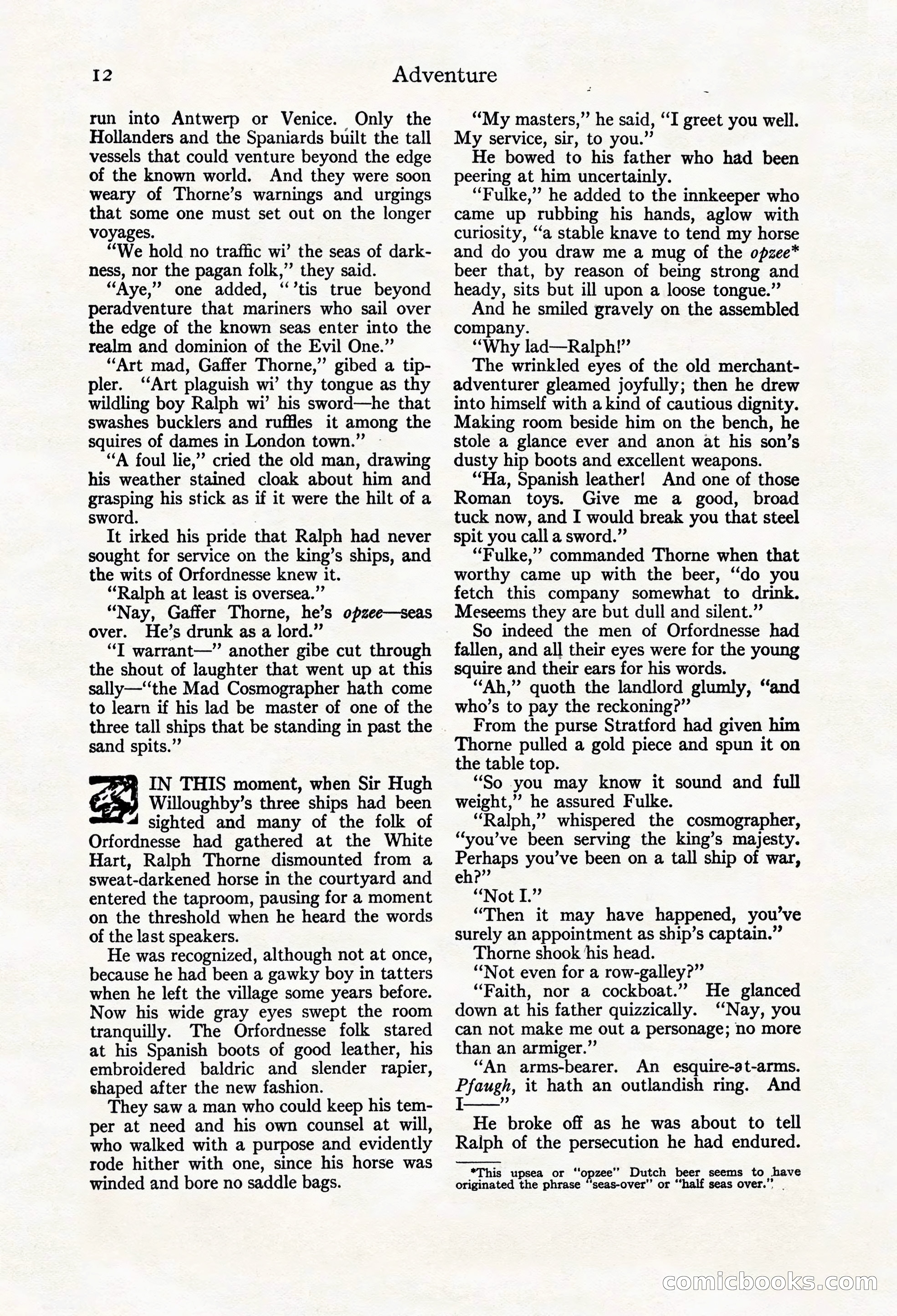
A restored page from Pulp Fiction, 1925. Page through the whole issue in the reader above.
📄 Transcribed text from this page (OCR, searchable)
Machine-transcribed from the original scan — historical spelling and the odd misread are preserved.
12 run into Antwerp or Venice. Only the Hollanders and the Spaniards built the tall vessels that could venture beyond the edge of the known world. And they were soon weary of Thorne’s warnings and urgings that some one must set out on the longer voyages. “We hold no traffic wi’ the seas of dark- ness, nor the pagan folk,” they said. “Aye,” one added, “’tis true beyond peradventure that mariners who sail over the edge of the known seas enter into the realm and dominion of the Evil One.”’ “Art mad, Gaffer Thorne,” gibed a tip- pler. ‘Art plaguish wi’ thy tongue as thy wildling boy Ralph wi’ his sword—he that swashes bucklers and ruffles it among the squires of dames in London town.” - “A foul lie,” cried the old man, drawing his weather stained cloak about him and grasping his stick as if it were the hilt of a sword. . It irked his pride that Ralph had never sought for service on the king’s ships, and the wits of Orfordnesse knew it. “Ralph at least is oversea.” “Nay, Gaffer Thorne, he’s opzee—seas over. He’s drunk as a lord.” “T warrant—” another gibe cut through the shout of laughter that went up at this sally—‘‘the Mad Cosmographer hath come to learn if his lad be master of one of the three tall ships that be standing in past the sand spits.” IN THIS moment, when Sir Hugh : Willoughby’s three ships had been “ sighted and many of the folk of Orfordnesse had gathered at the White Hart, Ralph Thorne dismounted from a sweat-darkened horse in the courtyard and entered the taproom, pausing for a moment on the threshold when he heard the words of the last speakers. He was recognized, although not at once, because he had been a gawky boy in tatters when he left the village some years before. Now his wide gray eyes swept the room tranquilly. The Orfordnesse folk stared at his Spanish boots of good leather, his embroidered baldric and slender rapier, shaped after the new fashion. They saw a man who could keep his tem- per at need and his own counsel at will, who walked with a purpose and evidently rode hither with one, since his horse was winded and bore no saddle bags. Adventure “My masters,” he said, “I greet you well. My service, sir, to you.” He bowed to his father who had been peering at him uncertainly. “Fulke,” he added to the innkeeper who came up rubbing his hands, aglow with curiosity, ‘‘a stable knave to tend my horse and do you draw me a mug of the opzee* beer that, by reason of being strong and heady, sits but ill upon a loose tongue.” And he smiled gravely on the assembled company. “Why lad—Ralph!”’ The wrinkled eyes of the old merchant- adventurer gleamed joyfully; then he drew into himself with a kind of cautious dignity. Making room beside him on the bench, he stole a glance ever and anon at his son’s dusty hip boots and excellent weapons. “Ha, Spanish leather! And one of those Roman toys. Give me a good, broad tuck now, and I would break you that steel spit you call a sword.” “Fulke,”’ commanded Thorne when that worthy came up with the beer, “do you fetch this company somewhat to drink. Meseems they are but dull and silent.” So indeed the men of Orfordnesse had fallen, and all their eyes were for the young squire and their ears for his words. “Ah,” quoth the landlord glumly, “and who’s to pay the reckoning?” From the purse Stratford had given him Thorne pulled a gold piece and spun it on the table top. “So you may know it sound and full weight,” he assured Fulke. “Ralph,” whispered the cosmographer, “vou’ve been serving the king’s majesty. Perhaps you’ve been on a tall ship of war, eh?” “Not I.” “Then it may have happened, you’ve surely an appointment as ship’s captain.” Thorne shook ‘his head. “Not even for a row-galley?” “Faith, nor a cockboat.” He glanced down at his father quizzically. “Nay, you can not make me out a personage; no more than an armiger.”’ “‘An arms-bearer. An esquire-at-arms. Pfaugh, it hath an outlandish ring. And ]|———”’ He broke off as he was about to tell Ralph of the persecution he had endured. *This upsea or ‘“‘opzee’’ Dutch beer seems to have originated the phrase “seas-over’’ or “half seas over.” _ COMmiclooe (©