
Pulp Fiction, 1925 · page 117 of 212
Adventure Magazine Cover, March 20, 1925 — page 117: what you’re looking at
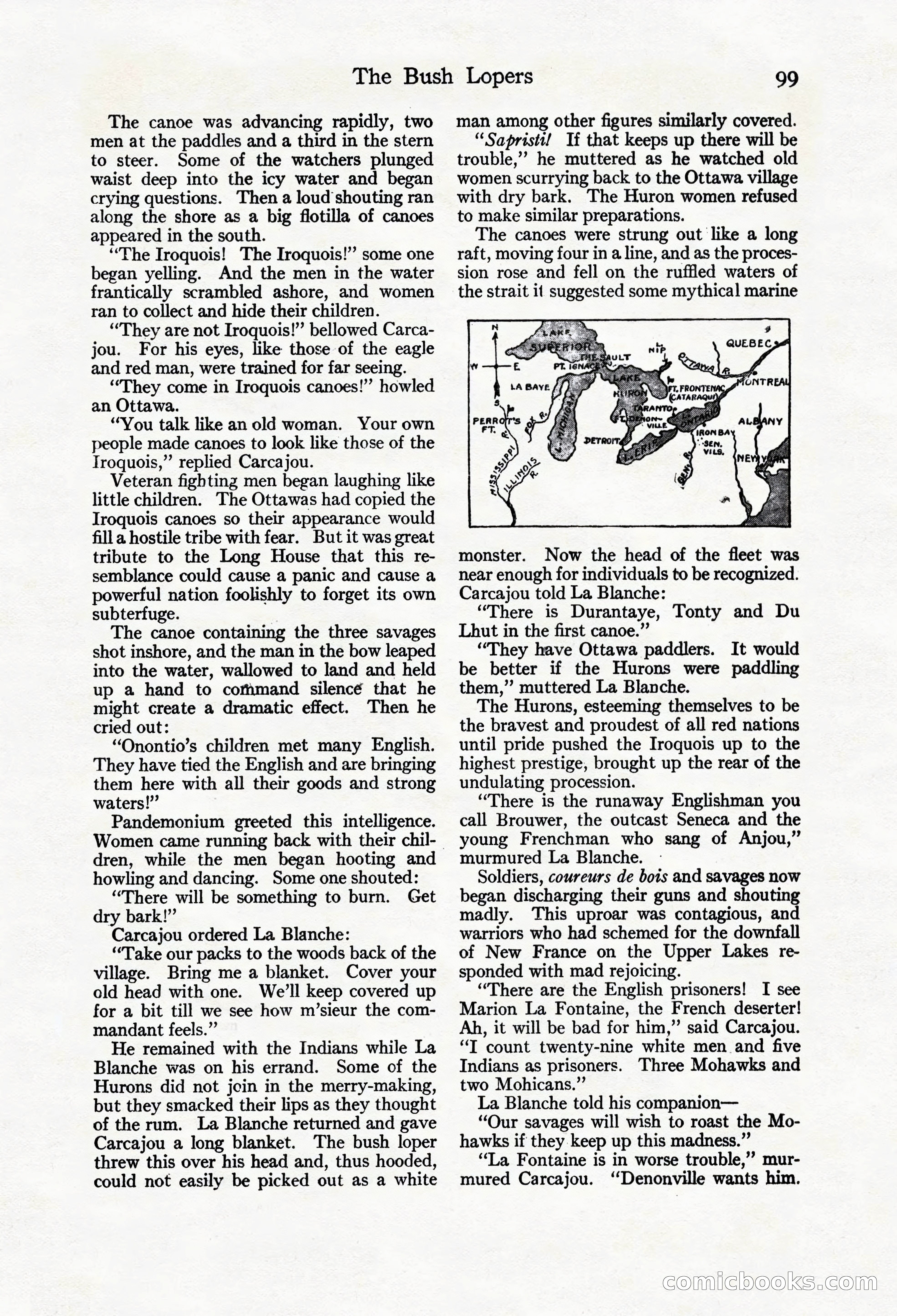
A restored page from Pulp Fiction, 1925. Page through the whole issue in the reader above.
📄 Transcribed text from this page (OCR, searchable)
Machine-transcribed from the original scan — historical spelling and the odd misread are preserved.
The Bush Lopers The canoe was advancing rapidly, two men at the paddles and a third in the stern to steer. Some of the watchers plunged waist deep into the icy water and began crying questions. Then a loud shouting ran along the shore as a big flotilla of canoes appeared in the south. ‘“‘The Iroquois! The Iroquois!’ some one began yelling. And the men in the water frantically scrambled ashore, and women ran to collect and hide their children. “They are not Iroquois!” bellowed Carca- jou. For his eyes, like those of the eagle and red man, were trained for far seeing. “They come in Iroquois canoes!’’ howled an Ottawa. “Vou talk like an old woman. Your own people made canoes to look like those of the Troquois,” replied Carcajou. Veteran fighting men began laughing like little children. The Ottawas had copied the Iroquois canoes so their appearance would fill a hostile tribe with fear. But it was great tribute to the Long House that this re- semblance could cause a panic and cause a powerful nation foolishly to forget its own subterfuge. The canoe containing the three savages shot inshore, and the man in the bow leaped into the water, wallowed to land and held up a hand to cothmand silencé that he might create a dramatic effect. Then he cried out: “Onontio’s children met many English. They have tied the English and are bringing them here with all their goods and strong waters!”’ Pandemonium greeted this intelligence. Women came running back with their chil- | dren, while the men began hooting and howling and dancing. Some one shouted: “There will be something to burn. Get dry bark!”’ Carcajou ordered La Blanche: “Take our packs to the woods back of the village. Bring me a blanket. Cover your old head with one. We’ll keep covered up for a bit till we see how m’sieur the com- mandant feels.”’ He remained with the Indians while La Blanche was on his errand. Some of the Hurons did not join in the merry-making, but they smacked their lips as they thought of the rum. La Blanche returned and gave Carcajou a long blanket. The bush loper threw this over his head and, thus hooded, could not easily be picked out as a white 99 man among other figures similarly covered. “Sapristt! If that keeps up there will be trouble,” he muttered as he watched old women scurrying back to the Ottawa village with dry bark. The Huron women refused to make similar preparations. The canoes were strung out like a long raft, moving four in a line, and as the proces- sion rose and fell on the ruffled waters of the strait 11 suggested some mythical marine monster. Now the head of the fleet was near enough for individuals to be recognized. Carcajou told La Blanche: “There is Durantaye, Tonty and Du Lhut in the first canoe.” “They have Ottawa paddlers. It would be better if the Hurons were paddling them,” muttered La Blanche. The Hurons, esteeming themselves to be the bravest and proudest of all red nations until pride pushed the Iroquois up to the highest prestige, brought up the rear of the undulating procession. “There is the runaway Englishman you call Brouwer, the outcast Seneca and the young Frenchman who sang of Anjou,” murmured La Blanche. Soldiers, coureurs de bois and savages now began discharging their guns and shouting madly. This uproar was contagious, and warriors who had schemed for the downfall of New France on the Upper Lakes re- sponded with mad rejoicing. “There are the English prisoners! I see Marion La Fontaine, the French deserter! Ah, it will be bad for him,” said Carcajou. “T count twenty-nine white men and five Indians as prisoners. Three Mohawks and two Mohicans.”’ La Blanche told his companion— “Our savages will wish to roast the Mo- hawks if they keep up this madness.” “Ta Fontaine is in worse trouble,” mur- mured Carcajou. ‘“Denonville wants him. CORnNIECLO© (©