
Pulp Fiction, 1924 · page 68 of 216
Adventure Magazine, December 10, 1924 — page 68: what you’re looking at
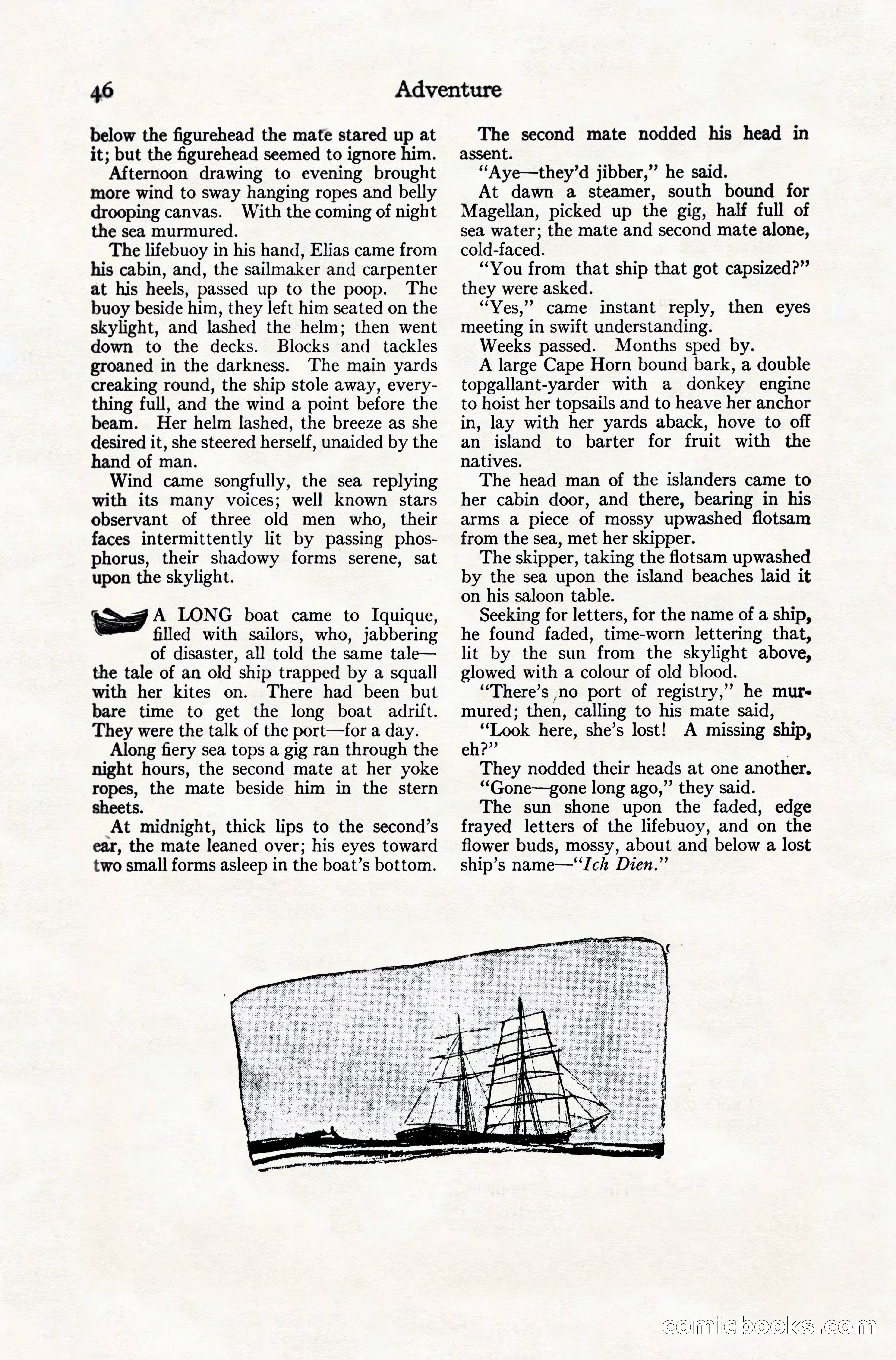
A restored page from Pulp Fiction, 1924. Page through the whole issue in the reader above.
📄 Transcribed text from this page (OCR, searchable)
Machine-transcribed from the original scan — historical spelling and the odd misread are preserved.
46 below the figurehead the mate stared up at it; but the figurehead seemed to ignore him. Afternoon drawing to evening brought more wind to sway hanging ropes and belly drooping canvas. With the coming of night the sea murmured. The lifebuoy in his hand, Elias came from his cabin, and, the sailmaker and carpenter at his heels, passed up to the poop. The buoy beside him, they left him seated on the skylight, and lashed the helm; then went down to the decks. Blocks and _ tackles groaned in the darkness. The main yards creaking round, the ship stole away, every- thing full, and the wind a point before the beam. Her helm lashed, the breeze as she desired it, she steered herself, unaided by the hand of man. Wind came songfully, the sea replying with its many voices; well known stars observant of three old men who, their faces intermittently lit by passing phos- phorus, their shadowy forms serene, sat upon the skylight. ta 4 LONG boat came to Iquique, filled with sailors, who, jabbering of disaster, all told the same tale— the tale of an old ship trapped by a squall with her kites on. There had been but bare time to get the long boat adrift. They were the talk of the port—for a day. Along fiery sea tops a gig ran through the night hours, the second mate at her yoke ropes, the mate beside him in the stern sheets. At midnight, thick lips to the second’s ear, the mate leaned over; his eyes toward two small forms asleep in the boat’s bottom. Adventure The second mate nodded his head in assent. “‘Aye—they’d jibber,” he said. At dawn a steamer, south bound for Magellan, picked up the gig, half full of sea water; the mate and second mate alone, cold-faced. “You from that ship that got capsized?” they were asked. “Yes,” came instant reply, then eyes meeting in swift understanding. Weeks passed. Months sped by. A large Cape Horn bound bark, a double topgallant-yarder with a donkey engine to hoist her topsails and to heave her anchor in, lay with her yards aback, hove to off an island to barter for fruit with the natives. The head man of the islanders came to her cabin door, and there, bearing in his arms a piece of mossy upwashed flotsam from the sea, met her skipper. The skipper, taking the flotsam upwashed by the sea upon the island beaches laid it on his saloon table. Seeking for letters, for the name of a ship, he found faded, time-worn lettering that, lit by the sun from the skylight above, glowed with a colour of old blood. ‘“‘There’s no port of registry,” he murs mured; then, calling to his mate said, “Look here, she’s lost! A missing ship, eh?” They nodded their heads at one another. ““Gone—gone long ago,” they said. The sun shone upon the faded, edge frayed letters of the lifebuoy, and on the flower buds, mossy, about and below a lost ship’s name—“‘Tch Dien.” Comicbhook Wh) (© =