
Pulp Fiction, 1924 · page 132 of 194
Adventure Magazine Cover, November 10, 1924 — page 132: what you’re looking at
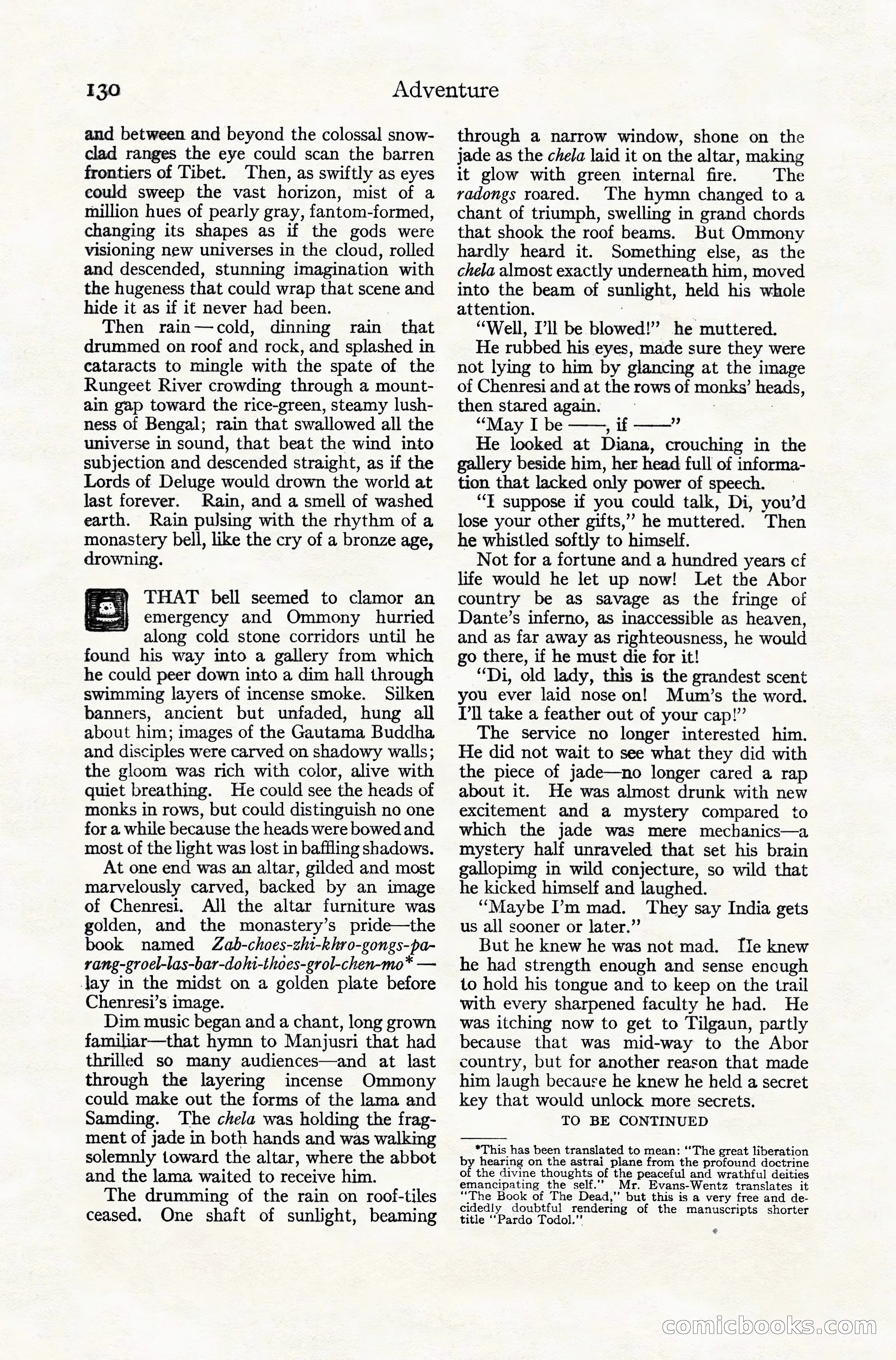
A restored page from Pulp Fiction, 1924. Page through the whole issue in the reader above.
📄 Transcribed text from this page (OCR, searchable)
Machine-transcribed from the original scan — historical spelling and the odd misread are preserved.
130 and between and beyond the colossal snow- clad ranges the eye could scan the barren frontiers of Tibet. Then, as swiftly as eyes could sweep the vast horizon, mist of a million hues of pearly gray, fantom-formed, changing its shapes as if the gods were visioning new universes in the cloud, rolled and descended, stunning imagination with the hugeness that could wrap that scene and hide it as if it never had been. Then rain—cold, dinning rain that drummed on roof and rock, and splashed in cataracts to mingle with the spate of the Rungeet River crowding through a mount- ain gap toward the rice-green, steamy lush- ness of Bengal; rain that swallowed all the universe in sound, that beat the wind into subjection and descended straight, as if the Lords of Deluge would drown the world at last forever. Rain, and a smell of washed earth. Rain pulsing with the rhythm of a monastery bell, like the cry of a bronze age, drowning. THAT bell seemed to clamor an emergency and Ommony hurried along cold stone corridors until he found his way into a gallery from which he could peer down into a dim hall through swimming layers of incense smoke. Silken banners, ancient but unfaded, hung all about him; images of the Gautama Buddha and disciples were carved on shadowy walls; the gloom was rich with color, alive with quiet breathing. He could see the heads of monks in rows, but could distinguish no one for a while because the heads were bowed and most of the light was lost in baffling shadows. At one end was an altar, gilded and most marvelously carved, backed by an image of Chenresi. All the altar furniture was golden, and the monastery’s pride—the book named Zab-choes-zhi-khro-gongs-pa- rang-groel-las-bar-dohi-thoes-grol-chen-mo* — ay in the midst on a golden plate before Chenresi’s image. Dim music began and a chant, long grown familiar—that hymn to Manjusri that had thrilled so many audiences—and at last through the layering incense Ommony could make out the forms of the lama and Samding. The chela was holding the frag- ment of jade in both hands and was walking solemnly toward the altar, where the abbot and the lama waited to receive him. The drumming of the rain on roof-tiles ceased. One shaft of sunlight, beaming Adventure through a narrow window, shone on the jade as the chela laid it on the altar, making it glow with green internal fire. The radongs roared. The hymn changed to a chant of triumph, swelling in grand chords that shook the roof beams. But Ommony hardly heard it. Something else, as the chela almost exactly underneath him, moved into the beam of sunlight, held his whole attention. “Well, I’ll be blowed!”’ he muttered. He rubbed his eyes, made sure they were not lying to him by glancing at the image of Chenresi and at the rows of monks’ heads, then stared again. “May I be ,f—— He looked at Diana, ine in the gallery beside him, her head full of informa- tion that lacked only power of speech. “T suppose if you could talk, Di, you’d lose your other gifts,” he muttered. Then he whistled softly to himself. Not for a fortune and a hundred years cf life would he let up now! Let the Abor country be as savage as the fringe of Dante’s inferno, as inaccessible as heaven, and as far away as righteousness, he would go there, if he must die for it! “Di, old lady, this is the grandest scent you ever laid nose on! Mum/’s the word. I'll take a feather out of your cap!” The service no longer interested him. He did not wait to see what they did with the piece of jade—no longer cared a rap about it. He was almost drunk with new excitement and a mystery compared to which the jade was mere mechanics—a mystery half unraveled that set his brain gallopimg in wild conjecture, so wild that he kicked himself and laughed. ‘Maybe I’m mad. They say India gets us all sooner or later.”’ But he knew he was not mad. Ile knew he had strength enough and sense encugh to hold his tongue and to keep on the trail with every sharpened faculty he had. He was itching now to get to Tilgaun, partly because that was mid-way to the Abor country, but for another reason that made him Jaugh because he knew he held a secret key that would unlock more secrets. TO BE CONTINUED *This has been translated to mean: ‘“‘The great liberation by hearing on the astrai plane from the profound doctrine of the divine thoughts of the peaceful and wrathful deities emancipating the self.’’ Mr. Evans-Wentz translates it “The Book of The Dead,”’ but this is a very free and de- cidedly doubtful rendering of the manuscripts shorter title ‘‘Pardo Todol." € CoOMmicbook A) CO =