
Pulp Fiction, 1924 · page 152 of 204
Adventure Magazine Cover, October 30, 1924 — page 152: what you’re looking at
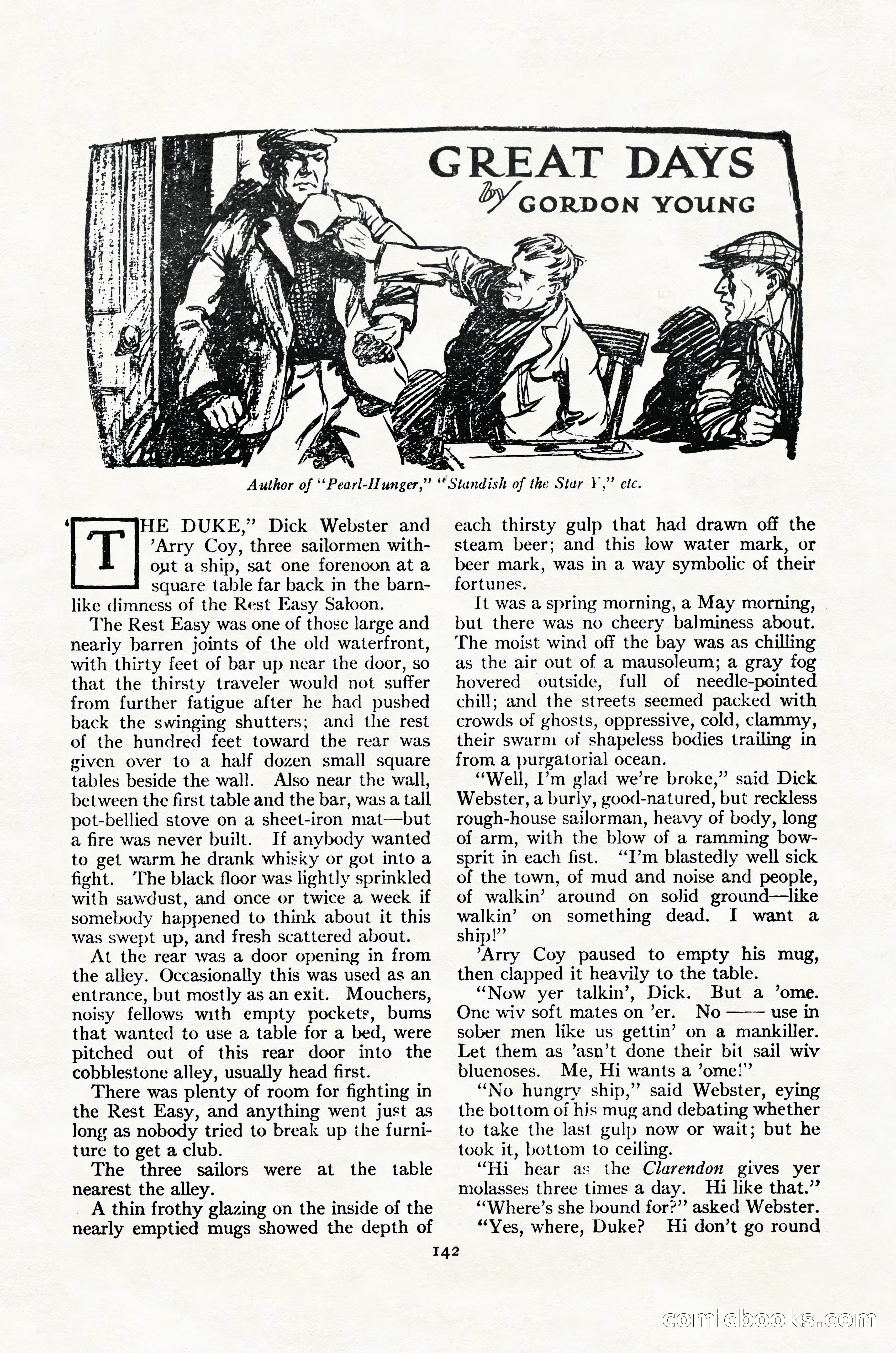
A restored page from Pulp Fiction, 1924. Page through the whole issue in the reader above.
📄 Transcribed text from this page (OCR, searchable)
Machine-transcribed from the original scan — historical spelling and the odd misread are preserved.
rn fT 0 epee o6 apr Asyhpy t : are rR i% ae VST pt rye eneecy ons 3s Darel qemvwa Lh artnd. S's * > S.ctenen de’ . a en . ee ted ae fi > ie we, HE DUKE,” Dick Webster and ’Arry Coy, three sailormen with- i owt a ship, sat one forenoon at a toed square table far back in the barn- like dimness of the Rest Easy Saloon. The Rest Easy was one of those large and nearly barren joints of the old waterfront, with thirty feet of bar up near the door, so that the thirsty traveler would not suffer from further fatigue after he had pushed back the swinging shutters; and the rest of the hundred feet toward the rear was given over to a half dozen small square tables beside the wall. Also near the wall, between the first table and the bar, was a tall pot-bellied stove on a sheet-iron mat—but a fire was never built. Tf anybody wanted to get warm he drank whisky or got into a fight. The black floor was lightly sprinkled with sawdust, and once or twice a week if somebody happened to think about it this was swept up, and fresh scattered about. At the rear was a door opening in from the alley. Occasionally this was used as an entrance, but mostly as an exit. Mouchers, noisy fellows with empty pockets, bums that wanted to use a table for a bed, were pitched out of this rear door into the cobblestone alley, usually head first. There was plenty of room for fighting in the Rest Easy, and anything went just as Jong as nobody tried to break up the furni- ture to get a club. The three sailors were at the table nearest the alley. . A thin frothy glazing on the inside of the nearly emptied mugs showed the depth of GREAT DAYS | GORDON YOUNG each thirsty gulp that had drawn off the steam beer; and this low water mark, or beer mark, was in a way symbolic of their fortunes. It was a spring morning, a May morning, but there was no cheery balminess about. The moist wind off the bay was as chilling as the air out of a mausoleum; a gray fog hovered outside, full of needle-pointed chill; and the streets seemed packed with crowds of ghosts, oppressive, cold, clammy, their swarm of shapeless bodies trailing in from a purgatorial ocean. “Well, I’m glad we’re broke,” said Dick Webster, a burly, good-natured, but reckless rough-house sailorman, heavy of body, long of arm, with the blow of a ramming bow- sprit in each fist. ‘I’m blastedly well sick of the town, of mud and noise and people, of walkin’ around on solid ground—like walkin’ on something dead. I want a ship!” ’Arry Coy paused to empty his mug, then clapped it heavily to the table. “Now yer talkin’, Dick. But a ’ome. One wiv soft mates on ’er. No use in sober men like us gettin’? on a mankiller. Let them as ’asn’t done their bit sail wiv bluenoses. 1S Me, Hi wants a ’ome! “No hungry ship,” said Webster, eying the bottom oi his mug and debating whether to take the last gulp now or wait; but he took it, bottom to ceiling. “Hi hear as the Clarendon gives yer molasses three times a day. Hi like that.” “‘Where’s she bound for?”’ asked Webster. “Yes, where, Duke? Hi don’t go round 142 DOO“ C© inn